
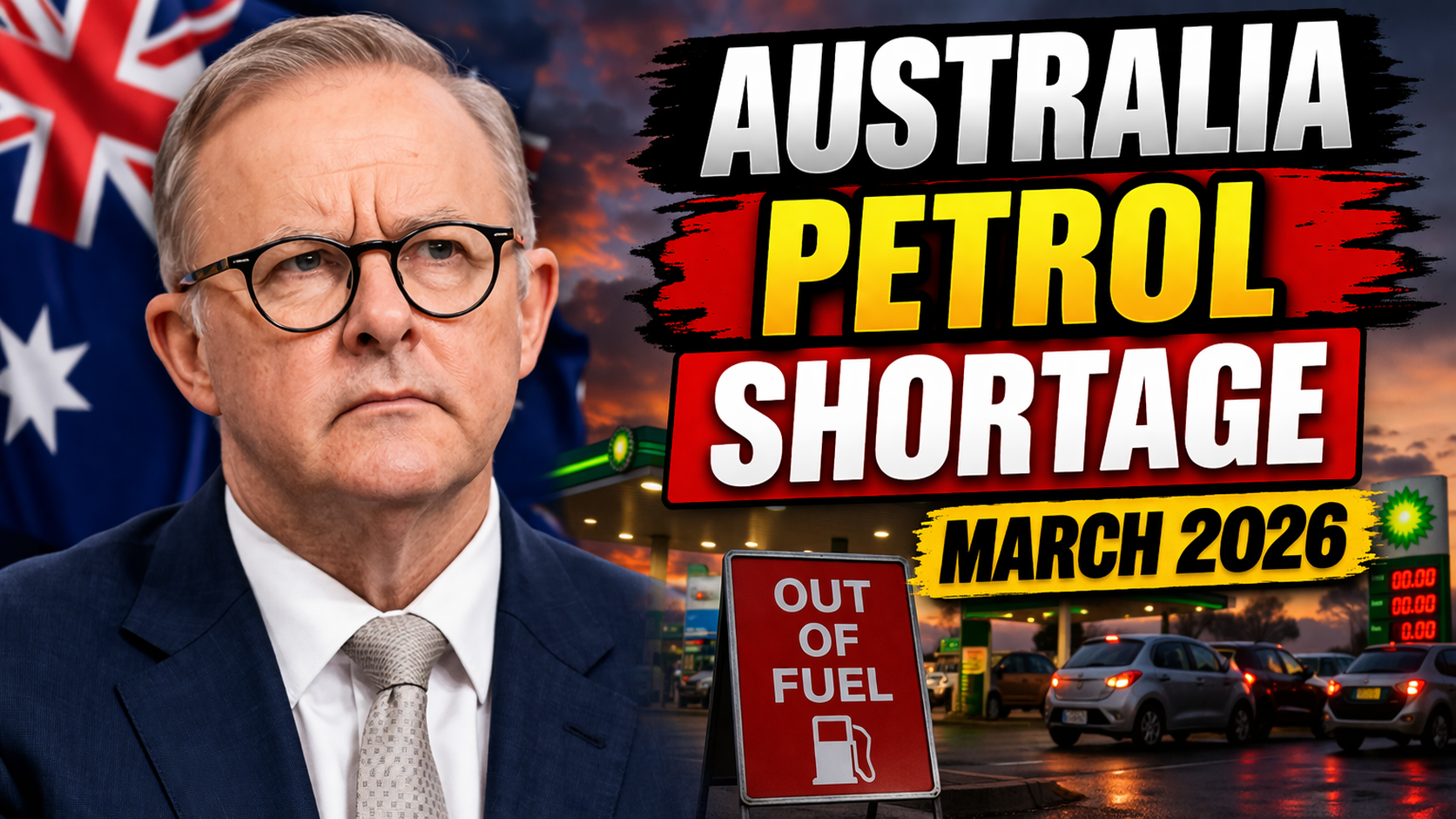
The US–Australia alliance is under a fresh strain in 2026 as President Donald Trump reacts sharply to Canberra’s cautious stance on military support in the Strait of Hormuz amid a deepening oil‑supply crisis. With global energy markets on edge, shipping lanes in the Gulf region under threat, and Washington demanding a stronger regional‑power response, the tone of Washington’s messaging toward Australia has shifted from assumed partnership to pointed frustration. The debate is now less about whether the two countries are “in the same team” and more about how much risk and how much coercive force each is willing to assume in a volatile Middle East.
The Strait of Hormuz Crisis and Its Global Impact
The Strait of Hormuz sits at the heart of a global energy‑distribution network, funnelling roughly a fifth of the world’s traded oil through a narrow maritime corridor between Iran and the Arabian Peninsula. In early 2026, a combination of Iranian‑backed attacks on tankers, mines, and drone‑as‑missile strikes has effectively disrupted normal shipping, creating what market analysts describe as the most significant oil‑supply shock in modern history. Oil prices have surged sharply, with benchmark grades climbing into the upper‑fifties to mid‑sixty‑dollar range and volatility spiking beyond anything seen in recent peacetime.
For the United States, the disruption is both an economic and a strategic test. While the US is less directly dependent on Gulf‑sourced crude than many Asian and European economies, the broader impact on global growth, inflation, and financial stability still matters. The US has responded with a calibrated military‑diplomatic campaign in the region, including airstrikes and naval operations aimed at restoring freedom of navigation. Central to this effort has been Washington’s push to build a coalition of allies and partners willing to contribute warships, minesweepers, or escort capacity to help reopen the strait.
Trump’s Demand for Allied Military Support
President Donald Trump has framed the Strait of Hormuz situation as a litmus test for alliance solidarity. In a series of public remarks and social‑media posts, he has argued that countries that rely heavily on Middle Eastern oil—among them NATO members, Japan, South Korea, and Australia—should match their economic dependence with explicit military contributions. He has repeatedly called on American allies to send warships, aircraft, and support vessels to the Gulf, warning that failure to step up would weaken the credibility of the alliance system and expose free‑riders.
Trump’s language has been unusually blunt. In one Truth Social post, he suggested that the US “no longer needs, nor desires” assistance from NATO countries, Japan, South Korea, and Australia, claiming that the United States has been so successful militarily that it does not require help. He has also described NATO allies who hesitate as “cowards,” and in doing so he has implicitly included Australia in a broader category of states whose support is, in his words, neither necessary nor particularly welcome. Such remarks have been interpreted in Canberra as a signal that the White House is frustrated with what it sees as cautious, risk‑averse positioning from traditional partners.
Australia’s Position and the “No Warships” Decision
Australia’s response to the Strait of Hormuz request has been carefully calibrated. The federal government has explicitly declined to join a US‑led coalition of six nations that are sending warships to the region, including European countries, Japan, and some Gulf states. Prime Minister Anthony Albanese has argued that Australia’s best contribution lies in indirect support rather than in risking Australian sailors in a high‑intensity maritime conflict zone.
In practice, Australia has already deployed a Wedgetail early‑warning and surveillance aircraft to the United Arab Emirates, along with a small contingent of support personnel and a package of medium‑range air‑to‑air missiles. This deployment is framed as helping to protect regional allies and commercial shipping without inserting Australian warships directly into the Strait of Hormuz. Officials in Canberra have also pointed to Australia’s participation in broader diplomatic efforts to de‑escalate the conflict, including backing joint statements and multilateral initiatives aimed at blocking Iran’s ability to weaponize the chokepoint.
Trump’s Reaction to Australia’s Stance
Trump has publicly expressed surprise and irritation at Australia’s decision. In a televised interview with Sky News Washington, he complained that he has “always said yes” to Australian requests for support and expected reciprocation in the Strait of Hormuz crisis. He said he was “a little bit surprised” that Australia declined to send warships, framing the refusal as out of step with the expectations of a close strategic partner.
At the same time, Trump has also backtracked slightly from his harshest social‑media comments, telling reporters that he does not consider Australia an enemy and that he values the relationship. This mixed messaging—one arm of the administration criticising Australia’s restraint while another acknowledges the country’s existing contributions—has left observers in Canberra and elsewhere unsure of whether the frustrations are tactical posturing or a deeper shift in Washington’s view of the alliance. In either case, the episode has injected a new edge into the usually routine discussion of burden‑sharing among US allies.
What the Debate Reveals About the US–Australia Alliance
Beneath the headlines, the Strait of Hormuz dispute exposes several underlying tensions in the US–Australia alliance. The first is the question of risk appetite. Australia, like many other middle‑powered democracies, has a long tradition of “supporting but not escalating” in US‑led operations: contributing intelligence, logistics, and niche capabilities while avoiding large‑scale combat deployments unless domestic political consensus is clear. Trump’s more transactional style, by contrast, tends to emphasise visible, high‑profile contributions such as ships, aircraft, and ground troops, and to treat smaller, indirect forms of support as less significant.
The second tension is about expectations versus consultative practice. Australian officials have argued that they have provided substantial assistance and have not been asked to do more in a way that sits clearly within the usual alliance‑decision‑making framework. They say that Canberra has already complied with a request from the United Arab Emirates to supply the Wedgetail aircraft and that there has been no formal, direct request from Trump for additional forces. This mismatch—Washington feeling that allies should just “show up” and Canberra insisting on a clear, negotiated ask—has created a sense of misalignment that can be hard to smooth over in the heat of a crisis.
How Australia Is Walking a Diplomatic Tightrope
In the background of the Strait of Hormuz debate, Australia is trying to balance several competing interests. On one side is its security‑relationship with the United States, which still underpins much of Australia’s defence posture, intelligence sharing, and regional‑deterrence planning. On the other side is the need to avoid being drawn into a wider regional war that could destabilize oil markets still further and potentially draw Australian forces into direct combat with Iranian‑linked units.
Australia’s strategy in 2026 has therefore leaned toward “quiet enablement” rather than “front‑line visibility.” The Wedgetail deployment, for example, enhances surveillance and early‑warning over Gulf‑related airspace without placing Australian ships in the most contested waters. Canberra has also supported diplomatic efforts to keep the United Nations Security Council and regional forums engaged, hoping that political pressure and targeted sanctions can de‑escalate the crisis without a full‑scale military escalation.
Australian officials have also been at pains to emphasise that the country remains a reliable partner. They point to past contributions in Iraq, Afghanistan, and the broader Middle East, as well as ongoing participation in joint war‑games and interoperability arrangements with the US military. The message from Canberra is that cooperation should be judged over the long arc of the alliance, not by a single headline‑grabbing decision on warships.
The Broader Strategic Implications for 2026
The Strait of Hormuz spat is more than a one‑off diplomatic flare‑up; it is a stress test for how the US–Australia alliance adapts to an era of great‑power competition and frequent energy‑related shocks. In Washington, there is growing pressure to demand that allies “do more” in theatres far from their own shores, especially when the US is bearing the bulk of the military and financial burden. For Australia, there is a parallel concern that enthusiastic participation in distant conflicts could erode public support for defence spending and distract from nearer‑term regional priorities, such as the Indo‑Pacific and South‑West Pacific.
The way this particular crisis resolves will likely shape future expectations. If the US is able to stabilise the Strait of Hormuz with a relatively small coalition, Trump may be less likely to push hard on allies in the short term. If the situation drags on, however, or if other energy‑supply chokepoints come under threat, the pressure on Australia and other regional powers could intensify. Canberra may face more explicit requests for ships, aircraft, or even ground‑based support in scenarios that lie several time zones away from Australian shores.
The Impact on Domestic Politics in Australia
At home, the debate over Strait of Hormuz support has already entered Australian politics. Opposition figures have used Trump’s comments to question the government’s commitment to the alliance, arguing that Australia should be more willing to stand shoulder‑to‑shoulder with the US in moments of crisis. Government ministers, in turn, have defended their cautious approach as a responsible use of limited defence resources and a reflection of Australia’s specific national‑interest calculus.
For the public, the episode is a reminder that alliances are not automatic. Many Australians assume that the US–Australia relationship will always be smooth, but the Strait of Hormuz stand‑off shows that even long‑standing partnerships can experience friction when risk, expectations, and political communication collide. How the two governments manage this episode—whether they move toward a more explicit, rules‑based understanding of burden‑sharing or simply paper it over—will influence how future crises are handled.
Looking Ahead: Cooperation, Tensions, and Expectations
As the oil‑crisis phase of the Strait of Hormuz confrontation continues, the US–Australia alliance is likely to remain in a delicate dance between cooperation and contention. Washington will want visible proof of partnership when it feels exposed; Canberra will want clear, negotiated requests and a realistic assessment of risk before committing forces. The 2026 episode may therefore become a reference point for how both countries negotiate burden‑sharing in an era of renewed energy‑geopolitics.
If the two sides can manage the current disagreement without lasting damage, the alliance may emerge with a more mature understanding of how to balance expectations, risk, and symbolic versus material contributions. If, however, the tone hardens and Canberra feels increasingly like a reluctant partner rather than a core ally, the relationship could develop a more transactional, less automatic character—one that still functions, but with more visible friction than in the recent past. For policymakers in both Canberra and Washington, the lesson of the Strait of Hormuz crisis is simple: even the closest alliances can fray when the price of backing them is not clearly defined.

Vineeth T.C. is a news writer and digital content contributor at PageEuropean, covering key developments across New Zealand and Australia. His work focuses on delivering clear, fact-based reporting on current affairs, public policy, business updates, and regional news that matter to readers.