
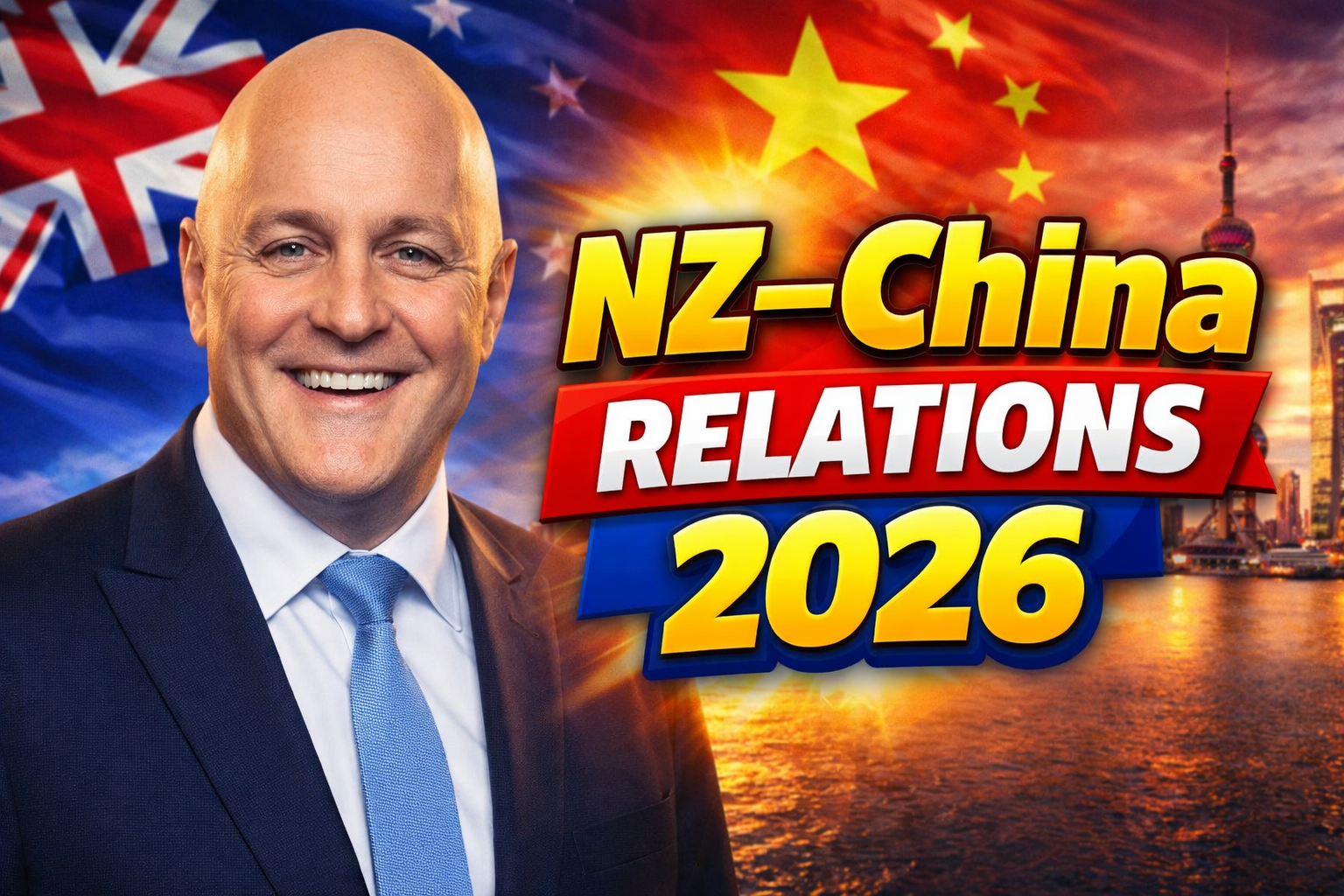
New Zealand’s China‑relations debate took on a sharper, more security‑driven tone in 2026 when Defence Minister Judith Collins publicly warned that Chinese missiles have the range to reach New Zealand territory. The comments came in the wake of the Australia–New Zealand Foreign and Defence Ministerial Consultations (ANZMIN 2+2), a high‑level meeting in Canberra that underscored a closer military and strategic alignment between Wellington and Canberra—and, by extension, with the United States. For many analysts, Collins’s missile warning marked a symbolic shift: from a largely trade‑centric framing of NZ–China relations to one in which China is increasingly treated as a direct security factor in New Zealand’s strategic calculus.
What Happened At The ANZMIN 2+2 Meeting
Held on 17 March 2026 in Canberra, the third ANZMIN 2+2 brought together Australian Foreign Minister Penny Wong and Defence Minister Richard Marles with New Zealand’s Foreign Minister Winston Peters and Defence Minister Judith Collins. The joint statement and subsequent briefings covered a wide range of regional and global issues, from South Pacific stability and Taiwan‑Strait tensions to concerns about “unsafe and unprofessional behaviour” in the South China Sea and broader Indo‑Pacific security challenges.
The meeting reaffirmed the importance of the ANZUS‑linked security architecture, including AUKUS and the Quad, and pledged deeper coordination, interoperability, and joint planning between Australian and New Zealand militaries. The emphasis on “aligning” forces and building a more unified “Anzac” posture reflects a broader US‑driven push to consolidate a network of alliances around China. For New Zealand, a long‑time partner with a more cautious, neutral‑leaning security tradition, this signals a noticeable tilt toward the US‑centred bloc.
Collins’s China Missile Warning
Shortly after the ANZMIN talks, Judith Collins gave an interview in which she explicitly stated that Chinese missiles possess the capability to reach New Zealand and that the country “should not consider ourselves immune from attack.” She framed the warning within a broader alarm about regional instability, describing the current period as “some of the most dangerous times that I have known in my lifetime.”
This is a striking departure from the way New Zealand’s leadership has historically spoken about China. Past governments, including centre‑left administrations, have carefully balanced the fact that China is New Zealand’s largest trading partner with the need to avoid overt security‑related confrontations. Collins’s language—talking about missile reach and vulnerability—comes much closer to the kind of threat‑oriented rhetoric usually associated with Washington, Canberra, and Tokyo when they discuss China.
The warning was not framed as a forecast of an imminent strike, but rather as a reminder that missile‑armed powers can project force over long distances and that New Zealand cannot assume its geographic isolation makes it immune to escalation in the wider Indo‑Pacific. The implication is that even if New Zealand is not a primary target, it could be caught in the fallout of a major regional conflict, particularly if it is seen as aligned with US‑led deterrence and countering arrangements.
How This Fits Into NZ–China Relations In 2026
New Zealand-China relations in 2026 are defined by a deep trade‑dependence on one side and growing security‑policy divergence on the other. China remains New Zealand’s top export market for dairy, meat, wood, and other primary products, while New Zealand is also a significant source of high‑quality food and niche manufacturing inputs for China. Economic ties continue to function largely on a business‑as‑usual basis, with both sides stressing the maturity and stability of the relationship.
At the same time, the Peters–Collins government has signalled a more hard‑line stance on sovereignty and security‑linked issues. The ANZMIN 2+2 joint statement echoed Western concerns about the Taiwan Strait, calling for the preservation of the status quo and opposing any unilateral moves to change it. New Zealand’s representatives also joined criticism of China’s behaviour in the South China Sea and its handling of regional disputes, while continuing to raise human‑rights‑related issues in Xinjiang, Tibet, and Hong Kong.
Collins’s missile warning sits within this broader context: it is a signal that New Zealand is willing to integrate more closely with Australia in a security sense even as it tries not to rupture the economic relationship with China. The government has repeatedly said it is “not in conflict with China,” but that it will defend its own interests and alliances if tensions in the region worsen.
Domestic Reactions And Political Debate
Within New Zealand, Collins’s comments have sparked debate between those who see them as a necessary frankness about strategic realities and those who warn they risk needlessly escalating rhetoric. Supporters of the government’s line argue that:
- It is vital to be honest with the public about the range of modern missile systems and the fact that armed conflict in the Indo‑Pacific could have knock‑on effects on New Zealand, even if it never becomes a battlefield.
- Closer alignment with Australia and the United States offers insurance against coercion or pressure, especially if the region deteriorates toward open confrontation between major powers.
- The government can still maintain a “mature” economic relationship with China while making clear that it will not subordinate its security choices to Beijing’s preferences.
Critics, including opposition MPs and some foreign‑policy scholars, counter that:
- Talking about missiles “reaching New Zealand” can feed fear‑based narratives and may be used to justify increased defence spending or deeper integration into US‑led structures without a clear public‑interest justification.
- Over‑emphasis on the China‑threat narrative risks alienating a key economic partner at a time when domestic living‑cost pressures are high and New Zealand still relies on strong trade links with Asia.
- There is a need for greater transparency about how far New Zealand is prepared to go within US‑allied arrangements, particularly in relation to possible participation in regional deterrence or countering operations.
China’s Likely Perspectives And Possible Responses
From Beijing’s point of view, New Zealand’s participation in ANZMIN‑style meetings and the adoption of security‑framed language about China are seen as part of a broader US‑driven encirclement strategy. Chinese officials have long argued that Washington is trying to build “small NATO‑style” blocs around China and to draw small‑and medium‑sized states into confrontation‑oriented alliances.
It is unlikely that the missile‑warning statement itself will trigger immediate economic or diplomatic retaliation from China, because:
- New Zealand continues to handle trade‑related interactions pragmatically and has not taken the same kind of expansive, America‑aligned posture as, say, Japan or Australia in some areas.
- China has an interest in keeping New Zealand as a relatively stable, cooperative partner in the South Pacific, where it also competes with Beijing for influence.
- The warning is framed as a generic strategic‑reality remark, not as a direct call for military action against China or a significant new deployment of forces.
However, the comments may contribute to China’s longer‑term reassessment of how it treats New Zealand’s security choices. If the trend continues toward tighter integration with US‑led arrangements, Beijing could become more cautious in its diplomatic and economic engagement, or more assertive in its own regional posture, seeing Wellington as a de facto extension of the broader US‑alliance network.
Strategic Implications For New Zealand
For New Zealand, the 2026 ANZMIN 2+2 talks and Judith Collins’s missile warning underscore a central tension:
- On the one hand, security planners are increasingly concerned about the risk of military escalation in the Indo‑Pacific, particularly around Taiwan and the South China Sea. They see value in closer defence ties with Australia and the United States, including interoperability, joint exercises, and information‑sharing.
- On the other hand, the government remains heavily dependent on trade with China and wants to avoid being forced into binary “bloc” choices that could damage its economic position or isolate it in regional fora.
The missile‑warning language can be read as an attempt to:
- Prepare the public for a world in which New Zealand might be asked to contribute more to regional deterrence or crisis‑response efforts.
- Signal to both Washington and Beijing that New Zealand is taking security seriously, without yet committing to the kind of offensive‑oriented posture that would fundamentally change its defence identity.
- Anchor the country more firmly within the Australia‑centred security‑cooperation orbit, while leaving room for independent diplomacy with Beijing on non‑security issues such as trade, climate, and development.
What This Means For Regional Dynamics
At the regional level, New Zealand’s 2026 shift is one more data point in a broader story of the Indo‑Pacific’s hardening alignments. As US‑China rivalry intensifies, smaller states are being encouraged—or pressured—to clarify their positions:
- Some, like Australia, have moved explicitly toward deep integration with AUKUS, the Quad, and US‑led deterrence.
- Others, including some Pacific Island states, seek to maintain a “balancing” posture, welcoming economic engagement from China while relying on traditional partners for security.
- New Zealand occupies a middle space: strengthening its defence‑alignment with Australia and the United States on one side, while continuing to treat China as a vital economic partner on the other.
The long‑term risk for Wellington is that this balancing act becomes harder to sustain. If the regional security environment deteriorates further, demands on New Zealand’s forces and political‑leadership may grow, potentially forcing more explicit choices about which side of the US‑China divide the country leans toward. Collins’s missile warning can be seen as a marker of that pressure: an acknowledgement that New Zealand’s security future is now tied, at least in part, to how the wider conflict‑dynamics with China unfold.
Toward A More Open Strategic Conversation
For the New Zealand public, the 2026 discourse around China and missiles raises urgent questions that have not yet been fully answered through open, transparent debate:
- How far does the government expect New Zealand to integrate with US‑led military and intelligence‑sharing networks?
- Under what conditions might New Zealand be asked to contribute forces or political support in a scenario involving Taiwan or the South China Sea?
- How will the government ensure that national‑security choices do not undermine the economic and diplomatic space needed to sustain its relationship with China?
Judith Collins’s warning about Chinese missiles reaching New Zealand territory is less a prediction of war than a symbolic threshold: an admission that New Zealand is now framed within the map of a great‑power dispute, even if it has no intention of becoming a primary battleground. The real test for the Peters–Collins government, and for future leaders, will be whether they can manage that reality in a way that protects New Zealand’s sovereignty, safeguards its economy, and avoids pulling the country into conflicts it did not start and does not wish to fight.

Vineeth T.C. is a news writer and digital content contributor at PageEuropean, covering key developments across New Zealand and Australia. His work focuses on delivering clear, fact-based reporting on current affairs, public policy, business updates, and regional news that matter to readers.