
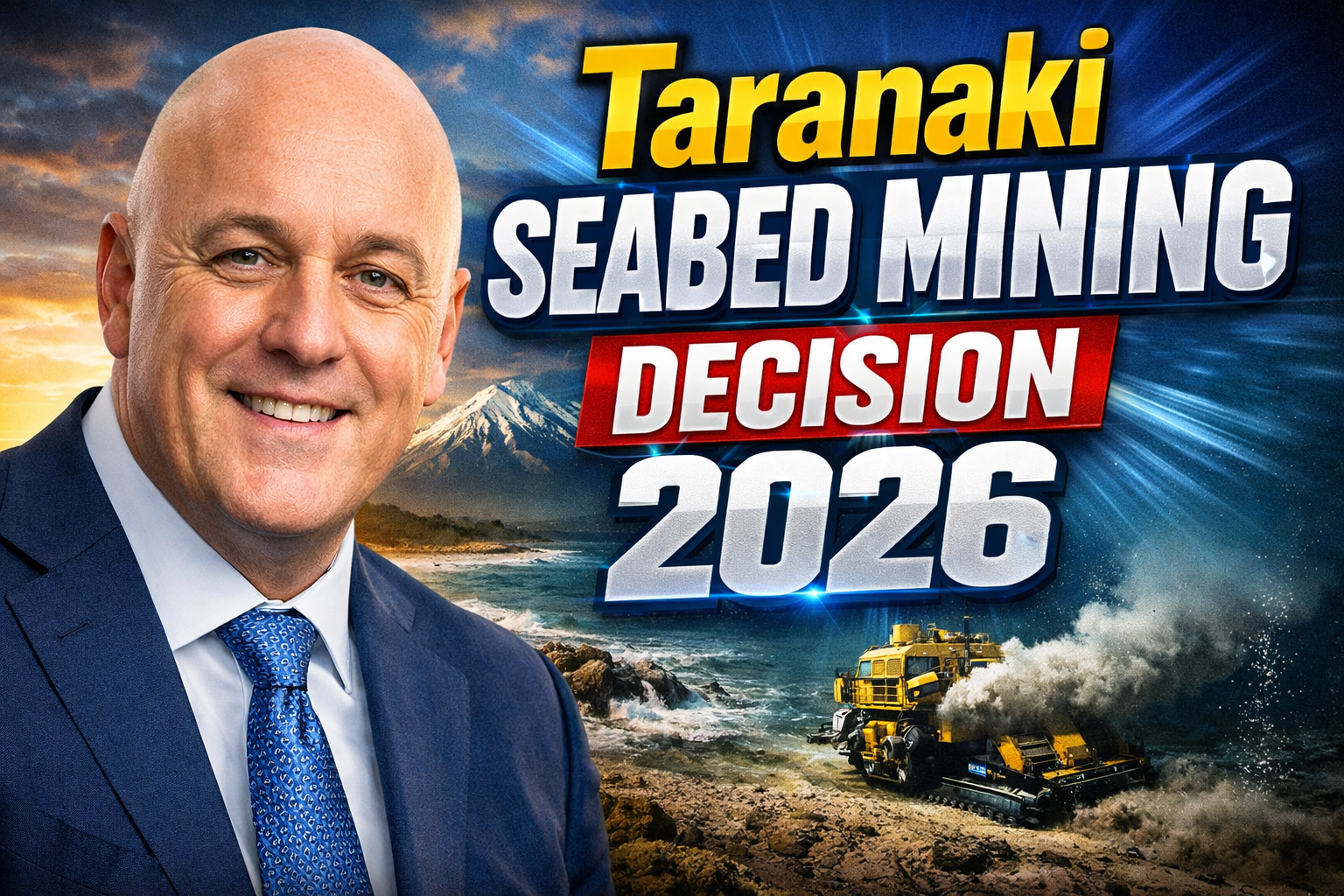
A pivotal fast-track decision has reshaped the debate over seabed mining in New Zealand’s South Taranaki Bight. Environmental advocates celebrate a major victory, while industry proponents regroup amid stalled economic promises.
The Fast-Track Framework
New Zealand’s Fast-Track Approvals Act streamlines major infrastructure and development projects, bypassing traditional lengthy consent processes. Launched to boost economic growth, it empowers expert panels to weigh benefits against risks swiftly. Seabed mining proposals like Taranaki VTM entered this system to accelerate decisions long mired in court battles.
Proponents hail it as a pragmatic tool for unlocking resources in a mineral-hungry world. Critics decry reduced public input and weakened environmental safeguards. For Trans-Tasman Resources, fast-track offered a fresh shot after years of legal defeats, placing their application before an independent panel in mid-2025.
This mechanism reflects government priorities: jobs, exports, and energy transition minerals. Yet the Taranaki case tests its balances, pitting ocean protection against industrial ambition.
Project Background and Company Goals
Trans-Tasman Resources, an Australian-led firm, has pursued vanadium-titanomagnetite extraction off Taranaki since 2013. Earlier marine consents granted in 2017 were overturned by courts in 2018 and upheld by the Supreme Court in 2024, citing inadequate ecological assessments. Undeterred, the company pivoted to fast-track, lodging a complete application by April 2025.
The project targets iron sands rich in vanadium, titanium, and iron—critical for steelmaking, batteries, and renewables. Company executives touted a world-class deposit capable of generating substantial annual revenue while creating hundreds of regional jobs. Taranaki VTM promised local spending on services, boosting an economy reliant on agriculture and energy.
Past failures stemmed from concerns over marine life in the biodiverse South Taranaki Bight. Fast-track acceptance marked a milestone, advancing to panel review despite vocal resistance from iwi, fishers, and greens.
Proposed Mining Operations
The plan involved dredging up to fifty million tonnes of seabed sands annually from depths of twenty to thirty meters. A crawler machine would vacuum material, pumping it via riser to a production vessel for magnetic separation. Valuable concentrate—around five million tonnes yearly—would ship globally, while tailings returned as sediment plumes.
Operations spanned twenty to thirty years across a vast bight area, overlapping fishing grounds and marine mammal habitats. Proponents emphasized closed-loop processing to minimize waste, with peer-reviewed studies claiming plumes dissipate harmlessly. Infrastructure included support vessels and monitoring tech for real-time environmental compliance.
Scale drew comparisons to terrestrial mega-mines, but underwater execution raised unique engineering and ecological hurdles.
| Operation Phase | Key Activities | Annual Volume Targets |
|---|---|---|
| Extraction | Seabed dredging via crawler | 50 million tonnes |
| Processing | On-vessel magnetic separation | 5 million tonnes concentrate |
| Discharge | Tailings plume redeposition | 45 million tonnes |
| Duration | Full-scale mining | 20-30 years |
Voices of Opposition
Iwi like Ngāti Ruanui and Te Atiawa led resistance, viewing the bight as a taonga under Treaty protections. Commercial fishers warned of lost livelihoods from sediment smothering shellfish beds. Environmental groups highlighted threats to endangered species: māui dolphins, pygmy blue whales, kororā penguins, and fairy prions.
Campaigns amassed thousands of signatures, framing seabed mining as irreversible ocean desecration. Greenpeace and Kiwis Against Seabed Mining mobilized globally, linking it to broader deep-sea mining perils. Local councils treaded neutrally, prioritizing influence over outright opposition.
Scientific critiques focused on plume modeling flaws and noise pollution impacts. Public fast-track submissions were curtailed, fueling perceptions of democratic deficit.
Fast-Track Panel’s Draft Decision
In early February 2026, the expert panel released a draft declining the application outright. This marked a stunning rebuke in a process designed for approvals. The panel, comprising specialists in environment, economics, and iwi matters, scrutinized evidence from hearings and submissions.
No conditions or mitigations swayed them; risks outweighed purported gains. The decision awaits finalization after applicant rebuttals, but signals strong reservations. Trans-Tasman expressed disappointment, vowing to address concerns.
This outcome contrasts other fast-tracks greenlit for housing or renewables, underscoring case-by-case rigor.
Core Reasons for Decline
Marine ecology dominated findings. Credible harm loomed for māui dolphins—the world’s rarest, with under fifty mature individuals—via noise, entanglement, and habitat loss. Penguins and prions faced similar perils from plumes blanketing food sources.
Uncertainty plagued sediment modeling: scale and persistence deemed unpredictable, potentially smothering benthic life across wide swaths. Underwater noise from operations could displace whales, disrupting migration corridors. Panelists noted insufficient baseline data and unproven restoration feasibility.
Cumulative effects with fishing and offshore wind compounded threats. Cultural impacts on iwi sustenance gathering went unmitigated. Economic upsides, while noted, failed to justify irreversible losses.
| Key Risk Factor | Affected Species | Panel Concerns |
|---|---|---|
| Sediment Plumes | Benthic organisms, fish nurseries | Extent and toxicity uncertain |
| Underwater Noise | Māui dolphins, blue whales | Behavioral disruption, injury |
| Habitat Disruption | Kororā penguins, fairy prions | Food chain collapse |
Economic Promises Versus Reality
Supporters projected three hundred direct jobs, plus indirect benefits totaling thousands. Annual economic injection neared one billion dollars, with two hundred million in local spend. Vanadium positioned New Zealand as a critical minerals player, reducing import reliance for green tech.
Yet panels questioned net benefits amid environmental costs. Job figures drew from optimistic models, ignoring boom-bust mining cycles. Regional prosperity claims overlooked fishing sector losses, estimated in millions yearly.
Global vanadium markets fluctuate wildly, undermining long-term viability. Critics argued land-based alternatives suffice without ocean risks.
What’s Next for the Project
Trans-Tasman has weeks to rebut the draft, potentially refining plans or submitting new evidence. Final decision could affirm decline, impose strict conditions, or—unlikely—approve. Appeals remain possible, though fast-track limits judicial review.
Company may pivot to smaller-scale pilots or alternative sites. Government faces pressure to refine fast-track for better marine safeguards. Iwi and greens prepare defenses against revival attempts.
Offshore wind developers eye the bight, prioritizing clean energy over mining.
Broader National Implications
This ruling reinforces New Zealand’s moana guardianship ethos, prioritizing taonga over extractivism. It challenges fast-track’s pro-development tilt, prompting law tweaks amid over one hundred amendments proposed.
Critical minerals quest persists, but seabed reluctance steers toward recycling and onshore sources. Taranaki’s economy seeks diversification sans mining, eyeing tourism and renewables.
Globally, it bolsters anti-deep-sea mining coalitions, influencing UN talks.
Pathways Forward
For industry, innovation beckons: cleaner tech or ethical sourcing. Regulators must balance growth with sustainability, enhancing fast-track transparency.
Communities demand veto powers for iwi and locals. Victory galvanizes ocean advocates, but vigilance endures against regulatory slippage.
New Zealand stands at a crossroads: harnessing resources responsibly or safeguarding seas for generations. The bight’s fate underscores that true prosperity honors ecological limits.

Vineeth T.C. is a news writer and digital content contributor at PageEuropean, covering key developments across New Zealand and Australia. His work focuses on delivering clear, fact-based reporting on current affairs, public policy, business updates, and regional news that matter to readers.