
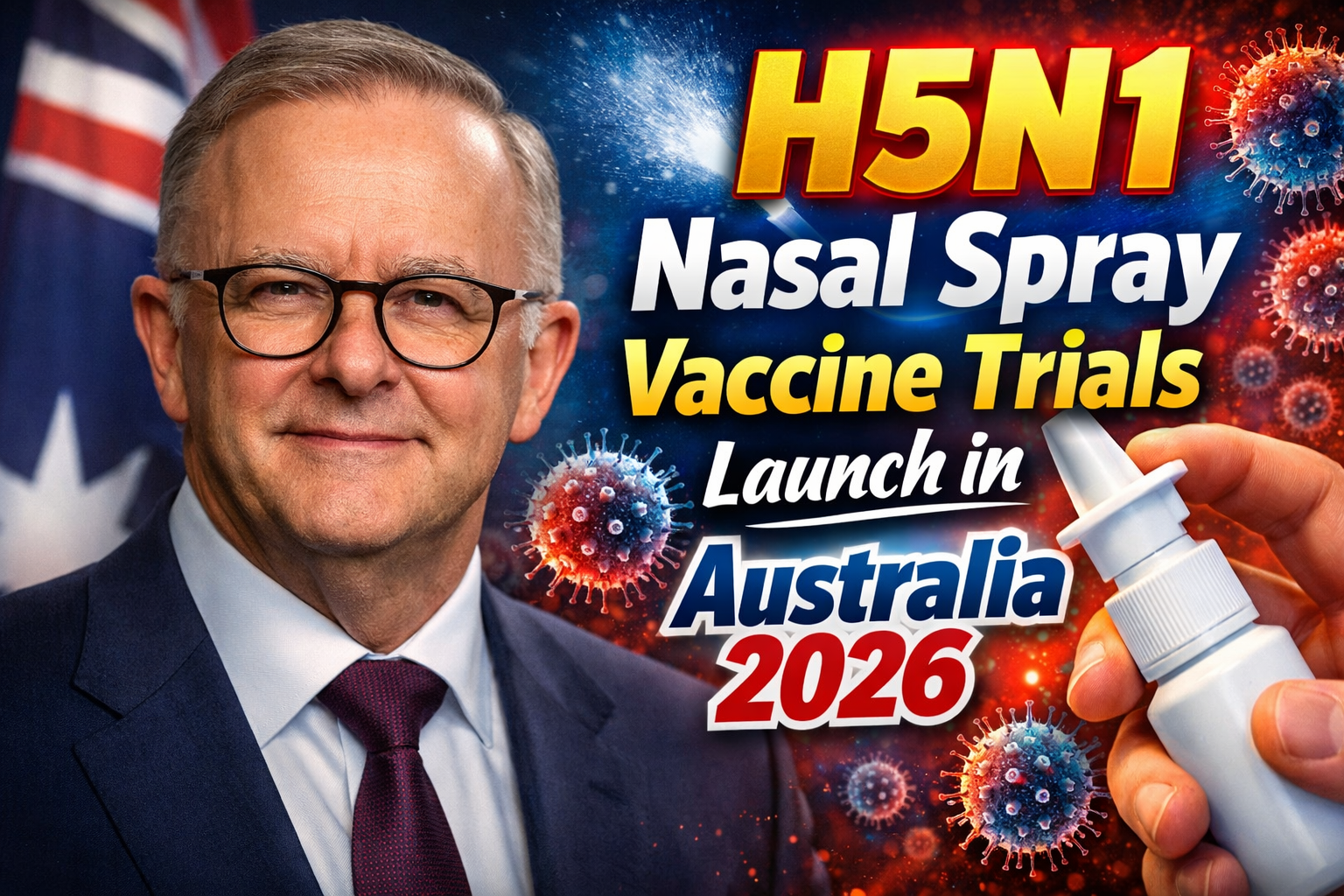
Australian researchers and health authorities have kicked off human clinical trials for an innovative nasal spray vaccine targeting the H5N1 bird flu virus, bolstering national defenses against potential pandemics. This development arrives amid escalating global concerns over H5N1’s spread in mammals, positioning Australia at the forefront of mucosal vaccine technology.

Background on H5N1 Threat
H5N1 avian influenza, known as bird flu, has evolved from poultry outbreaks to infecting wild birds, dairy cattle, and marine mammals worldwide. First detected in geese in China two decades ago, the virus now boasts over one thousand human cases, boasting a fatality rate exceeding half in confirmed infections.
Recent surges include mass die-offs in Antarctic penguins and seals, alongside U.S. dairy herd outbreaks spilling to one hundred sixty-five human cases, mostly mild among farm workers. Australia’s first incursion hit poultry flocks in 2024, prompting swift culls and biosecurity ramps.
Experts warn of mammalian adaptation risks, with genetic markers for airborne transmission appearing in ferrets—prime pandemic precursors. Without vaccines, containment relies on culling and surveillance, straining resources as climate shifts expand bird migration vectors.
Australia’s Pandemic Preparedness Push
The government has poured over one hundred seventeen million dollars into H5N1 defenses since 2024, stocking National Medical Stockpile with pandemic flu shots and antivirals. Investments cover wild bird monitoring, native species vaccines, and One Health coordination linking human, animal, and environmental health.
Interim Australian Centre for Disease Control leads updates to guidelines and response plans, while agriculture bolsters point-of-care testing and industry groups. Pre-emptive social research gauges vaccine uptake amid post-COVID trust dips.
This framework echoes COVID lessons, emphasizing rapid vaccine platforms. Nasal sprays emerge as game-changers, mimicking infection sites for superior mucosal immunity.
The Nasal Spray Vaccine Innovation
Unlike injections sparking systemic antibodies, nasal vaccines deploy antigens directly to nasal mucosa, igniting IgA barriers blocking viruses at entry. Washington University trials in rodents showed near-complete H5N1 protection, outpacing shots even against pre-existing flu immunity.
University of Maryland’s NanoVax H5 trial primed robust responses, tolerating well with mucosal and systemic defenses. HKUMed’s flu vector platform offers rapid strain-matching, mirroring COVID nasal successes.
Australia’s trial leverages adenovirus delivery—safe, non-replicating carriers inserting H5N1 hemagglutinin genes. Adjuvants amplify low doses, conserving stocks for outbreaks.
Trial Details and Timeline
Launched in early 2026 at sites in Melbourne and Sydney, phase one enrolls healthy adults aged eighteen to fifty, testing safety, dosing, and immunogenicity. Participants receive one or two sprays, followed six months for side effects and antibody levels.
Primary endpoints measure local reactions like runny noses, alongside systemic fever checks. Secondary aims probe cross-protection against H5 variants and T-cell responses.
Regulatory nods from TGA fast-track via pandemic provisions, eyeing phase two efficacy in exposed workers by late 2026. Success paves interim approvals, scaling production via partnerships like CSL Seqirus.
Advantages Over Traditional Vaccines
Nasal delivery disrupts transmission chains by shielding airways, crucial for respiratory threats. Rodent studies logged zero lung infections post-challenge, versus partial shot protection.
Shelf-stability suits stockpiles—no cold chains needed—while needle-free ease boosts compliance, vital in panics. Broad immunity counters antigenic drift, addressing injection vaccines’ prior immunity hurdles.
Scalability shines: platforms tweak inserts in weeks, versus months for eggs. Cost-effectiveness aids global equity, aligning with Australia’s aid commitments.
Global Landscape and Comparisons
Over eighty H5N1 human cases struck 2024-2025 across U.S., Cambodia, and Vietnam, spurring parallel efforts. U.S. contracts billions for mRNA and egg-based shots, but nasals lag despite promise.
Europe’s H5N8 trials show humoral responses, while HKUMed advances to humans. Australia’s joins, sharing data via WHO networks.
Comparisons favor nasals: COVID analogs halved infections in trials, hinting superior herd effects.
| Vaccine Type | Protection Site | Speed to Deploy | Stockpile Fit | Compliance Edge |
|---|---|---|---|---|
| Injectable | Systemic | Months (egg) | Cold chain | Needles deter |
| Nasal Spray | Mucosal + Systemic | Weeks (vector) | Shelf-stable | Needle-free |
Challenges and Safety Concerns
Trials flag mild nasals like sneezing, rarer than COVID counterparts. Rare anaphylaxis risks prompt monitoring.
Efficacy against evolving strains demands boosters; prior flu immunity blunted some, though adjuvants mitigate. Regulatory hurdles test broad approvals sans large trials.
Ethical nods prioritize at-risk groups—farmers, vets—post-safety. Public hesitancy lingers from mRNA skepticism, demanding transparent comms.
Government and Expert Statements
Health Minister Mark Butler hailed the launch as visionary preparedness, securing Australia’s leadership. Chief Medical Officer Professor Paul Kelly stressed mucosal edge for airborne threats.
CSL’s Paul Perreault pledged manufacturing surge, while WHO praised vector tech. Experts like Professor Raina MacIntyre urge integration with surveillance for early deployment.
Community and Industry Impact
Poultry sectors welcome reduced culls, with vaccination eyed for flocks. Dairy monitors mammal jumps, while tourism frets Antarctic links.
Communities near farms gain reassurance, though uptake hinges on trust-building. Jobs bloom in biotech hubs.
Broader Pandemic Preparedness Lessons
COVID exposed stockpile gaps; H5N1 drills One Health, fusing vet-human efforts. Investments fund PPE, comms, and equity for remote Indigenous groups.
Social science probes hesitancy, ensuring mandates stick. Global pacts share strains swiftly, averting delays.
Future Prospects and Rollout Scenarios
Positive phase one greenlights expansion to high-risk cohorts by 2027, with approvals if outbreaks surge. Universal flu platforms could annualize nasals.
Worst-case: pandemic sparks emergency use, vaccinating billions. Optimistic: routine for exposed workers, curbing zoonoses.
Implications for Global Health
Australia’s trials catalyze equity, exporting tech to vulnerable nations. WHO eyes nasals for annual flu shots, revolutionizing prevention.
Sustained funding cements leadership, blending innovation with vigilance.
This launch signals proactive stance—turning threat to triumph through science.

Vineeth T.C. is a news writer and digital content contributor at PageEuropean, covering key developments across New Zealand and Australia. His work focuses on delivering clear, fact-based reporting on current affairs, public policy, business updates, and regional news that matter to readers.