
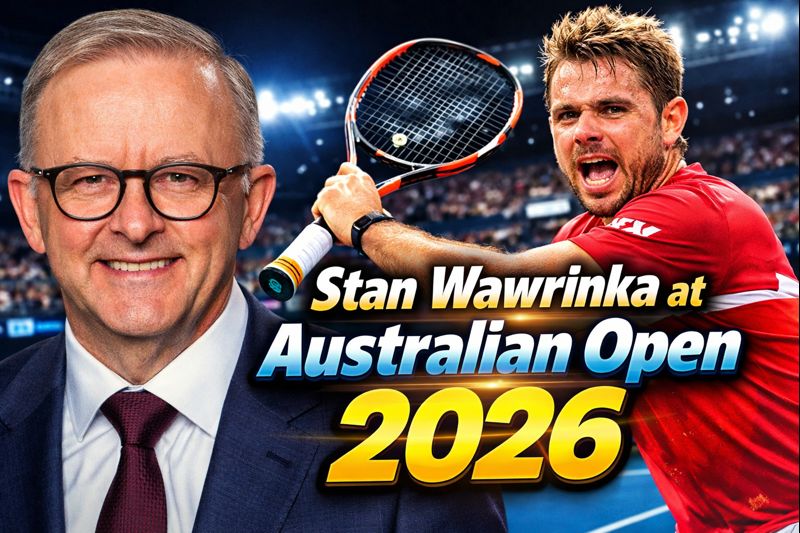
Stan Wawrinka, at 40 years old, continues to defy the relentless march of time in professional tennis, etching his name deeper into Australian Open lore during the 2026 edition. The Swiss veteran, in what he has declared his final season on the tour, advanced to the third round with a grueling five-set triumph, becoming the oldest man to reach that stage in Melbourne since Ken Rosewall at age 44 in 1978. This remarkable achievement underscores a career defined by resilience, iconic upsets, and three Grand Slam titles, offering a masterclass in longevity amid a sport increasingly dominated by youth.
Wawrinka’s Path to Third Round Glory
Wawrinka received a wildcard into the 2026 Australian Open, marking his return to Melbourne Park as a sentimental farewell. His first-round clash against Laslo Djere set the tone for defiance. Trailing by a set, the 40-year-old rallied with vintage tenacity, securing a four-set victory through sheer willpower and tactical slices. He turned defense into offense, winning longer rallies and dominating on serve to snap a major drought dating back years.
The second round elevated the drama against French qualifier Arthur Gea, a 21-year-old nearly half his age. Over four hours and 33 minutes on Kia Arena, Wawrinka endured a rollercoaster: dropping the first and third sets before clawing back with breaks in the fourth and a commanding tiebreak in the fifth. This marathon, the longest match of the tournament thus far, showcased his 58th five-set encounter in the Open Era—the most of any player. Next up looms a third-round test against a top-10 seed, where Wawrinka aims to prolong his stay.
Throughout, Melbourne’s crowds have embraced him, waving Swiss flags and chanting his name. Wawrinka has leaned on their energy, admitting post-match exhaustion but radiating joy. His physical preparation—targeted rehab from knee surgeries and selective scheduling—has preserved the one-handed backhand that remains a weapon of beauty and power.
Shattering Age Barriers: The Record Explained
Wawrinka’s third-round berth snaps a 48-year drought for players aged 40 or older at this stage. Ken Rosewall holds the benchmark, reaching the semis in 1978 at 44, but Wawrinka’s feat resonates in the modern era of athletic specialization. No man over 39 had advanced this far since Jimmy Connors in 1992, and Wawrinka’s five-set survival against youth evokes Rosewall’s own comeback spirit.
This milestone crowns a career of late-blooming peaks. Wawrinka claimed his first ATP title at 28, but majors arrived in his 30s: Australian Open at 29, Roland Garros at 30, US Open at 31. Entering 2026 ranked outside the top 100, his wildcard gamble paid off, blending nostalgia with competitiveness. Factors fueling this include refined fitness regimes, mental coaching, and a farewell tour’s emotional boost—much like Federer’s poignant 2022 exit.
Critics once pegged his age as a liability, yet Wawrinka flips the script. His game adapts: more slices, drop shots, and net approaches conserve energy while exploiting opponents’ impatience. This record not only personalizes his legacy but inspires aging athletes across sports, proving peak performance need not fade with decades.
| Age Record Comparison | Player | Age | Year | Achievement |
|---|---|---|---|---|
| Oldest to Third Round | Ken Rosewall | 44 | 1978 | Semifinals |
| Current Feat | Stan Wawrinka | 40 | 2026 | Third Round |
| Previous Modern | Jimmy Connors | 40 | 1992 | Fourth Round |
| Wawrinka Peaks | Stan Wawrinka | 29-31 | 2014-16 | Three Slams |
This table contextualizes Wawrinka’s endurance against historical giants.
Grand Slam Journey: From Underdog to Champion
Wawrinka’s Grand Slam odyssey began modestly. Debuting at Wimbledon in 2005, he built steadily, reaching his first quarterfinal at the 2008 US Open. Olympic gold in Beijing that year, partnering Roger Federer, propelled him into the elite, but majors eluded him until a golden 2014.
The Australian Open 2014 final remains etched in history. As underdog against Rafael Nadal, Wawrinka unleashed fury, winning in four sets with blistering backhands and unyielding baseline fire. This victory denied Nadal a career Grand Slam double and marked Wawrinka’s first major at 29, after years in the Big Three’s shadow.
Momentum surged to Roland Garros 2015. Top seed Djokovic awaited in the final, but Wawrinka peaked, triumphing in four sets amid Parisian clay mastery. His topspin backhand dismantled defenses, cementing status as a multi-surface threat.
US Open 2016 capped the trio. Djokovic faltered early; Wawrinka outlasted foes in epic semifinals against Monfils, then crushed Nishikori in the final. Three Slams across three years positioned him at world number three, a testament to selective brilliance over consistency.
Post-peak injuries struck: knee surgeries sidelined him for years, with rankings plummeting. Returns yielded flashes—2024 Wimbledon third round at 39—but 2026 Melbourne revives the narrative. Across 90 majors, his win rate hovers near elite levels, with deep runs fueling underdog lore.
Signature Shots and Playing Style Evolution
Wawrinka’s one-handed backhand stands as tennis’s most poetic weapon. Down-the-line lasers, often 100 mph with slice or topspin, dismantle passers. Against Gea, one such winner ignited the fourth-set comeback, drawing Federer-esque roars.
His all-court game blends aggression with guile. Forehand drives rallies; serve, though less explosive now, targets weaknesses. Evolution shows maturity: early career power games yielded to variety—volleys up 30 percent in recent years, drops to counter baseline bashers.
Mentally, he’s transformed. Early volatility gave way to steel, evident in five-set tiebreaks. Coaches credit visualization and yoga for sustaining focus. At 40, efficiency trumps endurance, conserving legs for clutch moments.
Rivalries and Big-Match Aura
No profile omits Wawrinka’s Big Three conquests. Against Federer, national pride mixed with deference—losses outnumbered wins, but mutual respect shone. Djokovic fell thrice in finals, with Wawrinka thriving as spoiler. Nadal duels peaked at 2014 Melbourne, though Nadal dominated later.
These rivalries defined eras. Wawrinka’s 13-21 record versus the trio belies impact: he alone halted Slam streaks, proving parity possible. Peers like Tsitsipas hail his aura—”Stan War” precedes him on court.
Third-Round Preview and Farewell Stakes
Facing Taylor Fritz or a qualifier next, Wawrinka eyes history: fourth round would extend records. Fritz’s big serve tests stamina, but Wawrinka’s experience edges longer exchanges. A win propels a potential top-seed clash, dream fuel for his swan song.
This farewell tour mirrors peers’—Federer, Nadal, Djokovic—but Wawrinka’s unscripted grit stands apart. Retirement looms post-season, with Davis Cup possibly last hurrah. Fans cherish every point, knowing Melbourne magic may repeat 2014.
Legacy Beyond Slams: Influence and Inspiration
Wawrinka’s impact transcends stats: 16 Masters titles, Olympic gold, Laver Cup heroics. Off-court, philanthropy via his foundation aids Swiss youth tennis, echoing roots from a modest Lausanne upbringing.
He inspires late bloomers—players like Opelka credit his resilience. In a Next Gen era of Alcaraz and Sinner, Wawrinka bridges eras, reminding that heart outlasts hype. Gender norms in tennis fade against his artistry; juniors mimic the backhand religiously.
Physically, his journey—from 2017 surgeries to 2026 miracles—guides recovery protocols. Mentorship roles beckon post-retirement, perhaps commentary or coaching.
Tournament Context and Cultural Echoes
Australian Open 2026 buzzes with narratives: Sinner defends, Alcaraz chases first Melbourne crown. Wawrinka’s run steals headlines, boosting attendance amid record 1 million visitors. Melbourne’s trams hum with “Stan the Man” chants.
Globally, his story resonates amid aging icons’ exits. Swiss media hails a “final roar,” while tennis podcasts dissect longevity secrets. As third round dawns January 24, Wawrinka embodies tennis’s timeless allure: age no barrier to brilliance.
In sum, Wawrinka’s 2026 exploits reaffirm a legacy of improbable triumphs. From 2014 champion to 40-year-old record-setter, he proves Grand Slams bow to warriors. Melbourne, you’ve been warned—this farewell burns bright.

Vineeth T.C. is a news writer and digital content contributor at PageEuropean, covering key developments across New Zealand and Australia. His work focuses on delivering clear, fact-based reporting on current affairs, public policy, business updates, and regional news that matter to readers.