
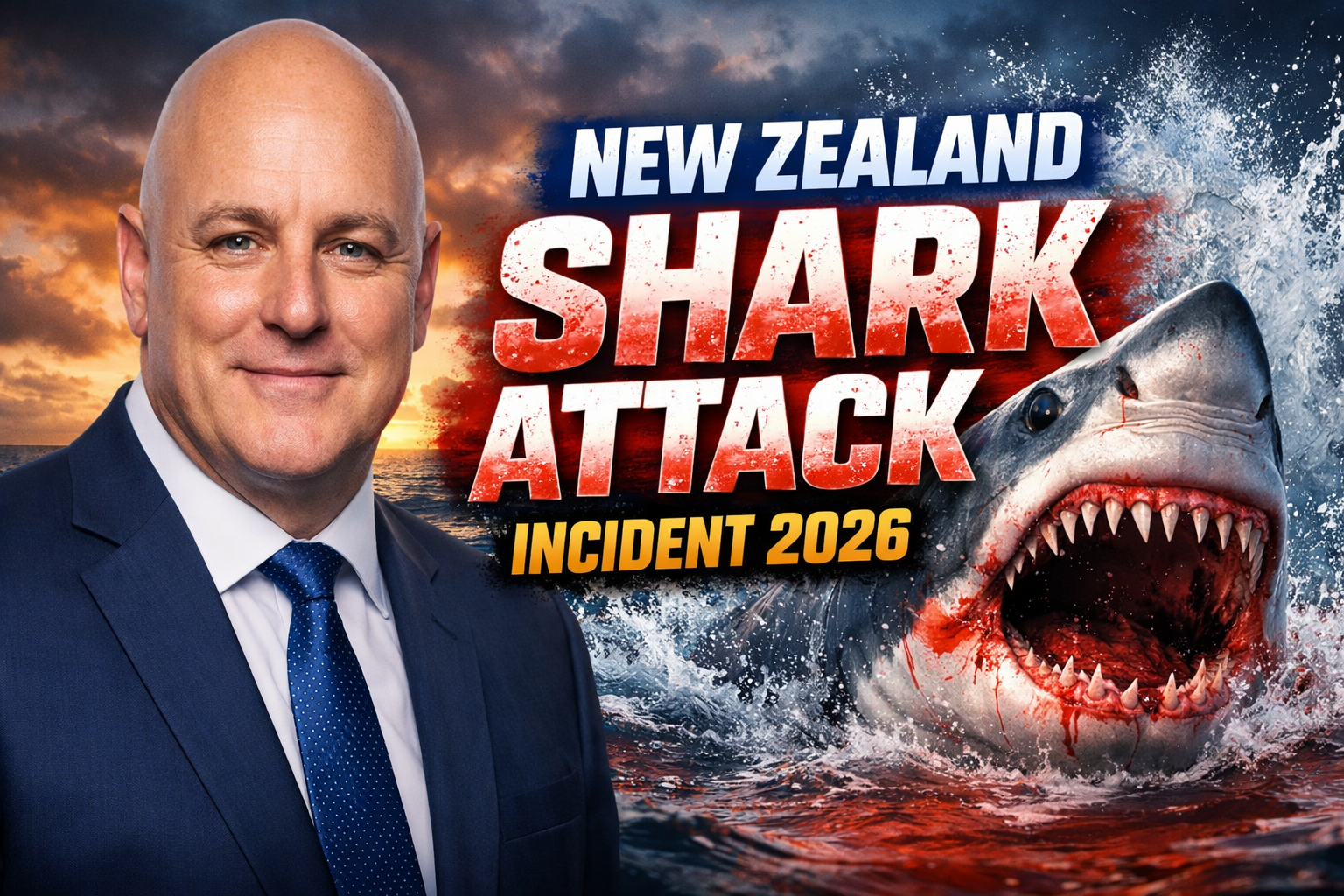
A surfer suffered severe injuries in a rare shark attack off the coast of New Zealand’s North Island on January 20, 2026, prompting swift action from authorities and heightened beach safety measures. The incident near Mount Maunganui involved a large great white shark, marking one of the most serious encounters in recent years. Officials provided a positive update on the victim’s condition, noting steady recovery amid ongoing investigations into local shark activity.

Incident Details
The attack occurred around 7:45 AM near Papamoa Beach, east of Tauranga in the Bay of Plenty region, during a routine dawn surf session. The victim, a local 42-year-old male surfer known in the community as a veteran wave rider, sustained deep lacerations to his lower leg and torso after the shark struck from below. Witnesses on the shore reported hearing screams and spotting a large dorsal fin circling before the surfer paddled frantically to safety.
Lifeguards and nearby fishermen rushed to assist, applying tourniquets to stem bleeding until St John Ambulance arrived. The shark, estimated at four to five meters long based on bite marks and eyewitness accounts, released the victim after a brief struggle. Rescue helicopters airlifted him to Tauranga Hospital, where surgeons repaired extensive tissue damage over six hours of surgery.
Victim Profile and Initial Response
The surfer, a father of two and longtime Papamoa resident, remains unnamed at family request but goes by “Kev” among mates. Known for mentoring young boarders, he ignored early morning swell warnings tied to recent flooding. Friends pulled him from his board onto a rescue ski, stabilizing him until paramedics took over.
Bay of Plenty Regional Council shark response protocols activated immediately: drones deployed for spotting, personal locator beacons distributed to surfers, and acoustic deterrents tested offshore. Surf Life Saving New Zealand issued a 24-hour closure for Papamoa and adjacent beaches, patrolled by jet skis and spotter planes.
Authorities’ Latest Update
On January 22, police and the Department of Conservation (DOC) held a joint press conference at Tauranga Police Station. Superintendent Bruce Holms reported the victim “out of danger,” upgraded from critical to stable after two days in intensive care. “He’s responding well to treatment, talking with family, and even joking about getting back on the board,” Holms stated, crediting rapid intervention.
DOC marine scientist Dr. Sarah Jennings confirmed great white shark involvement via bite radius analysis—wide, serrated marks typical of Carcharodon carcharias. No fatalities ensued, a relief after global spate of attacks. Monitoring continues with SMART drum lines baited non-lethally to tag and relocate threats.
| Medical Update Timeline | Status | Key Interventions |
|---|---|---|
| Jan 20, 7:45 AM | Critical | Tourniquet, airlift |
| Jan 20 Evening | Serious | Surgery, blood transfusion |
| Jan 21 | Stable | Ward transfer |
| Jan 22 | Recovering | Physiotherapy begins |
Shark Behavior and Environmental Factors
Experts link the attack to unusual patterns: heavy January rains from the North Island flooding stirred murky waters, drawing sharks closer to shore via runoff fish schools. Warmer currents, up 1.5 degrees Celsius this summer, boosted great white migrations from Stewart Island northward.
Bay of Plenty averages one incident per decade, far below Australia’s east coast frenzy. DOC tags show juveniles foraging reefs, adults hunting seals nearby. Climate shifts extend ranges, overlapping human activity peaks during holidays.
Local Community Impact
Papamoa Beach buzzes with support: fundraisers on GoFundMe topped 50,000 NZD for medical bills, wetsuit drives for locals, and barbecues honoring rescuers. Surf clubs ramped patrols, canceling junior sessions. Iwi Ngāi Te Whānau a Apanui performed karakia blessings at dawn, reaffirming kaitiaki guardianship over moana.
Tourism dips temporarily—Mount Maunganui rentals report 20 percent cancellations—but operators pivot to guided swims with electric deterrents. “Kiwis respect the ocean; this unites us,” said local mayor Kelvin Cloutier.
Historical Shark Attacks in New Zealand
New Zealand logs about three attacks yearly, mostly non-fatal, with great whites claiming 15 lives since records began in 1905. Recent years saw clusters: a 2024 fatal off the West Coast, 2023 incidents at Piha, and 2021 Tāmaki Strait bronze whaler mauling.
| Notable NZ Shark Attacks | Year | Location | Outcome |
|---|---|---|---|
| Current Papamoa | 2026 | Bay of Plenty | Serious injury |
| West Coast Fatal | 2024 | Westport | Deceased |
| Piha Surfer | 2023 | Auckland | Leg amputation |
| Tāmaki Strait | 2021 | Coromandel | Hospitalized |
| Chatham Islands | 2018 | Rekohu | Fatal |
Great whites dominate North Island, bronze whalers South. Low density keeps risks minimal—odds lower than car crashes.
Safety Measures and Prevention Strategies
Authorities rolled out tiered responses: immediate beach bans, drone surveillance covering 5km radii, and apps alerting via Bluetooth beacons. Shark-repellent wetsuits, magnetic bands, and board-mounted devices gain traction among pros.
Surf Life Saving pushes “punch the nose, gouge eyes” survival tips, backed by simulations. Education campaigns target tourists: no dusk swims, avoid murky zones, surf in groups. DOC expands tagging, aiming 100 sharks monitored by 2027.
| Prevention Tools | Effectiveness | Adoption Rate |
|---|---|---|
| Drones | High | 80% clubs |
| Acoustic Deterrents | Moderate | 40% beaches |
| Personal Beacons | High | Growing |
| Electric Wetsuits | Promising | 20% surfers |
Expert Analysis and Research Insights
University of Auckland marine biologist Dr. Riley McCabe attributes spikes to prey abundance: kahawai schools post-floods mimic wounded prey via splashing. Global data shows attacks cluster seasonally, not populations rising.
No culling debates here—New Zealand favors non-lethal tech, contrasting Australian nets. Long-term, AI underwater cameras predict hotspots, trialed at Raglan.
Broader Oceanic Health Context
Flood debris carried pollutants, stressing seal colonies and fish stocks, indirectly funneling sharks shoreward. Overfishing depletes competitors, letting apex predators thrive. Conservation successes rebound great whites from endangered lists, balancing ecology with caution.
Public fascination mixes fear and respect: documentaries screen at local cinemas, schools teach ocean literacy.
Victim Support and Recovery Roadmap
Tauranga Hospital’s specialist team coordinates rehab: wound care, prosthetics if needed, psychological counseling. Surfing NZ pledges adaptive boards, drawing from past amputee comebacks like Piha’s legends.
Family statements urge calm: “Ocean’s our backyard; respect keeps us safe.” Community vigils light beaches, turning tragedy to solidarity.
Government and Policy Responses
Minister of Conservation Tama Potaka visited Tauranga, boosting funding for shark tech by 2 million NZD. Regional councils integrate alerts into flood recovery plans. Prime Minister Christopher Luxon echoed resilience: “Kiwis conquer waves and worries.”
International aid offers from Australia, fresh off their shark crisis, include shared drone feeds.
Future Outlook for Beachgoers
Beaches reopen phased: Papamoa greenlit January 23 with patrols. Surfers adapt routines, eyeing forecasts. Incidents sharpen vigilance without deterring passion—NZ’s 100,000 wave riders persist.
Lessons embed: tech aids nature’s power. As “Kev” heals, his story inspires protocols nationwide.
Community Resilience and Lessons Learned
From iwi lore to modern apps, New Zealand harmonizes with seas. This attack tests systems, proving them robust. Fundraising milestones fund scholarships, ensuring young grommets surf safer.
Gratitude flows to everyday heroes—fishermen, lifeguards—embodying aroha. Waves crash on, carrying forward cautions and courage.

Vineeth T.C. is a news writer and digital content contributor at PageEuropean, covering key developments across New Zealand and Australia. His work focuses on delivering clear, fact-based reporting on current affairs, public policy, business updates, and regional news that matter to readers.