
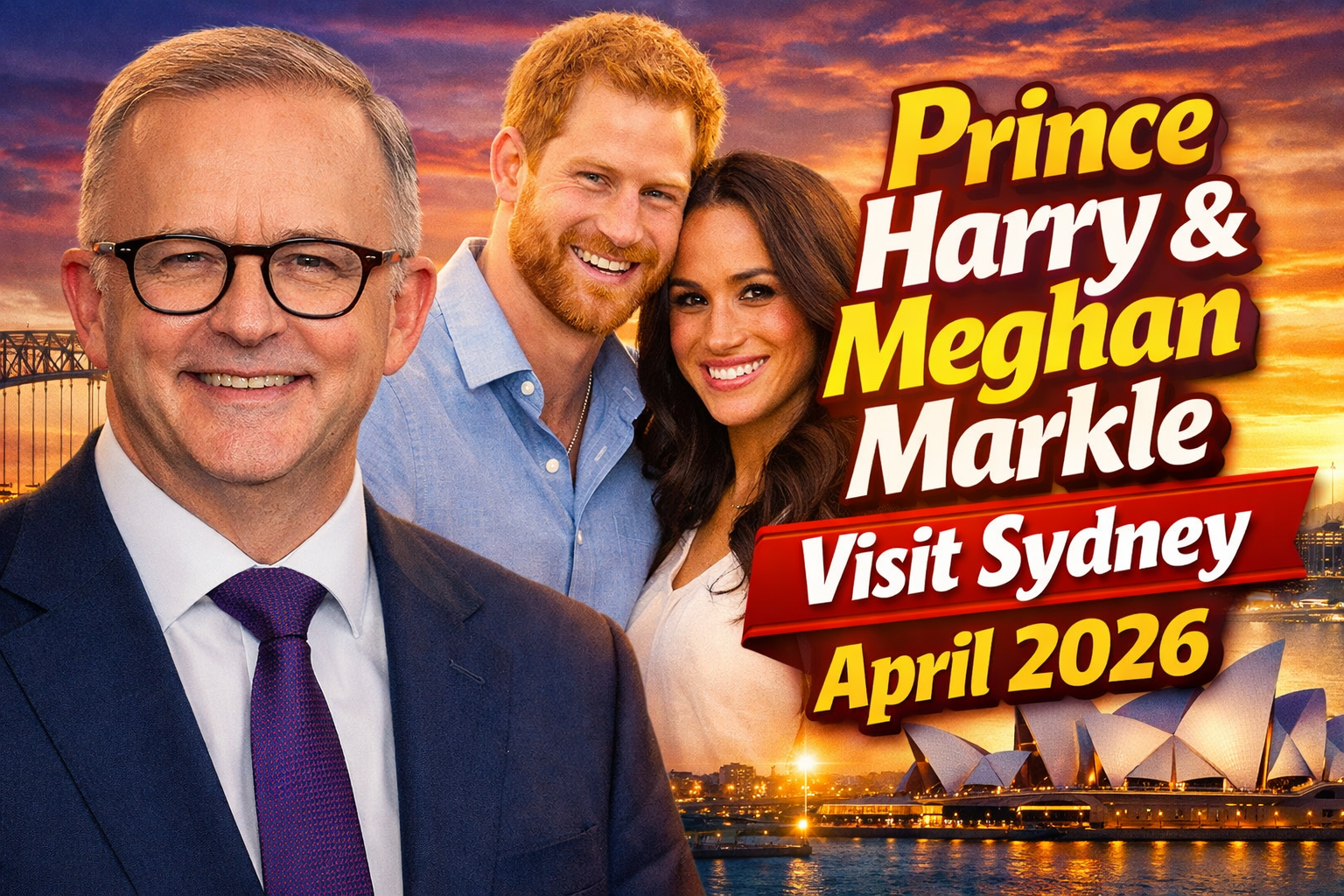
Mid‑April 2026 has given Sydney one of its most talked‑about international visits in years. Prince Harry and Meghan Markle, the Duke and Duchess of Sussex, returned to Australia for the first time since their 2018 royal tour, wrapping up a multi‑city trip in Sydney with a blend of public appearances, private engagements, and a high‑profile spotlight on Invictus Australia and the wider Invictus Movement. Their Sydney stop, rich with emotional moments and policy‑linked symbolism, turned the spotlight on mental health, veteran wellbeing, and the power of sport as a tool for recovery and community building.
The Sydney leg of a closely watched tour
The Sussexes touched down in Sydney on April 17, the final leg of a four‑day visit that began in Melbourne and included Canberra in between. This was also their first return to Australia since stepping back from active royal duties, making the visit feel both personal and political. Official statements from the couple’s office framed the trip as a mixture of private, business, and philanthropic activities, with a strong emphasis on mental health, women’s resilience, and support for veterans and their families.
In Sydney, the schedule balanced carefully curated public moments with smaller, more intimate gatherings. The city’s coastal backdrop—Sydney Harbour, the Opera House, and the Royal Botanic Garden—provided a cinematic setting for both nostalgia and new messaging. The Sussexes recreated some of their 2018 iconic moments, including a sailboat outing on the harbour, but the underlying focus was less about royal spectacle and more about cause‑driven visibility, especially around the Invictus Australia initiatives.
Invictus Australia: spotlight on veterans and sport
The centerpiece of the Sydney segment was the couple’s involvement with Invictus Australia and the broader Invictus Movement. Prince Harry founded the Invictus Games in 2015 as a multi‑sport event for wounded, injured, and sick service personnel and veterans, using adaptive sport as a platform for rehabilitation, camaraderie, and public awareness. Since then, the movement has expanded into yearly and regional programs, and Australia has become one of its most engaged partner nations.
During their visit, the Duke and Duchess of Sussex attended an Invictus Australia event in Sydney that highlighted the work being done with Australian veterans, particularly those dealing with physical injuries, post‑deployment trauma, and mental‑health challenges. The event showcased adaptive sports demonstrations, including wheelchair rugby, para‑cycling, and track and field trials, with current and former defence personnel demonstrating skill, determination, and the kind of grit the Invictus ethos is built on.
The Sydney program also included a conversation‑style discussion with veterans and their families, moderated by a senior Invictus Australia representative. Prince Harry spoke candidly about the psychological toll of deployment, the importance of acknowledging invisible wounds, and the role of sport in building structure, purpose, and peer support. Meghan lent her voice to the social‑mental health dimension, emphasizing how isolation, stigma, and economic pressure can compound trauma, and how community programs—backed by charities and government—can help families rebuild together.
Launching the Invictus Australia Sports Festival
One of the most concrete outcomes of the Sydney‑linked events was the broader rollout of the Invictus Australia Sports Festival, a new international adaptive sports event scheduled for October 2026 in Perth. Though the formal announcement was made in Canberra, the Sydney Invictus Australia gathering helped local organisers and potential participants understand the festival’s structure and significance.
The Invictus Australia Sports Festival, delivered in partnership with the Invictus Games Foundation and presented by the Australian company ATCO, is designed as a standalone competitive and community event attached to the larger Invictus ecosystem. It will bring together wounded, injured, and sick service members and veterans from across Australia and internationally, offering them opportunities to compete, train, and connect in a professional‑level, multi‑sport environment. The Sydney hub of the program has been crucial for recruitment, awareness, and fundraising, and the presence of the Sussexes has amplified its profile at a national level.
Prince Harry used the Sydney appearances to stress that the festival is not just a one‑off spectacle, but part of a long‑term “movement” to normalise conversations about mental health and service‑related trauma. He pointed out that many veterans feel discomfort revealing their struggles, and that events like these help create a culture where talking about anxiety, depression, or PTSD is as routine as discussing physical injuries.
Behind the scenes: what the event offered to veterans
For the veterans and families who attended the Sydney Invictus‑linked programs, the day was more than a celebrity appearance; it was a rare chance for validation, visibility, and access to resources. The venue, set up in a large indoor sports complex with views of the Sydney skyline, allowed for both competition and casual interaction. Adaptive‑sport clinics gave newcomers the chance to try new disciplines, while veterans already involved in programs could connect with coaches, sponsors, and psychologists embedded within Invictus Australia’s network.
Community‑care partners, including mental‑health organisations, family‑support groups, and Indigenous‑veteran services, had information stalls and on‑site counsellors. The event structure encouraged informal chats as much as formal workshops, reinforcing the idea that healing happens not only in clinical settings but in locker rooms, on fields, and in shared meals. The Sussexes’ presence turbo‑charged this sense of recognition, with many participants describing the experience as “a reminder that we’re not forgotten.”
Team‑style and social‑sport components were also woven into the Sydney programming. Mixed‑ability relay races, friendly wheelchair basketball matches, and group workouts allowed family members to participate alongside injured service personnel, reinforcing the message that recovery is a collective effort. Volunteers, many of them former athletes or ex‑military members themselves, formed the backbone of the event, underscoring the organic, community‑grown nature of the Invictus movement in Australia.
Public and media moments in Sydney
While the core focus remained on veterans and mental health, the Sydney visit naturally carried a strong media and public‑relations dimension. The city’s residents lined city streets and Harbour foreshores for glimpses of the royal couple, reviving the kind of public enthusiasm that had greeted their 2018 tour. The couple’s return to the Opera House surrounds, the harbour sail, and the beachfront walk in Coogee were all visually striking moments that played well on social media and news platforms.
Meghan’s solo community engagement in Sydney, while not formally branded as Invictus‑related, complemented the broader narrative of resilience and connection. She participated in a women‑focused lifestyle retreat linked to the “Her Best Life” podcast community, delivering a keynote conversation on self‑care, mental boundaries, and community building. The retreat, hosted at the InterContinental Coogee Beach, blended luxury, wellness, and feminist‑adjacent messaging, offering a softer, more personal counterpoint to the more somber tone of the Invictus programs.
Together, these two strands—public, soft‑lifestyle appearances and sharply focused veteran‑support events—created a multidimensional image of the Sussexes’ time in Sydney. The optics mattered: they were seen interacting with veterans in high‑performance sportswear, sharing hugs and handshakes, but also engaging with everyday Australians in more casual, lifestyle‑oriented settings. This duality helps sustain their broader brand as “cause‑driven royals,” even as they navigate the complex post‑royal‑duties identity.
The broader implications for Australian veterans and mental health
The 2026 Sydney visit did more than generate headlines; it helped cement Invictus Australia’s standing within the national veteran‑support architecture. The federal government, including the Minister for Veterans’ Affairs, has repeatedly used the Sydney‑linked events to underscore bipartisan support for mental‑health programs and adaptive‑sport funding. The announcement of the Invictus Australia Sports Festival in Perth has also opened up fresh conversations about how to integrate sports therapy into mainstream veteran‑care pathways, such as those coordinated by the Department of Veterans’ Affairs and Defence.
For ordinary Australians, the Sydney Invictus‑focused events served as a reminder that the cost of military service does not end with the return from deployment. The gathering of amputees, wheelchair athletes, and veterans with visible scars offered a vivid, human illustration of the realities often glossed over in politics and media. At the same time, the messages of resilience, teamwork, and the “re‑cycling” of trauma into achievement encouraged a more nuanced public discourse about mental health—one that is less focused on stigma and more on shared responsibility.
How the visit fits into the Sussexes’ evolving public role
Prince Harry and Meghan Markle’s Sydney stop in April 2026 marked a new chapter in their public life. No longer constrained by the rigid protocols of the Royal Family, they had the flexibility to shape a visit that mixed personal nostalgia, media‑savvy storytelling, and concrete philanthropic outcomes. The focus on Invictus Australia and the veterinary‑veteran support networks in Sydney highlighted their continued commitment to the military‑community space, even as they pursued broader commercial and media ventures.
The choice of Sydney as the final stop suggested a strategic nod to the city’s soft‑power appeal—it is one of Australia’s global showpieces—and its symbolic value for the Sussexes, who first visited together in 2018. The blend of adaptive‑sport events, public walks, and private conversations threaded a narrative of continuity: the same core concerns about mental health, service, and community, now being advanced through a different institutional and personal framework.
Looking ahead: legacy beyond the headlines
As the Sydney crowds disperse and the spotlight moves on, the real impact of this visit will unfold in the months and years ahead. Increased participation in Invictus programs, growing interest in the October 2026 Sports Festival in Perth, and stronger links between government agencies and veteran‑support charities will all be measurable outcomes. On a softer level, the public image of veterans as both heroic and deeply human has been subtly reinforced by the presence of high‑profile advocates like Prince Harry and Meghan Markle.
For Sydneysiders, the 2026 visit will be remembered not just as a royal spectacle, but as a moment when the city’s admiration for the Sussexes intersected with a deeper conversation about trauma, healing, and the role of sport in restoring purpose. The Sydney‑based Invictus Australia events, framed by the couple’s presence, have become a small but meaningful chapter in the long‑term story of how one nation reckons with the visible and invisible costs of its military service.

Vineeth T.C. is a news writer and digital content contributor at PageEuropean, covering key developments across New Zealand and Australia. His work focuses on delivering clear, fact-based reporting on current affairs, public policy, business updates, and regional news that matter to readers.