
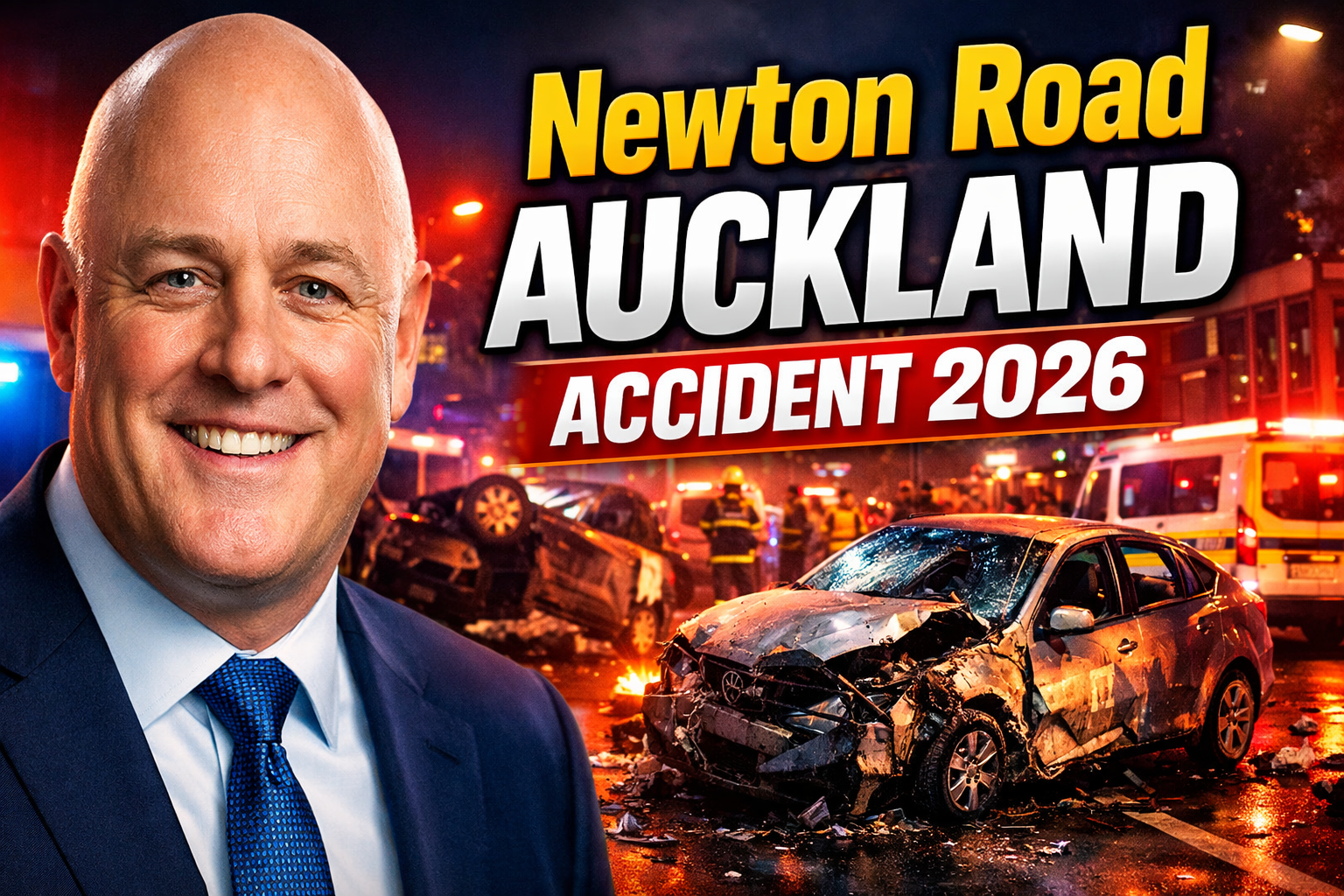
On the evening of Sunday, April 5, 2026, a serious two‑vehicle collision unfolded on Newton Road in Auckland’s Eden Terrace, drawing a swift and multi‑agency emergency response and sparking fresh questions about the use of unmarked police vehicles in the city’s central suburbs. The crash involved an unmarked police car and a private vehicle, resulting in injuries to two people, including a police officer, and causing a significant temporary closure of Newton Road as road‑investigation and recovery teams worked through the night. The scene, captured in eyewitness photos and social‑media reports, quickly became a flashpoint for debate over police fleet operations, urban traffic safety, and the visibility of emergency responders on Auckland’s busy streets.
How the Crash Unfolded
The incident was reported to police just before 8:50 p.m., when the two vehicles collided on Newton Road in the heart of Eden Terrace, a short, steep‑bent stretch in the inner‑city that runs through student‑heavy and residential‑apartment neighbourhoods. Descriptions from the Police and emergency‑service briefings indicate that the unmarked police vehicle, carrying four officers, and the private car came together in a side‑on or near‑broadside collision, generating extensive damage to both vehicles. The impact was violent enough to require extended road‑closure and heavy‑recovery equipment, underscoring the severity of the forces involved.
Inspection‑level reports from Inspector Kai Shao, speaking for Auckland City Police, confirmed that the driver of the second vehicle and one of the officers in the unmarked police car sustained injuries in the crash. The other two officers in the police vehicle were uninjured, though the total‑loss nature of the collision meant that both vehicles had to be towed from the scene once investigations and forensics were complete. Newton Road was closed from the Grafton Road ridge down toward the lower‑end of the valley, creating a ripple‑effect closure that diverted local traffic and forced emergency‑service units to navigate a temporarily re‑routed urban grid.
The Unmarked Police Car Factor
The involvement of an unmarked vehicle has become one of the most politically sensitive aspects of the incident. Unmarked police cars are regularly used for surveillance, high‑risk operations, and undercover work, and their deployment in the central city raises practical questions about whether they are immediately recognisable to other drivers. In the early‑morning and evening rush‑periods, when Newton Road is already busy with traffic, pedestrians, and cyclists, the presence of a low‑profile police vehicle can be less obvious than a high‑visibility‑painted patrol car.
Eyewitness accounts from local residents describe seeing a “dark‑coloured, SUV‑type vehicle with subtle markings” coming down Newton Road moments before the crash, followed by a metallic‑sounding impact that reverberated through nearby apartments. Some commenters have speculated about whether the private‑vehicle driver recognised the car as a police vehicle before the collision, while others have questioned why the unit was operating in an unmarked format in a densely populated area where the risk of sudden braking or lane‑changes is high. Police have not ruled out that the unmarked status influenced how quickly the other driver reacted, but they have also stressed that the investigation is still early‑stage and that no conclusions have been reached.
Police emphasise that unmarked vehicles are used only where operational necessity justifies the trade‑off between visibility and effectiveness, and that drivers are still required to follow all standard traffic‑laws and safety protocols regardless of the vehicle type they are interacting with. The incident, however, is likely to trigger renewed debate about when and where unmarked cars should be deployed in Auckland, particularly on narrow, gradient‑laden roads where reaction‑times are already compressed.
Emergency Response and Hospital Outcomes
The 111 call‑system was activated within minutes of the crash, and Hato Hone St John, Auckland’s primary ambulance‑and‑paramedic service, dispatched an ambulance and a rapid‑response unit to the site. A St John spokesperson later confirmed that one of the injured patients was assessed at the scene and then transported to Auckland City Hospital in a serious condition, underscoring both the speed and the seriousness of the emergency response. The other injured person, believed to be the officer involved, was treated for minor but still significant injuries, which typically indicates a mix of bruising, musculoskeletal trauma, and possible concussive or stress‑related effects even in what is formally described as “minor‑injury” status.
Newton Road was closed for several hours while Police Technical Investigation Unit technicians documented the collision‑site, collected evidence, and reconstructed the sequence of events. Traffic was re‑routed via Grafton Road, Ponsonby Road, and the surrounding arterial network, with traffic‑control officers and digital signage deployed to manage the diversion. The road was reopened around midnight, but the lingering effects on local traffic and on nearby businesses—particularly hospitality venues and student‑domestic‑hotspots—were noticeable into the next day.
For the residents of Eden Terrace and the adjacent suburbs, the incident also brought a heightened sense of vulnerability. The crash occurred in a frequently busy corridor, flanked by apartment buildings, medical‑research facilities, and student‑accommodation complexes. The loudness of the impact, the sight of flashing emergency‑lights juxtaposed with the narrow street‑geometry, and the temporary blackout of the road created a jarring image that has since circulated widely in local‑media and social‑media channels.
Community Reaction and Social Media Response
News of the crash spread quickly through Auckland’s social‑media ecosystem, with local residents and commentators posting photos, videos, and first‑hand eyewitness accounts from apartment‑balconies and side‑streets. One Reddit user who lives in an apartment a short distance from the scene described the night as “surreal,” with the sound of the crash followed by a sudden surge of emergency‑vehicles and the slow‑moving glow of investigation‑scene‑lighting that remained on the road well into the night.
The incident has also sparked broader conversation about urban‑road safety, especially in the inner‑city and on roads that combine heavy traffic, steep gradients, and limited‑on‑street parking. Newton Road is known for its narrowness and the way it funnels traffic past the Auckland University medical‑campus and the surrounding research‑and‑hospital‑complex, which means vehicles often move at varying speeds depending on whether they are local‑traffic or through‑traffic. The collision has prompted calls for a review of the road’s design, including potential speed‑limit reductions, more consistent signage, and additional traffic‑calming measures, especially in the evening‑and‑overnight hours when visibility and reaction‑times decrease.
The unmarked‑police‑car angle has further fanned the debate, with some commentators arguing that the incident underscores the need for clearer‑visual‑differentiation between operational‑police‑vehicles and regular‑traffic. Others have pushed back, noting that the legal and safety responsibilities of all road‑users should not be contingent on whether a vehicle has obvious markings and that the focus should remain on everyone’s adherence to the Road‑Code. The Police, for their part, have reiterated that the investigation is ongoing and that they will not release full operational details until the inquiry is complete.
What the Investigation Will Likely Cover
The Police investigation into the crash will almost certainly focus on several key areas: the speed and direction of both vehicles, how each driver reacted in the moments leading up to the collision, and the visibility and recognition of the unmarked police car. Technical‑investigation‑unit analysts will review dash‑cam and any CCTV footage from nearby buildings, take measurements of the road‑surface and the vehicles’ positions, and use forensic‑evidence such as tyre‑marks and impact‑points to reconstruct the sequence of events.
Police will also examine whether either driver was affected by factors such as fatigue, distraction, or impairment, and whether any traffic‑law infractions occurred in the lead‑up to the crash. The inquiry into the use of the unmarked vehicle will likely consider whether standard‑operating‑procedures were followed, including whether the officers were authorised to be in that vehicle type in that location and whether their driving behaviour was consistent with the Police’s own internal‑guidelines. Depending on the findings, there could be follow‑up actions ranging from procedural‑reviews and training‑updates to potential disciplinary measures if any errors are identified.
Medical, Legal, and Policy Implications
For the injured individuals, the road to recovery will involve both physical and psychological components. Even “minor” injuries in the context of a high‑impact collision often include whiplash‑style strain, soft‑tissue damage, and emotional‑trauma, and full recovery can take weeks or months. The Police officer involved may also face internal‑review processes, since any on‑duty‑incident that leads to injury or significant vehicle‑damage automatically triggers management‑oversight protocols.
From a legal perspective, the crash will be treated as a standard road‑traffic‑collision initially, with the police and the courts handling any questions of liability, insurance‑claims, and, if applicable, criminal‑charge considerations. The unmarked‑nature of the police car adds no special legal‑status shield; the principles of the Road‑Code and the responsibilities of all drivers still apply, even for police‑operated vehicles. However, the public‑scrutiny and potential media‑interest mean that the Police will be under pressure to be transparent about the findings once the investigation is complete.
The broader policy‑level question is how this incident will affect Auckland’s approach to emergency‑vehicle deployments and urban‑road design. The collision on Newton Road may prompt a review of where unmarked vehicles are used in the city, especially in high‑density, mixed‑use corridors where the risk of collision with pedestrians, cyclists, and private vehicles is higher. It may also feed into wider conversations about whether certain inner‑city roads need more aggressive‑traffic‑calming measures, increased surveillance‑or‑warning‑systems, or even temporary‑night‑time‑speed‑reductions.
The Larger Picture: Safety on Auckland’s Inner‑City Roads
The Newton Road crash should be seen in the broader context of Auckland’s ongoing struggle to balance mobility, safety, and urban‑density. The city’s central suburbs are home to a growing population of students, healthcare workers, tourists, and local residents, all of whom share a network of narrow, often‑steep‑grade roads with limited‑separation between cars, bikes, and pedestrians. Events like the collision on Newton Road are a stark reminder of how quickly a routine‑evening‑drive can turn into a life‑altering incident when multiple factors—speed, visibility, distraction, and road‑design—intersect in the wrong way.
The involvement of an unmarked police car adds another layer of complexity, but it does not change the core message: all road‑users, including emergency services, have a shared responsibility to drive with caution, awareness, and respect for the vulnerability of others. The rapid‑emergency‑response shown by Hato Hone St John and the Police technical‑operations team is a sign that the city’s emergency‑systems are functioning well, even under the pressure of a high‑profile incident. The challenge now is to turn the lessons from the Newton Road collision into concrete changes—whether in vehicle‑marking policies, road‑design standards, or public‑education campaigns—that reduce the chances of a similar event occurring again.
In the immediate aftermath, Newton Road has reopened, the wreckage has been cleared, and the investigation continues behind the scenes. For the residents of Eden Terrace, the crash has left a lasting impression: a reminder that the streets they walk and drive through every day are not merely abstract infrastructure, but real‑world spaces where split‑second decisions can have lifelong consequences. The 2026 Newton Road accident, and the emergency‑response that followed, will likely become one of the reference points for future debates about how Auckland can keep its inner‑city roads safe, visible, and resilient in an era of increasing traffic and growing pressure on urban space.

Vineeth T.C. is a news writer and digital content contributor at PageEuropean, covering key developments across New Zealand and Australia. His work focuses on delivering clear, fact-based reporting on current affairs, public policy, business updates, and regional news that matter to readers.