
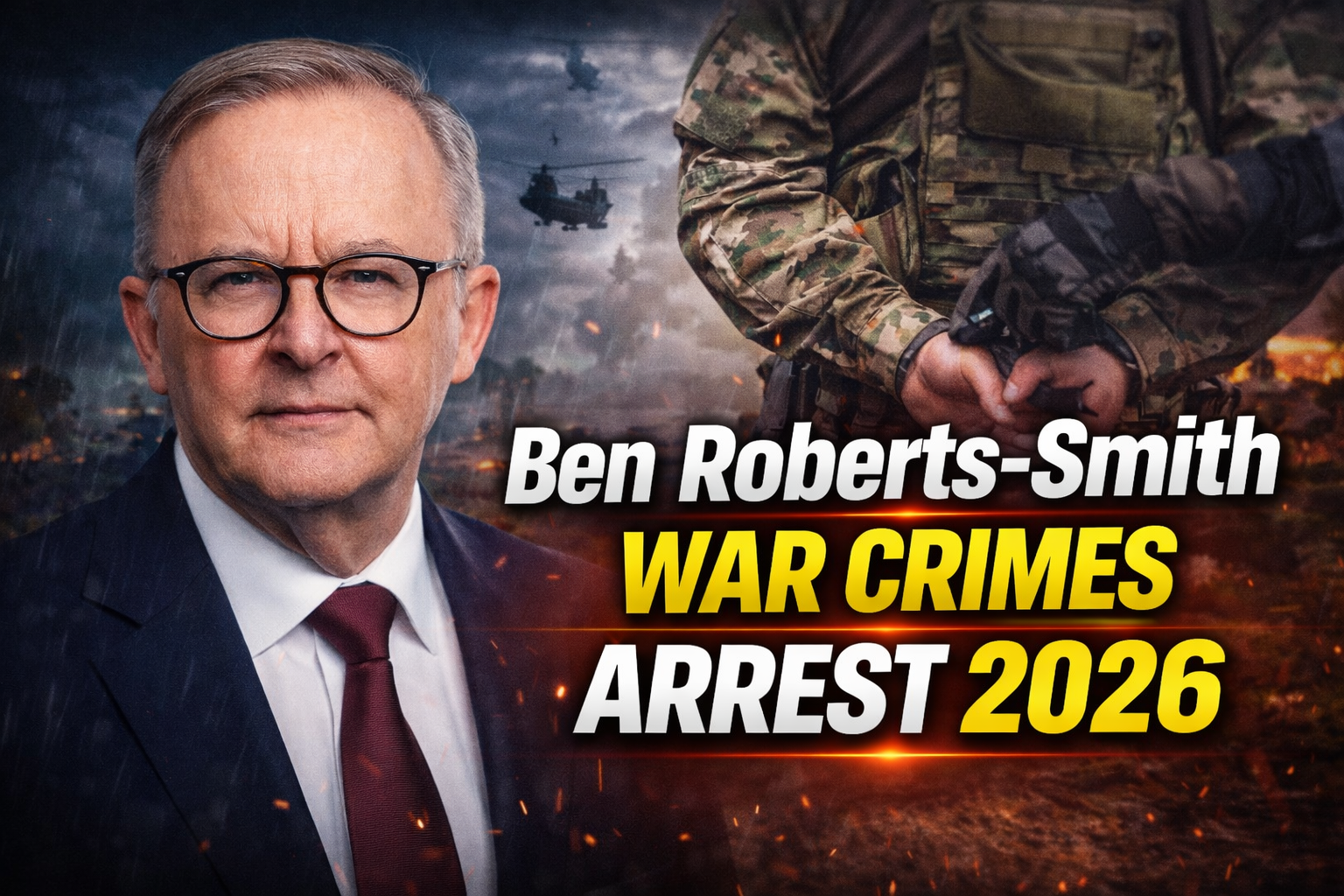
Ben Roberts‑Smith’s arrest in April 2026 marks one of the most consequential moments in Australia’s modern military‑justice history. The country’s most decorated living veteran, once celebrated as a national hero, now faces formal criminal charges over alleged war crimes committed during deployments in Afghanistan between 2009 and 2012. The Australian Federal Police (AFP) have charged Roberts‑Smith with five counts of war‑crime‑related murder, following a years‑long investigation by the Office of the Special Investigator and a landmark defamation trial that already found, on the civil standard of proof, that he was complicit in multiple unlawful killings. This case has become a polarizing national debate about command culture, accountability, and the treatment of veterans, and it now moves into the criminal‑justice arena with the full weight of the law.
Who Ben Roberts‑Smith is
Ben Roberts‑Smith is a former Australian Special Air Service (SAS) soldier who served in the war in Afghanistan over several tours. He was awarded the Victoria Cross for Australia in 2011 for bravery during a 2010 operation in the Kandahar region, where he exposed himself to heavy enemy fire to protect wounded comrades and coordinate a rescue. That award made him the most decorated living Australian veteran, and for years he was held up as a symbol of courage, professionalism, and sacrifice in the Australian Defence Force.
After leaving the military in 2013, Roberts‑Smith transitioned into corporate‑sector roles and public‑facing commentary, including on veterans’ mental health and defence policy. His high profile and media presence made the subsequent allegations against him even more explosive, because they were not simply accusations against an anonymous soldier, but against a national icon whose story had been used to shape the public image of the Australian war effort.
The path to the 2026 arrest
The road to Roberts‑Smith’s 2026 arrest began with media reporting and then escalated through a series of official investigations. In 2018, investigative reporting by major Australian news outlets alleged that Roberts‑Smith oversaw or participated in the unlawful killing of several unarmed Afghan detainees, including using killings to “blood” junior soldiers and to conceal the deaths of non‑combatants. Those stories triggered a formal defamation lawsuit brought by Roberts‑Smith against the publishers, which unfolded over an 110‑day trial in the Federal Court.
In June 2023, Justice Anthony Besanko of the Federal Court dismissed Roberts‑Smith’s defamation case, ruling that the newspapers had proven, on the civil standard of “balance of probabilities,” that he was responsible for or complicit in at least four unlawful killings. The judge found, for example, that Roberts‑Smith had ordered the execution of unarmed men to “blood” recruits, had kicked a handcuffed Afghan farmer off a cliff, and had been involved in the killing of a captured Taliban fighter whose prosthetic leg was later taken as a trophy and used as a drinking vessel by troops. Those findings were upheld through appeal, leaving the civil‑court record intact even though they did not constitute a criminal conviction.
Following that civil judgment, the Office of the Special Investigator and the Australian Federal Police pursued a parallel criminal‑investigation track. That probe took around five years, reviewing battlefield reports, witness statements, and forensic evidence. On 7 April 2026, Roberts‑Smith was arrested by the AFP at Sydney Airport as he arrived on a domestic flight. He was taken into custody, processed, and later formally charged with five counts of war‑crime‑related murder under the Commonwealth Criminal Code.
What the charges actually mean
The criminal charges against Roberts‑Smith are framed under section 268.70(1) of the Commonwealth Criminal Code Act 1995, which creates the offence of “war crime—murder” in international armed conflict. The specific charges include:
- One count of murder as a war crime.
- One count of jointly committing murder as a war crime.
- Three counts of aiding, abetting, counselling, or procuring the commission of murder as a war crime.
Those charges relate to conduct alleged to have occurred during Australian SAS operations in Afghanistan between 2009 and 2012. Prosecutors allege that Roberts‑Smith, as a senior non‑commissioned officer, was not only present for several incidents but actively directed or encouraged the killing of unarmed Afghan detainees who posed no immediate threat. The charges also cover conduct where he may have assisted or encouraged others to commit such killings, even if he did not personally fire every shot.
Under Australian law, each war‑crime‑murder charge carries a maximum penalty of life imprisonment. Because war crimes fall under the international‑law‑implementation provisions of the Criminal Code, they are treated as some of the most serious offences in the Australian legal system, reflecting Australia’s obligations under the Geneva Conventions and the Rome Statute of the International Criminal Court, to which Australia is a party.
The role of the Australian Federal Police
The AFP’s role in this case illustrates how Australia handles allegations of war crimes by its own soldiers. The Office of the Special Investigator, a dedicated federal body created to investigate suspected war‑crime conduct by Australian Defence Force personnel in Afghanistan, led the fact‑gathering and intelligence work, working with the Defence Honours and Awards Appeals Tribunal and reviewing classified military records. Once the Office of the Special Investigator concluded there was a prosecutable case, it handed a brief to the AFP, which then undertook the operational side of the investigation, including surveillance, interviews, and ultimately the arrest.
The April 2026 arrest at Sydney Airport was a carefully coordinated operation. AFP Commissioner Kim Cassidy and the Special Investigator’s director of investigations later confirmed that the arrest followed a years‑long probe with significant evidentiary hurdles, including the need to verify witness accounts, cross‑check battlefield logs, and navigate the classified‑security environment inherent to military operations. The AFP has stressed that the decision to charge Roberts‑Smith was based on evidence, not on media‑driven politics, and that any active‑or former‑ADF member is treated under the same legal framework as any other Australian civilian when it comes to alleged war‑crime conduct.
The broader context of SAS war‑crimes allegations
Roberts‑Smith is not being investigated in isolation. His case sits within a much wider investigation into the conduct of elements of the Australian Special Operations Task Group, particularly the SAS, in Afghanistan. The Brereton Inquiry, a 2020–2021 review of the Australian Special Operations Task Group, found credible evidence of 39 unlawful killings, 23 of which were linked to SAS troops. The inquiry described a toxic “punishment culture” in some units, where the killing of supposed prisoners or “snatchees” was used to discipline or intimidate troops or to avoid the perceived burden of holding detainees.
The Roberts‑Smith case has become a focal point for that wider reckoning, because of his high profile and because several of the alleged incidents described in the defamation trial map onto the Brereton findings. Critics argue the case must be pursued to uphold the rule of law and to signal that even elite soldiers are not above accountability. Supporters of Roberts‑Smith, however, claim the broader culture and pressure of the Afghanistan campaign are being ignored and that he is being singled out for political or media‑driven reasons. The tension between those narratives has made the case a flashpoint in debates about military culture, the trauma of war, and the limits of deference to veterans.
Civil findings versus criminal charges
An important distinction in the Roberts‑Smith saga is the difference between the 2023–2025 defamation‑trial findings and the 2026 war‑crime charges. In the civil trial, Justice Besanko applied the lower “balance of probabilities” standard, meaning the judge had to be satisfied it was more likely than not that the alleged conduct occurred. That standard was enough for the court to find that Roberts‑Smith had participated in at least four unlawful killings and ordered executions to “blood” junior soldiers, but it is not the same as a criminal conviction.
The new AFP charges now move the matter into the criminal‑court system, where the prosecution must prove guilt “beyond reasonable doubt.” That is a higher burden, and the eventual trial will involve cross‑examination of witnesses, forensic experts, and possibly classified military material subject to strict handling protocols. The criminal case may also test whether the evidence can be presented in a way that meets those elevated standards, particularly given the passage of time and the sensitivity of some battlefield records. For the public, the case will now be watched closely to see whether the civil‑court findings translate into a criminal conviction, and what that might mean for other serving or former soldiers under investigation.
What happens next in court
After his arrest and formal charging, Roberts‑Smith was taken into custody and later appeared in a New South Wales court for an initial hearing. Standard procedure in such a high‑profile matter includes a bail application, where the defence will argue that he should be released on specific conditions, while the prosecution will seek to ensure that potential risks—such as flight, intimidation of witnesses, or interference with evidence—are mitigated. Given the seriousness of the charges and the maximum penalty of life imprisonment, the court will weigh those factors carefully.
Assuming the case proceeds, the next phase will likely involve a committal or pre‑trial procedural stage to determine whether there is sufficient evidence to send the matter to a higher‑level trial, such as the Federal Court or another designated superior court. Roberts‑Smith’s defence team is expected to contest the admissibility of some evidence, debate the interpretation of military orders and battlefield context, and argue that the alleged conduct cannot be proven beyond reasonable doubt. The trial, if it goes ahead, would probably last several weeks or longer, given the number of alleged incidents, multiple witnesses, and technical military‑evidence issues.
Reactions in Australia and within the military
The arrest and charges have provoked strong and often polarized reactions. Veterans’ advocacy groups are divided, with some praising the move as a long‑overdue step toward accountability and others warning that it could damage the morale of current troops and stigmatize the entire SAS regiment. Some former SAS members have publicly backed Roberts‑Smith, arguing that the campaign environment and the pressures of counter‑insurgency warfare have been underplayed in the media‑driven narrative. Others, including former senior military leaders, have stressed the importance of upholding the law and the Geneva Conventions, even when it involves highly decorated soldiers.
Politically, the case has become a litmus test for how Australia balances its reverence for veterans with its international legal obligations. The federal government has repeatedly stated that all Australians, regardless of status, are subject to the rule of law, but the specificity of the allegations—and the emotional weight of his Victoria Cross—has made the issue a lightning rod in public debate. The Roberts‑Smith case now stands as a bellwether for how future allegations of war crimes by Australian personnel will be investigated, prosecuted, and remembered.
Broader implications for war‑crime investigations
The Roberts‑Smith prosecution, if it results in a trial and conviction, would be one of the most significant Australian war‑crimes cases in recent memory. It would send a clear signal that even the most decorated members of the armed forces can be held criminally liable for unlawful conduct in conflict zones. It could also influence how other nations, especially close allies, handle allegations of war crimes by their own troops, by setting a precedent for how evidentiary, political, and security challenges are navigated in domestic courts.
At the same time, the case raises broader questions about command responsibility, the pressure of counter‑insurgency operations, and the need for better oversight and training in elite units. Many legal and military‑ethics experts have called for clearer rules on the treatment of detainees, robust mechanisms to report abuses without fear of reprisal, and stronger protections for low‑ranked soldiers who may feel pressured to carry out unlawful orders. The Roberts‑Smith story, in that sense, is not just about one man; it is about the systems, cultures, and pressures that shape behavior in war and the extent to which national societies are willing to confront uncomfortable truths in the name of the law.

Vineeth T.C. is a news writer and digital content contributor at PageEuropean, covering key developments across New Zealand and Australia. His work focuses on delivering clear, fact-based reporting on current affairs, public policy, business updates, and regional news that matter to readers.