

Prime Minister Christopher Luxon announced the 2026 New Zealand general election date as Saturday, 7 November 2026, providing early certainty for voters and parties alike. This full-term vote follows the National-led coalition’s 2023 victory, setting the stage for a high-stakes contest over economic recovery and policy delivery.
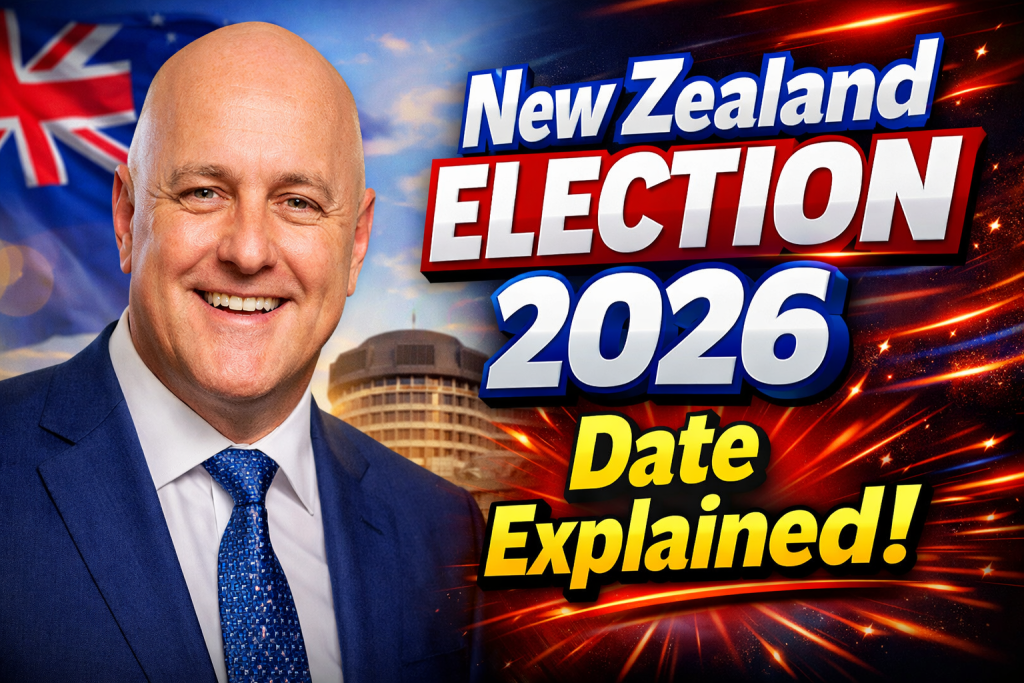
Election Date Confirmation
Christopher Luxon formally advised the Governor-General on 21 January 2026, locking in 7 November as polling day. This aligns with the three-year parliamentary cycle since the 14 October 2023 election, avoiding early dissolution risks.
Early announcement—months ahead of the traditional window—mirrors Luxon’s governance style, emphasizing planning amid global uncertainties. Parliament plans to rise on 24 September, dissolve on 1 October, with writs issued 4 October.
The Electoral Commission outlines a structured 10-month lead-up, balancing preparation time against campaigning urgency. No by-elections complicate the calendar, ensuring a clean full-term run.
Christopher Luxon’s Role and Strategy
Luxon, National Party leader since 2021, steers the centre-right coalition with ACT and New Zealand First into battle. His business background—former Air New Zealand CEO—anchors promises of fiscal discipline and growth.
The coalition’s 2023 mandate delivered tax threshold adjustments, public sector trims, and infrastructure acceleration. Luxon pitches continuity: “Fixing the basics and building the future” through lower taxes, reduced regulation, and housing boosts.
Campaign focus hits doorsteps early, targeting suburban voters squeezed by costs. Luxon eyes a stronger majority, leveraging economic upticks against opposition critiques of austerity.
Full Campaign Timeline
The Electoral Commission timetable structures the race meticulously, from party registrations to result declarations.
Key milestones unfold progressively:
| Date | Event Milestone |
|---|---|
| 21 January 2026 | PM announces election date |
| 6 August | Party/logo registration deadline |
| 7 August | Regulated advertising expenses begin |
| 1 October | Parliament dissolves |
| 4 October | Writ Day issued |
| 8 October | Candidate nominations close (noon) |
| 21 October | Overseas voting opens |
| 25 October | Final enrolment day |
| 26 October | Advance voting starts |
| 6 November | Advertising ends (midnight) |
| 7 November | Election Day (9am-7pm polling) |
| 27 November | Official results declared |
| 3 December | Writ return deadline |
Advance voting—proven popular in 2023—expects record uptake, easing Election Day queues. Overseas Kiwis vote from 21 October, while late enrollers cast special votes.
Major Parties in Contention
National, under Luxon, defends 48 seats from 2023, banking on coalition stability. Labour, led by Chris Hipkins, rebuilds from 34 seats, hammering cost-of-living failures.
Te Pāti Māori eyes electorate sweeps, while Greens push climate urgency. ACT’s David Seymour targets double-digit list support, NZ First’s Winston Peters courts seniors.
Smaller players like TOP and New Conservatives vie for relevance, though MMP thresholds (5 percent or electorate win) loom large.
Current seat projections based on trends:
| Party | 2023 Seats | Projected 2026 Range |
|---|---|---|
| National | 48 | 45-55 |
| Labour | 34 | 30-40 |
| Green | 15 | 12-18 |
| Te Pāti Māori | 6 | 5-8 |
| ACT | 11 | 8-12 |
| NZ First | 8 | 5-10 |
Overhang risks persist if Māori seats exceed party vote entitlement.
Dominant Key Issues
Cost of living tops Ipsos polls, with 45 percent citing it primary—housing affordability, grocery prices, fuel, and rents under fire. National touts bracket tax relief; Labour demands wealth taxes.
Economy and inflation follow: GDP growth lags peers, unemployment ticks up. Luxon highlights 2025 recovery signals; opponents decry beneficiary cuts.
Housing crisis endures—1 million homes pledged, yet shortages bite. Immigration debates intensify: post-study work visas versus infrastructure strain.
Climate action polarizes: coalition rollbacks versus Green urgencies amid 2026 floods. Health waitlists, crime spikes, and co-governance round priorities.
The table ranks voter concerns:
| Issue Priority | Voter Concern % | National Stance | Labour Stance |
|---|---|---|---|
| Cost of Living | 45 | Tax cuts, subsidies | Price controls |
| Housing | 32 | Deregulation | Public builds |
| Economy/Jobs | 28 | Investment incentives | Job protections |
| Health | 22 | Efficiency reforms | Funding boosts |
| Climate | 18 | Balanced emissions | Urgent net zero |
Polling Landscape and Momentum
Mid-January polls show National leading Labour 36-30 percent, Greens steady at 11, ACT 9. MMP thresholds favor majors, with NZ First hovering 6 percent.
Luxon approval hovers 45 percent, buoyed by steady governance minus scandals. Hipkins rebuilds post-Ardern, attacking “out-of-touch” policies.
Regional swings loom: Auckland urban liberals tilt left, provincial heartlands right. Māori roll swings could amplify Te Pāti Māori.
Coalition Mathematics Post-Election
No party governs alone under MMP—121 seats needed (120 plus overhangs). Luxon eyes National-ACT-NZ First redux, targeting 61+ seats.
Labour-Greens-Te Pāti Māori centre-left bloc needs 61, historically fragile. Centrist pivots like TOP could broker kingmaker roles.
Scenarios project:
- National-led: Stable majority if ACT/NZ First hold.
- Labour-led: Upset requires Green surge, Māori gains.
- Hung: Cross-bench deals prolong talks.
MMP Voting Mechanics Refresher
Voters mark two crosses: electorate candidate and party list. Electorates (71 general, 7 Māori) yield constituency MPs; lists fill proportional balance (49 seats).
Party vote determines parliament shares—5 percent threshold or one electorate unlocks lists. Special votes (overseas, late) finalize two weeks post-polling.
Enrolment campaigns ramp up August, targeting youth and Māori rolls. Advance packs mail mid-October for convenience.
Luxon’s Campaign Playbook
Luxon launches regionally: Christchurch infrastructure, Auckland housing blitzes, rural farm tours. Billboards hit “Deliver More,” contrasting 2023 pledges.
Digital savvy amplifies: targeted ads on Meta, TikTok youth outreach. Debates loom October—TVNZ, Newshub face-offs sharpen contrasts.
Coalition unity tests emerge: ACT freedoms versus NZ First populism. Luxon mediates, projecting competence.
Voter Engagement Strategies
Parties blitz booths from August: Labour door-knocks, National town halls, Greens campuses. Enrolment drives partner iwi, unions, businesses.
Broadcast allocations—free airtime by party vote—peak September. Spending caps ($150k candidates, $4.7m parties) enforce parity.
Youth turnout push: 2023’s 65 percent under-30s target rises via influencers, festivals.
Economic Backdrop Shaping Debate
GDP forecasts 2.2 percent growth, inflation eases to 2.5 percent—RBNZ holds steady. Unemployment 4.8 percent pressures welfare discourse.
Global headwinds—Trump tariffs, China slowdown—frame trade pitches. Luxon leverages CPTPP gains; Labour eyes diversification.
Flood recoveries spotlight resilience spending, pitting prevention versus response.
Path to 7 November
Nine months afford policy sharpening, gaffes avoided. Scandals or shocks could pivot trajectories—recessions hurt incumbents, surges help.
Voters weigh Luxon’s delivery against Hipkins’ vision. MMP ensures no landslides; negotiations crown winners.
This election tests post-COVID mandates: stability endures or change prevails. With dates set, New Zealand charts its political course.

Vineeth T.C. is a news writer and digital content contributor at PageEuropean, covering key developments across New Zealand and Australia. His work focuses on delivering clear, fact-based reporting on current affairs, public policy, business updates, and regional news that matter to readers.