
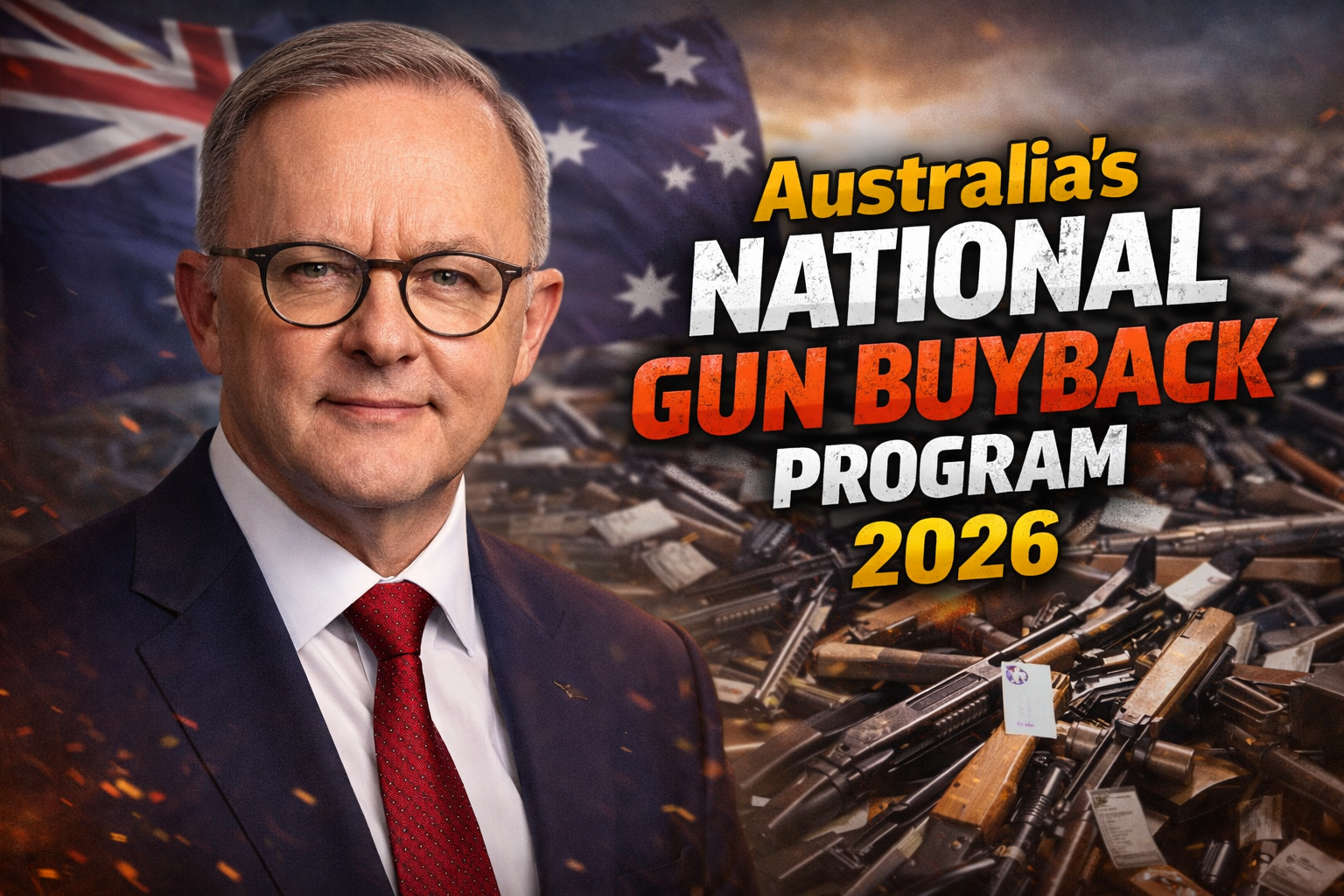
A tragic mass shooting at Bondi Beach has prompted swift action from federal and state leaders, launching the most ambitious national gun buyback since the 1996 reforms. This program targets surplus, newly restricted, and illegal firearms, aiming to reduce the estimated four million guns circulating nationwide while tightening access amid rising extremism concerns.

Background and Trigger Event
The catalyst arrived on a sunny Sydney afternoon during a Hanukkah celebration, where two gunmen unleashed horror, claiming fifteen lives from ages ten to eighty-seven and wounding dozens more. One attacker held a valid firearms license for six weapons, exposing gaps in vetting despite prior intelligence flags. Prime Minister Anthony Albanese responded decisively, convening National Cabinet the next day to forge consensus on sweeping changes.
This incident shattered Australia’s post-Port Arthur complacency, where strict laws had curbed mass shootings for decades. Public outrage swelled, polls showed overwhelming support for reform, and cross-party unity emerged despite rural pushback. The buyback echoes 1996’s success, when over 650,000 firearms vanished, coinciding with the sharpest homicide drop in nearly a century. Yet today’s scale matches a nation with far more licensed owners, blending voluntary surrender with mandatory prohibitions.
Program Objectives and Scope
The initiative zeroes in on high-risk categories: surplus firearms beyond personal “genuine reason” limits, newly banned semi-automatics and rapid-fire models, and black-market weapons fueling crime and terror. Goals include slashing registered firearms by hundreds of thousands, enhancing intelligence-driven license checks, and curbing imports of lethal components. States handle collections, the Australian Federal Police oversees destruction, and federal funds reimburse owners fairly.
Reforms extend beyond buyback. License applicants face deeper ASIO scrutiny, sharing data across jurisdictions to flag extremism risks. Online sales tighten, prohibiting DIY explosive kits and untraceable “ghost gun” parts. Hate crime clauses tie in, criminalizing antisemitic incitement linked to the attack, reflecting its ISIS-inspired roots. Collectively, these measures aim to prevent lone wolves exploiting legal loopholes.
Funding and Compensation Framework
Cost estimates hover around one billion dollars, split fifty-fifty between Canberra and states, funded via existing budgets without new taxes. Legislation passed swiftly in January, establishing a reimbursement scheme with tiered payouts based on firearm type, age, and condition. Owners surrender at police stations or approved dealers, verified via serial numbers to prevent fraud.
Rates reflect market values adjusted for prohibition premiums—shotguns fetch hundreds, rifles thousands, handguns mid-range. Caps discourage hoarding: no single owner exceeds set quotas per category. Disputes route through independent tribunals, prioritizing speed to sustain momentum. Critics decry costs amid fiscal pressures, but proponents cite lives saved as priceless return.
| Firearm Category | Example Models | Compensation Range | Estimated Surrenders |
|---|---|---|---|
| Semi-Automatic Rifles | Lever-action repeats | $2,000-$5,000 | High volume |
| Pump-Action Shotguns | Tactical variants | $800-$2,500 | Moderate |
| Handguns | High-capacity | $1,000-$3,000 | Targeted |
| Surplus Centrefire | Bolt-actions excess | $500-$1,500 | Bulk rural |
| Illegal/Modifications | Ghost guns, mods | Fixed $300-$1,000 | Urban focus |
This table outlines core targets, guiding owner planning.
Detailed Timeline of Rollout
December 2025 ignited action: Bondi attack on the fourteenth, National Cabinet pact on the fifteenth, Albanese’s announcement on the nineteenth. States rushed enabling laws by March, federal funding bill cleared parliament by late January. Collections launch nationwide from July first, running twelve months with amnesties for unregistered drops.
Phases stagger for efficiency: urban hubs first, rural tours via mobile units. Quarterly audits track progress, mid-program tweaks possible via Cabinet. Destruction follows weekly—melting, crushing—televised for transparency. Full evaluation hits end-2027, informing permanent caps like one gun per license type.
States vary slightly: New South Wales prioritizes Sydney hotspots, Queensland eyes farm surpluses, Western Australia builds on recent voluntary hauls exceeding eighty thousand firearms. Territories align fully, ensuring seamless border flows.
Key Changes to Firearms Laws
Prohibitions headline: semi-automatics expand to include more repeaters, ending grandfathering for post-1996 acquisitions. Genuine reason narrows—recreational shooting demands club proof, pest control site-specific. Storage mandates upgrade: bolted safes, ammo separation, biometric locks for high-risk.
Licensing overhauls intelligence fusion: ASIO flags auto-deny, mental health cross-checks mandatory. Renewals yearly for probationary holders, five-yearly for veterans with assessments. Imports ban assault-style imports, 3D-print files policed online. Penalties soar: illegal possession fines thousands, jail for prohibited use.
Hate-extremism links innovate: licenses revoke on radical content views, social media monitored ethically. Training compulsory—safety courses embed de-escalation, suicide prevention.
Stakeholder Reactions and Controversies
Gun lobbies like the Sporting Shooters Association decry overreach, warning rural suicides from despair, black-market spikes. Farmers lament pest control curbs, sport shooters fear range closures. Yet polls show eighty percent public backing, urban voters prioritizing safety.
Coalition MPs split: moderates endorse, Nationals balk at buyback costs. Greens push further—total handgun bans—Labor mediates center. Jewish groups hail antisemitism clauses, multicultural alliances broaden support. Police unions applaud workload aids like federal destruction.
Rural towns host tense forums, urban rallies demand action. Media splits: tabloids hype urgency, broadsheets probe economics.
Implementation Logistics
States lead logistics: pop-up centers in supermarkets, rural roadshows with helicopters for remote drops. Apps streamline appointments, QR codes verify eligibility. Dealers earn fees for handling, incentivizing compliance. AFP’s national hub crushes guns en masse, live-streamed ceremonies build trust.
Challenges anticipate: amnesty bins for illegals, no-questions amnesty weeks. Fraud hotlines, serial tracing tech deter double-dips. Rural air drops for isolated stations, indigenous partnerships ensure outback reach.
Expected Impacts on Gun Ownership
Australia’s four-point-one million firearms—over one per seven people—face historic cull. Projections mirror 1996: half-million surrenders, twenty percent drop in circulation. Homicides, already low, could halve further per precedents. Suicides, guns’ domain, decline as access tightens.
Crime stats shift: fewer armed robberies, gang firepower dims. Legal owners shrink to essentials, clubs digitize ranges. Black market raids intensify, border scanners upgrade.
| Projected Outcomes | Pre-Buyback | Post-Buyback Estimate | Change |
|---|---|---|---|
| Registered Firearms | 4.1 million | 3.2-3.5 million | -20-25% |
| Mass Shootings Risk | Elevated | Sharply reduced | Dramatic |
| License Holders | 980,000 | 800,000 | -18% |
| Illegal Seizures | Baseline | +30% via amnesties | Boosted |
Metrics gauge success rigorously.
Comparisons to Past Buybacks
1996’s post-Port Arthur blitz set benchmarks: voluntary yet firm, culturally seismic. Over ninety percent compliance, minimal violence. Later schemes—2002, 2003—mopped specifics like Adelaide-type shotguns. 2026 scales bigger, tech-savvier, extremism-focused.
Differences sharpen: today’s intelligence web, online patrols absent then. Costs adjusted for inflation exceed prior, reflecting arsenal growth. Success hinged public buy-in; 2026 leverages Bondi grief similarly.
Support for Affected Owners
Government softens edges: mental health hotlines, financial counseling for farmers. Relocation aid for range-dependent families, community grants replace lost sponsorships. Veteran shooters get priority processing, transition workshops.
Clubs evolve: simulator tech, air rifles fill gaps. Sporting alternatives bloom—archery, paintball—diverting youth.
Enforcement and Penalties
Post-buyback vigilance ramps: random audits, satellite stock checks. Breaches sting—five-figure fines, license loss, jail for repeats. Prohibited possession mandates court, no bail for violence links.
Tech enforces: facial recognition at ranges, GPS-tracked ammo sales trials.
Broader Societal Shifts
Reforms ripple culturally: school programs teach non-violence, media curbs graphic gun glorification. Multicultural dialogues counter extremism, integrating migrants safely. Women’s groups cheer domestic violence drops from access curbs.
Economically, safe-cracking booms, destruction firms thrive. Tourism touts safer shores.
Challenges and Criticisms
Rural backlash brews: compliance dips where pests proliferate. Black-market fears valid—1996 saw upticks before fades. Costs balloon if surrenders surge. Over-policing risks alienating moderates.
Government counters data: lives outweigh dollars, precedents prove fades.
Long-Term Vision
By 2030, caps entrench: one handgun, five longarms max per reason. Digital registries real-time, AI flags anomalies. Australia models global restraint, exporting expertise.
Bondi’s shadow births resilience: safer streets honor victims. Buyback binds nation—urban resolve, rural adaptation—forging enduring peace.

Vineeth T.C. is a news writer and digital content contributor at PageEuropean, covering key developments across New Zealand and Australia. His work focuses on delivering clear, fact-based reporting on current affairs, public policy, business updates, and regional news that matter to readers.