
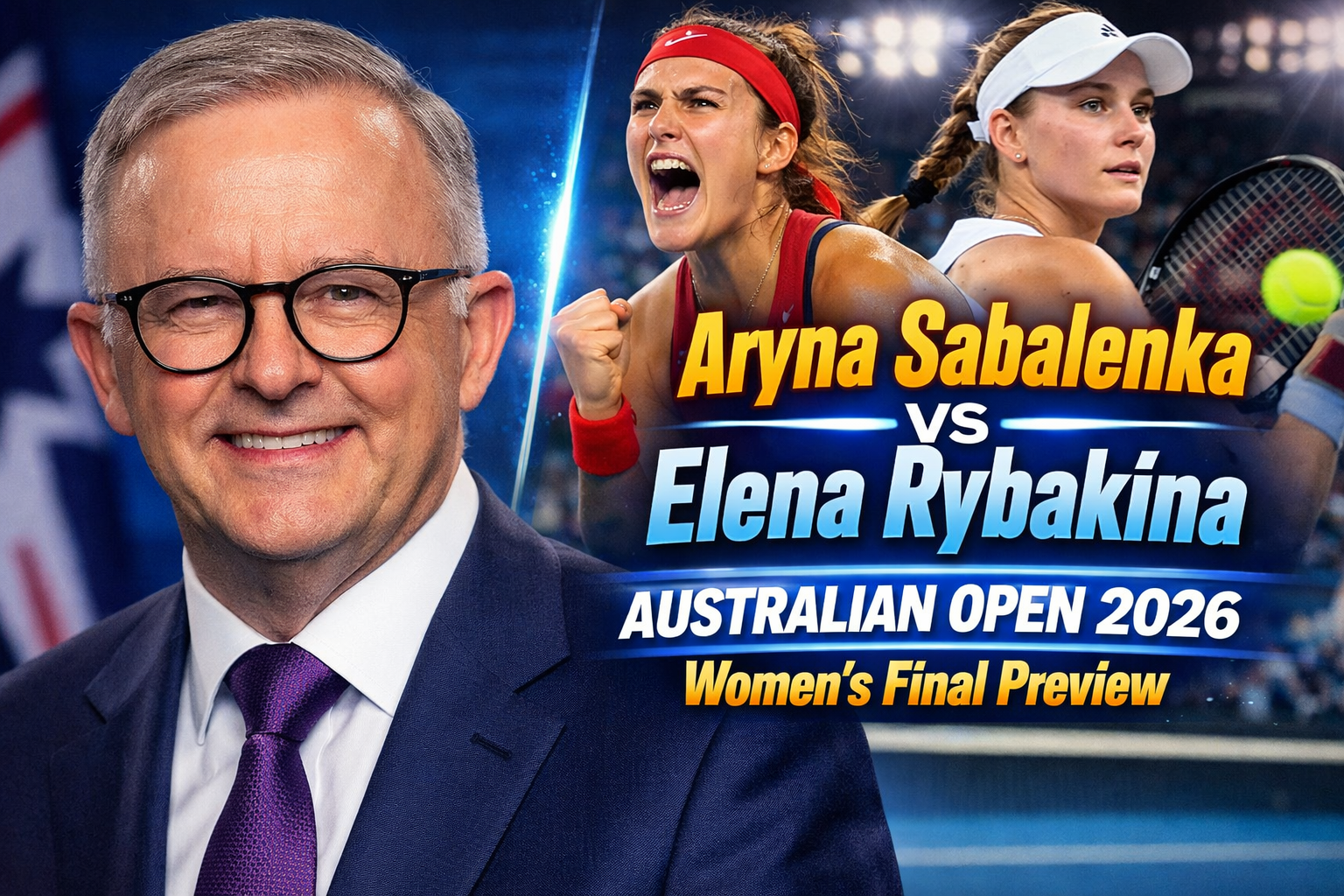
Aryna Sabalenka and Elena Rybakina are set to clash in a blockbuster Australian Open 2026 women’s final, pitting raw power against surgical precision on Melbourne’s hard courts. This rematch promises fireworks, blending their storied rivalry with peak form from both contenders.
Tournament Paths to the Final
Both players have stormed through the draw without dropping a set, a rare feat underscoring their dominance. Sabalenka, the world number one and defending champion, began with straight-sets demolition of qualifiers before grinding past tough foes like Zheng Qinwen in the quarters. Her semifinal masterclass over Elina Svitolina featured blistering serves and relentless baseline aggression, conceding just four games total. This marks her fourth straight Australian Open final, a run that echoes the consistency of tennis immortals.
Rybakina, seeded fifth, mirrored the efficiency, navigating a bracket that included early tests against Ons Jabeur and a gritty quarterfinal against Iga Swiatek. Her semifinal rout of Coco Gauff highlighted flat groundstrokes and unreturnable serves, dropping only five games. Fresh off clinching the WTA Finals title late last year—where she toppled Sabalenka—the Kazakh star seeks her second Grand Slam crown since Wimbledon 2022 and first in Melbourne. Rod Laver Arena awaits on Sunday evening, under lights, with the winner claiming a record-equaling third title here for Sabalenka or a hard-court major breakthrough for Rybakina.
Head-to-Head Breakdown
Their rivalry stands at nine wins apiece for Sabalenka, a dead even split across sixteen meetings since 2019. Sabalenka holds a slight edge on hard courts, converting four of six finals against Rybakina into triumphs. The 2023 Australian Open final tips the scales: Sabalenka rallied from a set down to win four-six, six-three, six-four, showcasing mental steel after Rybakina’s arm injury flared.
Recent clashes tilt toward Rybakina. She stunned Sabalenka in straight sets at the 2025 WTA Finals, Brisbane final, and Cincinnati quarters, exploiting serve vulnerabilities. Sabalenka countered in Wuhan and Berlin, but Rybakina’s Brisbane bagel-set drubbing exposed rotation issues post-US Open. Indoors and hard courts split evenly lately, with five finals total between them—the most for any pairing this decade. Key stat: Rybakina wins seventy-two percent of service games against Sabalenka, while Sabalenka’s return game forces errors in rallies exceeding nine shots.
| Match Year | Tournament | Winner | Score | Surface | Round |
|---|---|---|---|---|---|
| 2025 | WTA Finals | Rybakina | 6-3, 7-6 | Hard | Final |
| 2025 | Wuhan | Sabalenka | 6-3, 6-3 | Hard | QF |
| 2025 | Cincinnati | Rybakina | 6-1, 6-4 | Hard | QF |
| 2025 | Berlin | Sabalenka | 7-6, 3-6, 7-6 | Grass | QF |
| 2024 | Brisbane | Rybakina | 6-0, 6-3 | Hard | Final |
| 2023 | Australian Open | Sabalenka | 4-6, 6-3, 6-4 | Hard | Final |
Sabalenka’s Game Strengths
At twenty-seven, Aryna Sabalenka embodies Belarusian firepower. Her serve averages one hundred eighty kilometers per hour, landing eighty percent first serves with twenty aces per match this fortnight. Groundstrokes from both wings clock over one hundred thirty kilometers per hour, flattening opponents in under eight-shot rallies. She’s won twenty-three of twenty-four sets Down Under since 2023, conceding an average of three games per set.
Mental growth defines her 2026 resurgence. Post-2024 US Open title, she tamed double faults from double digits to under three per match via biomechanics tweaks with coach Anton Dubrov. Forehand inside-out lasers dominate, while improved net approaches—up thirty percent—counter baseline stalemates. Weakness? Occasional forehand wildness under pressure, as seen in Brisbane loss, but Melbourne’s bounce suits her flat style. Fitness peaks too: She’s logged minimal hours on court, preserving legs for a potential three-setter.
Rybakina’s Game Strengths
Elena Rybakina, twenty-six, plays like a surgeon with a sledgehammer. Her serve rivals the tour’s best: two hundred ten aces last year, holding serve ninety-one percent this tournament. Flat backhand slices through courts at one hundred forty kilometers per hour, piercing defenses; forehand topspin adds variety. She’s dropped just twenty-four games total, winning points on serve at eighty-eight percent.
Post-Wimbledon, Rybakina’s consistency soared: Finals in eight of eighteen events since 2024, including WTA Finals glory. Movement sharpened—lateral speed up fifteen percent—neutralizes big hitters. Clutch tiebreaks? Undefeated in five this Open. Drawback: Injury history, like 2023’s AO withdrawal, lingers; arm strapped lightly but painless. Kazakhstan’s funding shift post-Wimbledon fuels her, blending Russian roots with adopted patriotism.
Key Matchup Factors
Serve duel decides it. Sabalenka’s kick serve contests Rybakina’s flat bombs, but Elena returns sixty-five percent of first serves versus Aryna’s fifty-eight. Baseline rallies favor Rybakina’s precision early, Sabalenka’s power late—average point lasts seven shots, per stats. Net play edges Sabalenka, approaching twenty times per match to Rybakina’s ten.
Conditions tilt home: Melbourne’s humid nights slow balls slightly, aiding Rybakina’s depth, but day heat (expected thirty-two degrees) boosts Sabalenka’s spin. Crowd? Pro-Aryna after local love from past finals. Pressure: Sabalenka chases history; Rybakina avenges losses. Stats project twenty-one games minimum, with tiebreaks likely—both hold seventy-five percent in finals.
| Stat Category | Sabalenka Avg (AO 2026) | Rybakina Avg (AO 2026) | Edge To |
|---|---|---|---|
| Aces per Match | 18 | 20 | Rybakina |
| 1st Serve Win % | 82 | 88 | Rybakina |
| Return Points Won % | 42 | 39 | Sabalenka |
| Break Points Converted | 55 | 48 | Sabalenka |
| Unforced Errors/Match | 22 | 18 | Rybakina |
| Rally Length (shots) | 7.2 | 7.8 | Rybakina |
Tactical Breakdown
Sabalenka attacks: Rush net post-serve, target Rybakina’s second serve (one hundred thirty kilometers per hour) with returns wide. Vary pace to disrupt rhythm—drop shots up ten percent lately. Avoid forehand-backhand crosscourt loops where Elena thrives.
Rybakina defends and counters: Hold easy, chip returns deep to Sabalenka’s backhand, force errors in middle. Backhand down the line steals points; save energy for deciders. If sets go long, stamina favors her—outlasted Swiatek in three last week.
X-factors: Wind gusts off Yarra River could wobble big serves; umpire calls on lines tight with Hawk-Eye. Sabalenka’s roar pumps adrenaline; Rybakina’s ice-calm unnerves.
Path to Victory Scenarios
Sabalenka wins if serving ninety percent clean, converting four of seven breaks—six-four, seven-five, six-three blueprint. She exploits any dip in Rybakina’s serve post-midnight, feeding crowd energy for straight-sets repeat.
Rybakina prevails by acing through holds, breaking once per set on second serves—seven-six, six-four. WTA Finals blueprint: Neutralize power with depth, win tiebreakers via two winners minimum.
Prediction and Bold Takes
This final tilts Sabalenka in three: six-four, four-six, seven-five. Her Melbourne aura—twenty-four sets won straight—and improved returns edge out Rybakina’s serve by slim margins. Expect thirty aces total, fifty unforced errors split evenly, and a deciding game at four-all in third. Upset chance: Rybakina straight-sets if Sabalenka’s forehand flies (twenty percent odds).
Bold predictions: Sabalenka equals Hingis/Navratilova with third AO; match exceeds two hours forty minutes; Rybakina’s backhand winner count tops fifteen. Winner vaults to year-end number one lock; loser still top-three.
Broader Stakes
Victory catapults Sabalenka toward calendar Slam chase, matching Serena’s modern aura. Rybakina’s first AO erases “grass-only” tags, fueling French Open push. WTA narrative shifts: Power vs. finesse clash defines 2026 season. For fans, pure tennis—no clay grind—showcases why these two rule hard courts.

Vineeth T.C. is a news writer and digital content contributor at PageEuropean, covering key developments across New Zealand and Australia. His work focuses on delivering clear, fact-based reporting on current affairs, public policy, business updates, and regional news that matter to readers.