
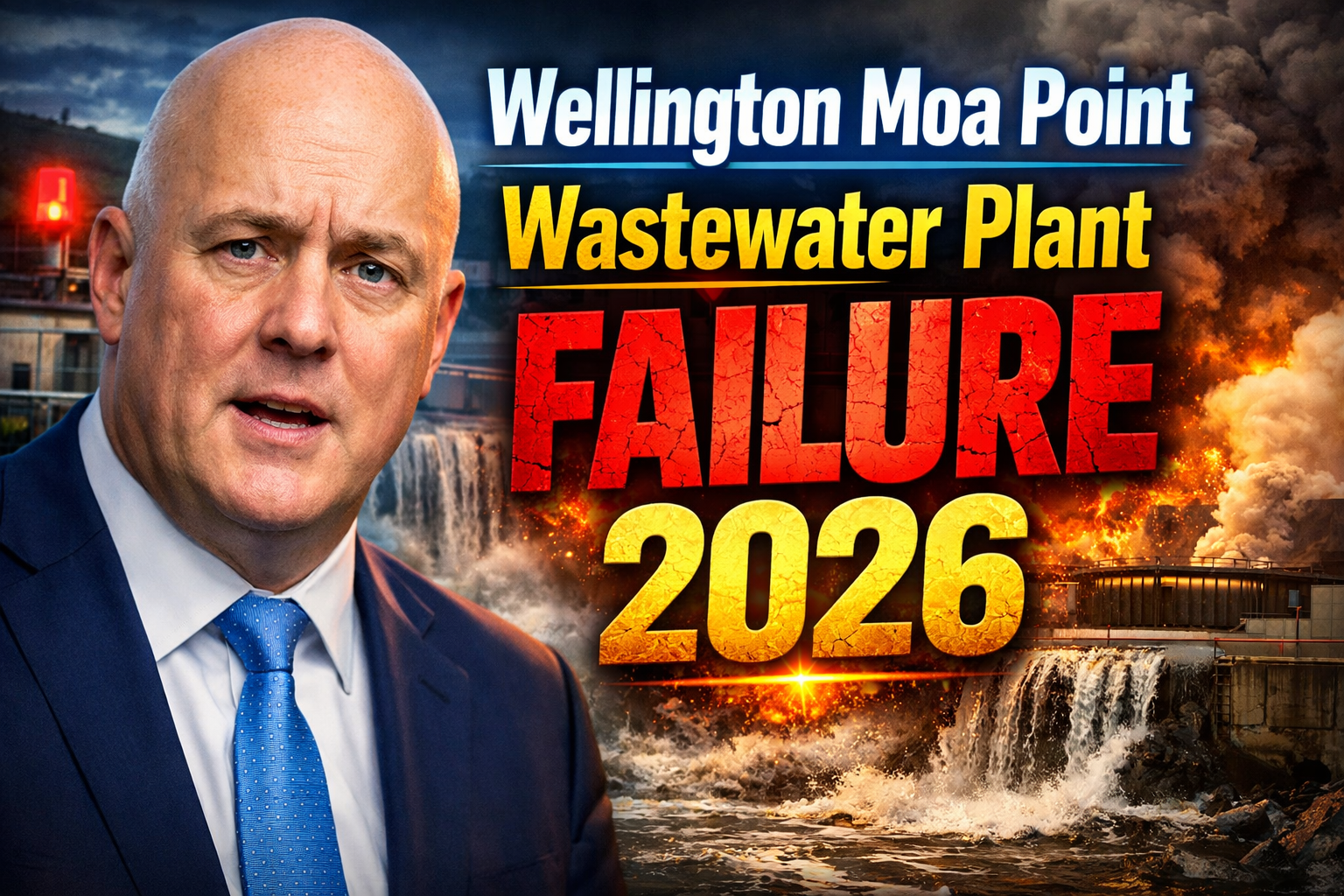
Wellington’s Moa Point Wastewater Treatment Plant suffered a devastating failure on February 3, 2026, flooding its facilities with raw sewage and spewing untreated wastewater into the sea at alarming rates. Multiple floors submerged during heavy rain, forcing shutdown and evacuation while millions of litres poured into Tarakena Bay and beyond. This Third World-style breakdown in a modern city stranded beaches, threatened marine ecosystems, and ignited fury over crumbling infrastructure, with fixes potentially months away.
What Happened
The crisis unfolded around 1:00 a.m. when alarms triggered during a torrential downpour. Wastewater backed up through the outfall pipeline—being serviced for UV lamp replacements—and flooded lower levels, knocking out power and inundating 70 percent of the plant. Peak discharge hit 3,300 litres per second of untreated effluent, mostly diluted by stormwater but laced with sewage.
Staff evacuated amid hazardous gases; fire crews arrived but couldn’t access submerged areas. By dawn, the entire facility stood offline, rerouting flows haphazardly. Wellington Water’s Pat Dougherty called it a nightmare scenario, with cameras later revealing 80 percent equipment ruin—pumps, screens, and electricals drowned.
Plant Background
Moa Point, perched on Wellington’s south coast, processes sewage for 500,000 residents across the capital region. Opened decades ago, it treats 150 million litres daily via screening, settlement, and UV disinfection before ocean discharge through a 2-kilometre Cook Strait outfall. It handles urban waste from homes, hospitals, and industries, safeguarding harbors like Evans Bay.
Recent upgrades lagged despite population growth and climate pressures. Reports flagged repeated compliance breaches—overflows during storms—yet remedial work continued piecemeal, culminating in catastrophe.
| Plant Capacity | Daily Average | Peak Handling |
|---|---|---|
| Wastewater Volume | 150 million litres | 330 million litres |
| Population Served | 500,000 | Greater Wellington |
| Discharge Point | Cook Strait outfall | Tarakena Bay backup |
Core specs underscore its critical role.
Causes and Contributing Factors
A mechanical glitch during UV maintenance allowed backflow; heavy rain overwhelmed pipes, surging sewage indoors. Dougherty puzzled over pipeline capacity exceedance—the outfall should handle more than the plant. No power meant no ventilation, amplifying dangers.
Prior audits revealed chronic issues: aging infrastructure, underinvestment, and storm vulnerabilities. Iwi and council reports decried “repeated non-compliance,” with discharges breaching consents. Climate change intensifies rains, exposing design flaws from drier eras.
Immediate Response
Priorities crystallized: pump sludge to avert stench, inspect outfalls via cameras, restore partial power for long-outfall diversion. Greywater screening aimed online by weekend’s end, slashing solids. Environmental teams tested waters; air quality monitored for hydrogen sulfide.
Wellington Water apologized profusely, launching internal probes. Fire and Emergency secured the site; contractors mobilized pumps. Mayor Andrew Little labeled it “hugely significant,” urging beach avoidance amid summer peak.
Environmental Damage
Untreated flows contaminated South Coast from Tarakena to beyond, threatening kōura, fish, and seabirds. Millions of litres—70 million estimated—carried pathogens, nutrients fueling algae blooms. Water quality plummeted; shellfish bans hit iwi fisheries.
Beaches closed indefinitely: no swimming, surfing, or kayaking. Marine mammals risked ingestion; sediment locked in toxins long-term. Past spills scarred habitats; this rivals cyclone overflows in scale.
| Impact Area | Closure Duration | Wildlife Risk |
|---|---|---|
| Tarakena Bay | Weeks to months | Fish, shellfish kills |
| South Coast Beaches | Indefinite | Birds, marine mammals |
| Cook Strait Waters | Monitoring | Plankton disruption |
Metrics reveal widespread taint.
Public Health Risks
E.coli and enterococci surged, mirroring post-rain spikes but amplified. Swimmers faced gastrointestinal woes, skin infections; children and elderly most vulnerable. Dog walkers warned off; fishing halted.
Health advisories blanketed media: “Stay out” signs sprouted. Hospitals prepped for spikes; past events logged illness upticks. Airborne odors signaled gas perils near plant.
Economic Consequences
Cleanup tallies millions: equipment 80 percent trashed, repairs months out. Ratepayers face hikes; businesses—cafes, tours—lose summer revenue. Tourism dips as “sewage capital” stigma sticks.
Redirects strain alternatives like Seaview plant, risking overloads. Insurance claims mount for fisheries; council budgets stretch amid recovery.
Community and Iwi Reactions
Fury erupted: “Third World infrastructure,” cried locals. Iwi like Ngāti Toa condemned environmental sacrilege, vowing oversight of probes. Puketapu-Dentice demanded swift solutions, eyes on rāhui lifts.
Protests brewed; social media trended #MoaPointFail. Little echoed disappointment, beach denial crushing summer vibes.
Long-Term Fixes
Full reboot eyes late 2026: de-sludge, dry-out, replace gear. Long-outfall stabilization first, then redundancy builds—extra pumps, climate-proofing. Investigations dissect preventability; consents tighten.
Government aid eyed, learning from Auckland overflows. Upgrades accelerate: pipe separations, green infrastructure.
Broader Lessons
Event exposes nationwide woes—lag upgrades versus sea-level rise, intensification. Wellington’s “fast-following” model buckled; resilience demands billions. Iwi partnerships strengthen monitoring; public shaming spurs action.
New Zealand confronts water crises: boil notices, spills recur. Moa Point catalyzes overdue reckoning, from consents to funding.

Vineeth T.C. is a news writer and digital content contributor at PageEuropean, covering key developments across New Zealand and Australia. His work focuses on delivering clear, fact-based reporting on current affairs, public policy, business updates, and regional news that matter to readers.