
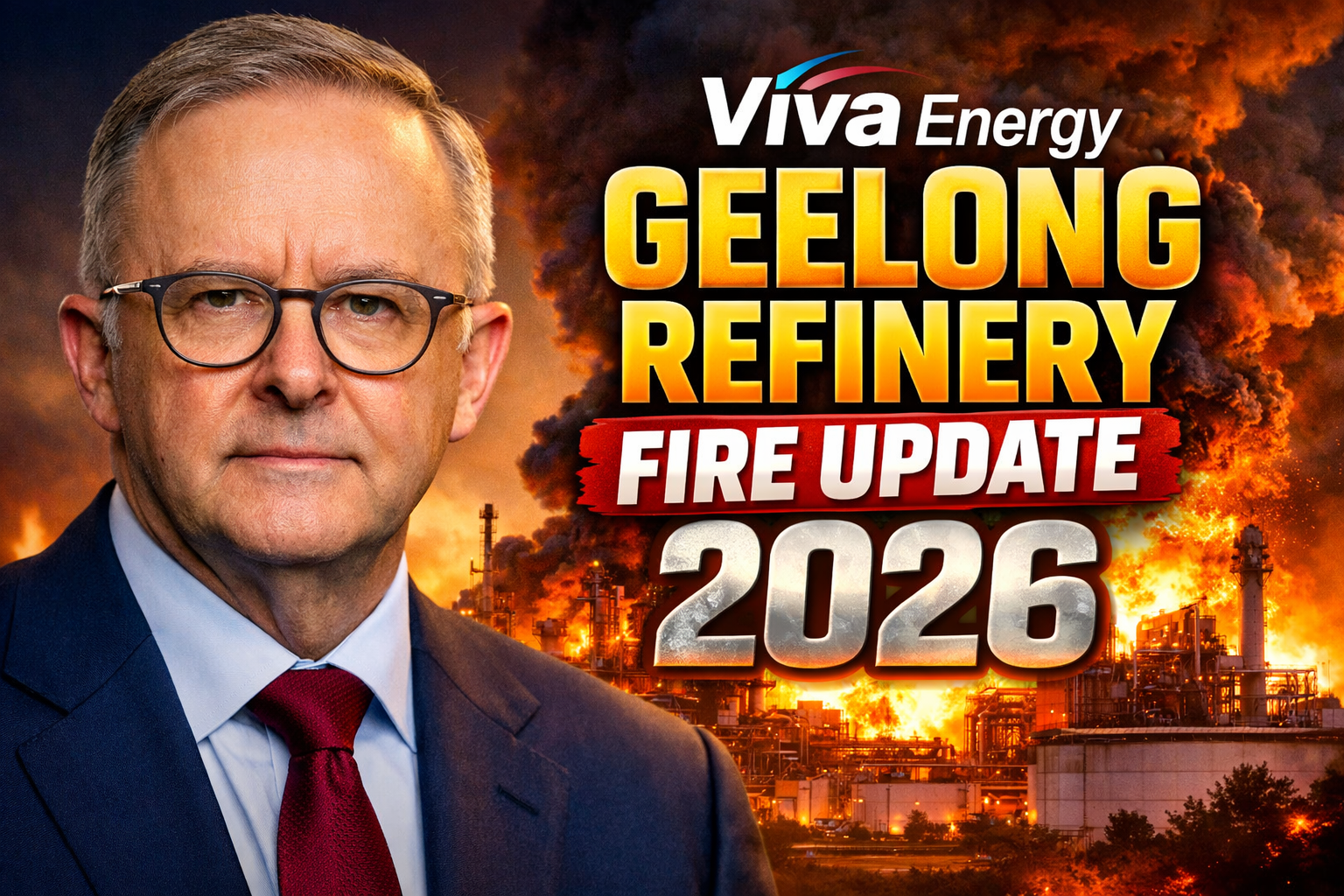
A massive fireball lit up Geelong’s night sky on April 15, 2026, as a catastrophic fire tore through Viva Energy’s Corio refinery, Australia’s largest remaining fuel plant and Victoria’s lifeline. The blaze, erupting after 11pm in primary petrol units, slashed production across petrol, diesel, and jet fuel, compounding global shortages from the Strait of Hormuz closure amid the Iran conflict. Diesel pumps ran dry across Melbourne and regional hubs, stranding trucks, farms, and emergency fleets, while panic-buying emptied stations statewide.
Prime Minister Anthony Albanese rushed to the site for briefings, as Viva throttled output to minimum rates—petrol down 40%, diesel and avgas at 80% capacity. Supplies hold till May’s end via imports and stocks, but experts warn of rationing risks under the National Fuel Security Plan’s Level 3. In a perfect storm of bad timing, this local inferno threatens Victoria’s economy, exposing Australia’s import-heavy fuel vulnerability.
Fire Cause and Containment
The conflagration ignited in a 30×30 meter zone housing petrol crackers, likely from a hydrocarbon leak or electrical fault—investigations ongoing by WorkSafe Victoria. Flames soared 50 meters, spewing black smoke over Corio Bay, prompting evacuations within 2km and shelter-in-place orders. No injuries among 400 staff; 12 firefighters treated for smoke.
Victoria State Fire Authority declared it under control by April 16 noon, dousing hotspots with foam. Damage assessments pegged structural losses in millions, with cooling towers spared. Viva pledged no cost pass-throughs, tapping on-site tanks holding weeks’ supply.
Refinery Operations
Geelong, processing 120,000 barrels daily since 1954 (now Viva-owned post-Shell), churns 10% of national refined fuels—half Victoria’s petrol/diesel, key jet fuel for Tullamarine. Amid Lytton closure, it’s Australia’s sole east coast refinery, importing crude via 650km pipeline from Hastings.
Daily yields: 25% petrol, 35% diesel, 20% jet. Fire hit cokers hardest, idling units; diesel lines partially spared but throttled.
Diesel Disruptions
Diesel, powering 90% of trucks and farms, faced quickest shortages—83 stations dry pre-fire, now widespread. Melbourne depots rationed hauls; regional Victoria saw 300-400% demand spikes from stockpiling. Mining sites in Gippsland idled drills; ag harvesters stalled mid-field.
Imports from Singapore/Asia ramp up, but Hormuz woes hike freight 50%, delaying tankers. Aviation ripples: Qantas domestic flights eyed cuts.
Government and Industry Response
Albanese activated the National Liquid Fuel Task Force, eyeing Level 3 prioritization for mining, ag, emergencies. Excise halved April 1-June 30 aids relief. Victoria’s Lily D’Ambrosio urged calm: “Temporary outages; supplies inbound.”
Viva draws from terminals (Melbourne, Sydney), BP/Caltex pitch in. WA’s Roger Cook warns national escalation. ACCC monitors gouging.
Stats and Projections
Impact snapshot:
| Fuel Type | Pre-Fire Output (bbl/day) | Post-Fire Capacity | Victoria Shortfall (Weeks) | Nat’l Impact (%) |
|---|---|---|---|---|
| Petrol | 30,000 | 60% | 2-3 | 6 |
| Diesel | 42,000 | 80% | 1-2 | 8 |
| Jet Fuel | 24,000 | 80% | 2 | 5 |
| Total | 120,000 | 75% avg | – | 10 |
Demand surges:
| Sector | Surge (%) | Affected Sites | Mitigation |
|---|---|---|---|
| Trucking | 250 | 500+ stations | Rationing, imports |
| Agriculture | 400 | Regional farms | On-site tanks urged |
| Mining | 200 | Gippsland ops | Level 3 priority |
| Aviation | 150 | Airports | Stockpile draws |
Stocks last till May; imports cover 90% gap.
Regional Effects
Victoria reels: Melbourne freeways clog sans trucks; supermarkets hoard perishables. Jamshedpur-like industrial belts in Geelong factories idle generators. Rural ag—wheat, dairy—faces harvest losses; remote mines weigh shutdowns. Tourism dips as avgas pinches charters.
Price creep: Diesel up 20c/liter, petrol 15c—despite pledges.
Global Context
Hormuz closure (Iran war) slashed imports 20%; pre-fire, 100+ Vic stations empty. Geelong fire compounds IMF-noted energy shocks, mirroring Venezuela shortages. Renewables lag; EVs at 5% fleet.
Conclusion
Geelong’s flames fan Victoria’s fuel fears, but coordinated grit—from imports to stocks—charts recovery. Disruptions sting, yet expose pivot needs: More refineries? Biofuels? As pumps refill, resilience defines Down Under—crisis navigated, engines reignited.

Vineeth T.C. is a news writer and digital content contributor at PageEuropean, covering key developments across New Zealand and Australia. His work focuses on delivering clear, fact-based reporting on current affairs, public policy, business updates, and regional news that matter to readers.