
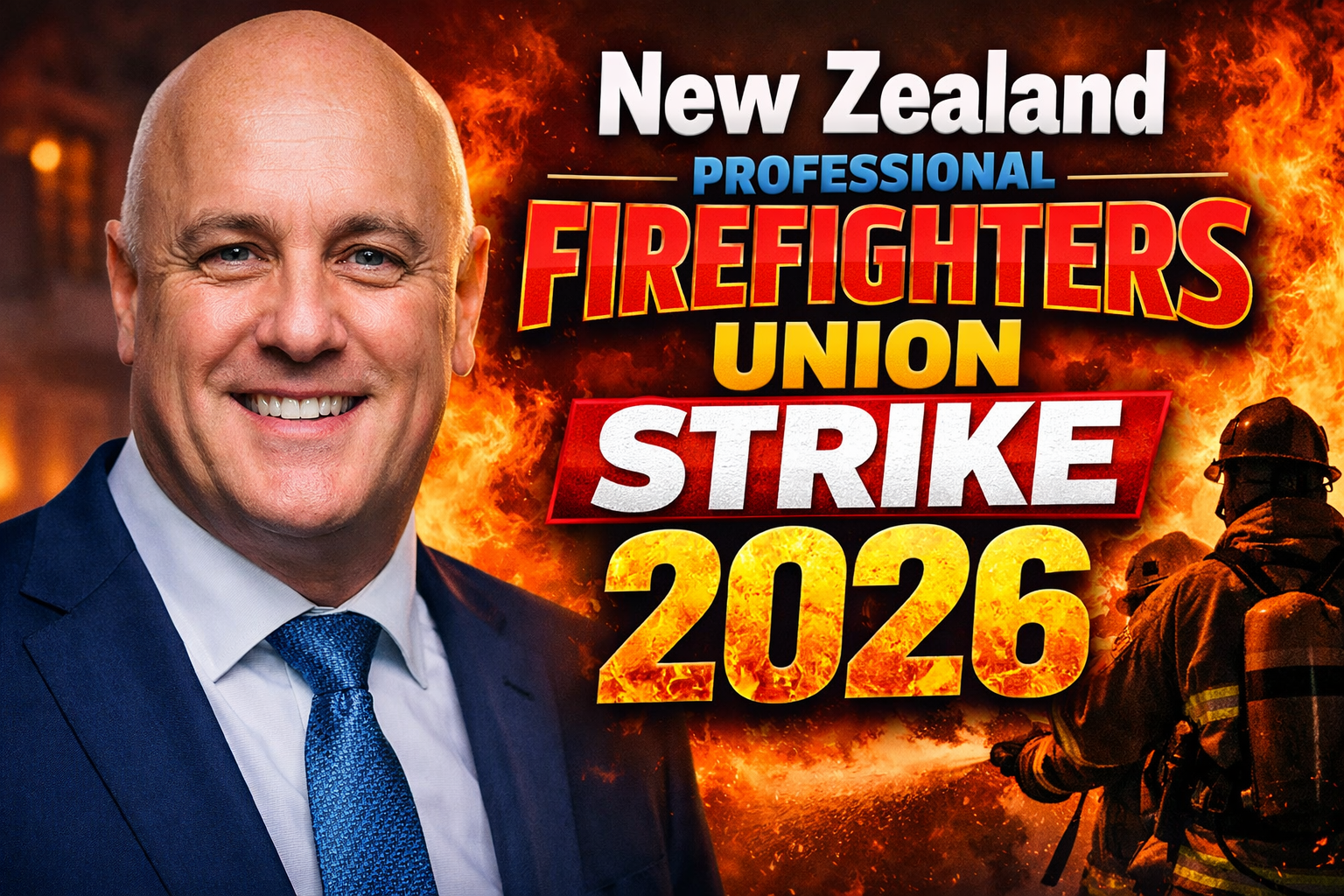
New Zealand’s professional firefighters have escalated industrial action into 2026, staging nationwide one-hour strikes amid a protracted pay and staffing dispute with Fire and Emergency New Zealand. The New Zealand Professional Firefighters Union argues that stagnant wages and understaffing endanger public safety, while FENZ counters with fiscal constraints and contingency plans.
Background to the Ongoing Dispute
Bargaining began in July 2024 for a new collective agreement covering paid firefighters, sparking over 18 months of tension. FENZ’s initial offer—a 5.1 percent rise over three years—met union rejection, deemed insufficient against inflation and recruitment shortfalls. By late 2025, limited strikes emerged, including national walkouts that closed stations for an hour.
Into 2026, actions intensified: January strikes coincided with major incidents like Auckland’s Pakuranga blaze, highlighting response gaps. February brought bi-weekly stoppages from midday, targeting metro areas. Union secretary Wattie Watson called strikes a “last resort,” urging investment in frontline roles.
FENZ faces government-mandated cuts—$50 million annually by 2029—threatening 230 promised hires. Volunteers fill gaps, but union insists paid crews handle complexity.
Details of the 2026 Strike Actions
Strikes resumed January 16 and 23, with further dates in February 13, 20, 23, 27, and March 2—all noon to 1pm. Stations shutter nationwide, rerouting calls to volunteers or neighboring brigades. Dunedin firefighters labeled it their “only option,” limiting duration as goodwill.
FENZ warns of delays, urging fire safety vigilance. A Pakuranga warehouse fire during January action saw volunteers respond, injuring one severely. Union rebuts: contingencies should suffice, blaming FENZ for rebuffing recall protocols.
Actions halt amid facilitation bids, but acceptance of a revised deal—20-24 percent compounded rises plus cancer screenings—signaled potential resolution.
| Strike Dates 2026 | Duration | Scope | Contingencies |
|---|---|---|---|
| Jan 16, 23 | 1 hour (12-1pm) | National | Volunteers activated |
| Feb 13, 20, 23, 27, Mar 2 | 1 hour | Metro focus | Rerouting to adjacent stations |
| Total Impact | Limited | Paid firefighters | Public safety advisories |
Union Demands: Pay, Staffing, and Safety
NZPFU seeks parity with inflation—cumulative 12-15 percent since 2022—plus retention bonuses. Core issues: understaffing leaves crews fatigued, breaching minimums. They demand binding commitments for 230 hires, opposing restructures slashing non-core roles.
Cancer screenings target presumptive illnesses from exposures; early access cuts fatalities. Overtime caps address burnout, with training backlogs cited.
Watson emphasizes: “Enough is enough”—public risks escalate without action.
Fire and Emergency New Zealand’s Position
FENZ board and CEO Theo Branky stress budget realities: insurance levies drop in 2026, mandating $60 million savings from $800 million spend. Offers evolved via mediation, culminating in union-accepted terms averaging 22 percent compounded.
Contingencies proved robust—99 percent incidents handled during stoppages. Volunteers (12,000 strong) complement 2,000 paid staff, but FENZ seeks balanced models.
Restructuring targets efficiencies: admin trims fund frontline. Branky urges ending action post-acceptance.
| FENZ Offer Evolution | Initial (2024) | Final Accepted |
|---|---|---|
| Pay Rise | 5.1% over 3 yrs | 20-24% compounded |
| Additional Benefits | None | Cancer screenings |
| Staffing | No commitment | Hiring review |
| Budget Context | $800m total | $50m cuts by 2029 |
Public Safety Risks and Incident Responses
Critics highlight dangers: delayed responses risk lives, property. Pakuranga fire—leaping roof flames, serious injury—fueled backlash. FENZ data shows average 7-minute delays, within norms but testing limits.
Union counters: strikes timed off-peak, volunteers trained. Public urged detectors, escape plans. No fatalities linked, but near-misses stoke urgency.
| Key Incidents During Strikes | Location | Outcome |
|---|---|---|
| Pakuranga Warehouse Fire | Auckland | Building destroyed, 1 serious injury |
| Multiple False Alarms | Nationwide | Handled by volunteers |
| Rural Grass Fires | South Island | Contained without spread |
Economic and Operational Impacts
Strikes disrupt routines: businesses drill evacuation, insurers eye premiums. Rural stations—reliant on paid crews—face isolation. Taxpayer costs mount via overtime, mediation.
Acceptance halts action, but scars linger: recruitment dips amid uncertainty. Volunteers gain spotlight, prompting retention debates.
Government and Political Involvement
Minister for Internal Affairs Brooke van Velden backs FENZ efficiencies, tying levies to performance. Labour opposition slams underfunding, linking to 2023 firefighting levy hikes without frontline gains.
Mediation via Employment Relations Authority fast-tracked resolution, exemplifying tripartite models.
Historical Context of Firefighter Disputes
NZ firefighting labor echoes 1990s brigade battles, 2010s pay equity fights. Post-2017 merger forming FENZ, tensions simmered until 2024 bargaining. Global parallels: Australian strikes over fatigue, UK over pensions.
| Past NZ Fire Disputes | Year | Resolution |
|---|---|---|
| Brigade Amalgamations | 1990s | Centralized model |
| Pay Equity | 2010s | Incremental rises |
| FENZ Formation | 2017 | New bargaining framework |
| 2024-2026 Pay Round | Ongoing | Union-accepted deal |
Community and Volunteer Perspectives
Volunteers praise—handling 30 percent calls—but fatigue looms. Iwi groups laud cultural bridges in rural response. Public splits: polls show 60 percent back union, 40 percent fear risks.
BusinessNZ seeks insurance stability; unions pivot to prevention lobbying.
Resolution and New Collective Agreement
Firefighters ratified the deal, ending 18 months of strife. Pay compounds to 20-24 percent over term, with screenings and allowances. Backpay flows soon; hiring reviews commence.
NZPFU hails “hard-won victory,” FENZ “relief for all.” Implementation watches closely.
| Agreement Highlights | Details | Duration |
|---|
| Agreement Highlights | Details | Duration |
|---|---|---|
| Base Pay Increase | 20-24% compounded | Multi-year |
| Health Benefits | Early cancer checks | Immediate |
| Overtime/Allowances | Enhanced | Phased |
| Dispute Mechanism | Binding arbitration | Ongoing |
Broader Implications for Emergency Services
Deal sets precedents: unions eye paramedics, police. Fiscal discipline tempers gains, pressuring levies. Retention hinges on delivery—hiring lags risk repeats.
Tech investments—drones, AI dispatch—emerge as force multipliers.
Future Outlook: Prevention and Preparedness
Post-strike, focus shifts: national drills, community training. Union pushes levy reform for growth funding. Climate fires demand adaptive models.

Vineeth T.C. is a news writer and digital content contributor at PageEuropean, covering key developments across New Zealand and Australia. His work focuses on delivering clear, fact-based reporting on current affairs, public policy, business updates, and regional news that matter to readers.