
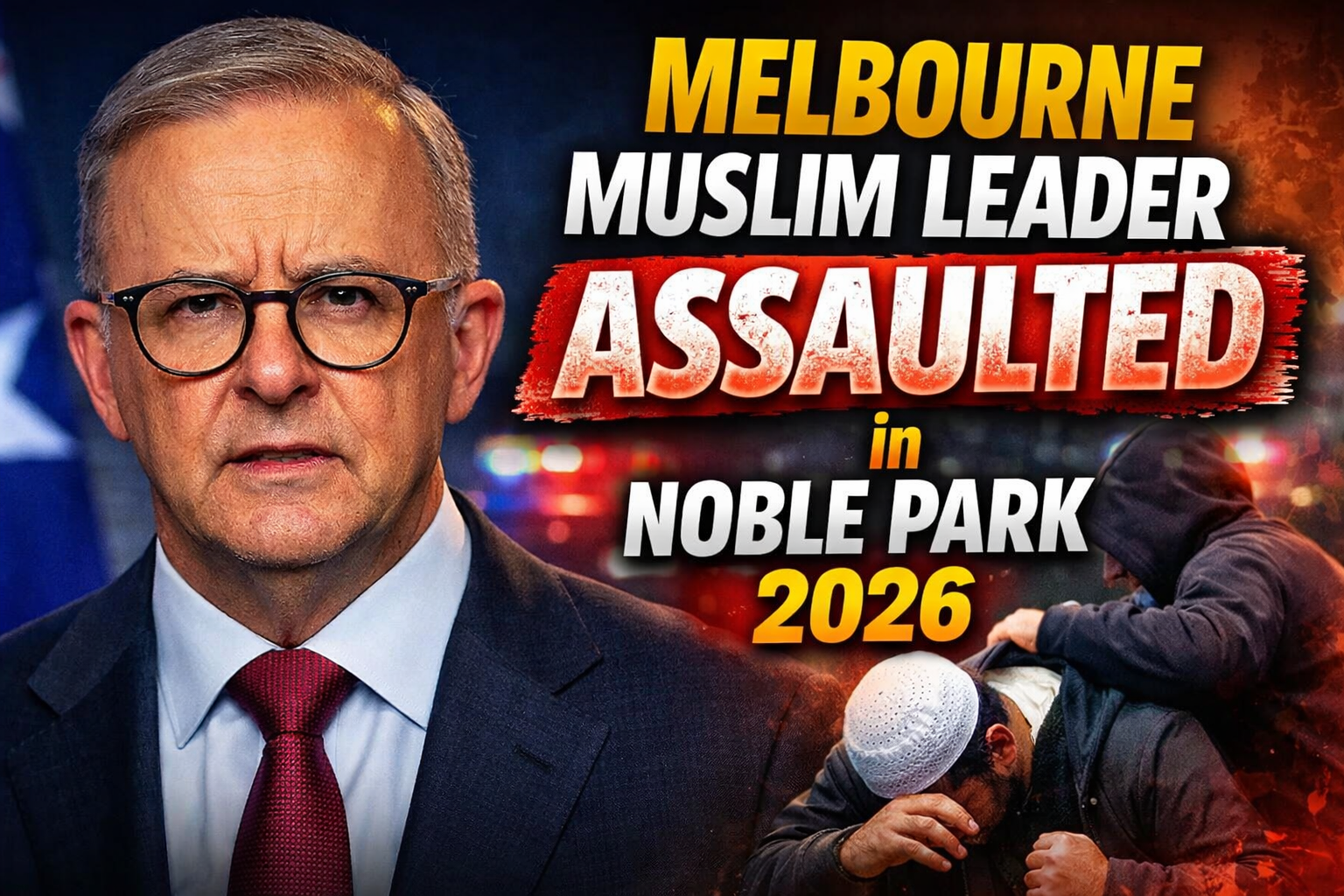
A prominent Melbourne Muslim leader and his wife suffered a brutal roadside assault in Noble Park on January 10, 2026, sparking fears of a white-supremacist hate crime. Victoria Police launched a full investigation, treating the attack as religiously motivated amid rising Islamophobic incidents across Australia. The incident unfolded on the South Gippsland Highway near Dandenong, highlighting vulnerabilities faced by faith communities in suburban Melbourne.
Incident Details
The assault occurred around 7:30pm as the imam drove home with his wife after evening prayers. Assailants in another vehicle boxed them in, hurling racial slurs and objects at their car before pulling over to attack. The leader took punches to the face, sustaining bruising and cuts, while his wife faced stabbing threats.
Bystanders intervened, scaring off the attackers who fled toward Dandenong. The couple’s vehicle suffered dents and shattered glass, but quick aid prevented worse harm. Emergency services rushed the imam to Dandenong Hospital for treatment, releasing him later that night.
Witnesses described a chaotic scene: screeching tires, shouted anti-Muslim abuse, and visible tattoos on the offenders suggesting extremist affiliations. Dashcam footage from nearby vehicles captured parts of the chase, aiding police inquiries.
Victim Profile
The imam, a respected figure in Melbourne’s Muslim community, leads prayers at a Noble Park mosque and counsels youth against radicalization. Known for interfaith work, he bridges divides in diverse suburbs like Noble Park, home to large Afghan and Pakistani populations. His wife supports community kitchens, aiding new migrants.
Neither had prior threats, making the random targeting chilling. Community leaders praised their contributions, noting the assault’s intent to terrorize everyday Muslims. Psychological support now aids their recovery from trauma.
Police Response and Investigation
Victoria Police classified the case as a potential hate crime under anti-vilification laws, deploying the Multi-Faith Offences and Public Order team. Detectives canvassed the highway, seizing CCTV from service stations and homes. Descriptions pinpoint Anglo men aged 20s-30s, short hair, tattoos including runes and Celtic crosses—hallmarks of far-right groups.
Forensic teams analyzed vehicle debris for DNA matches. Public appeals yielded tips, with two persons of interest flagged. Counter-terrorism units monitor links to known extremists, though no arrests as of January 12.
Superintendent calls for calm urged community vigilance without panic. Patrols intensified around mosques in Greater Dandenong, Noble Park, and Springvale.
Context of Rising Islamophobia
This attack fits a surge in anti-Muslim incidents post-2025, with Victoria reporting doubled complaints. Scanlon Foundation data shows Islamophobia as Australia’s top religious bias, fueled by Middle East tensions and online rhetoric. Similar assaults hit Melbourne shopping centers earlier, targeting hijab-wearers.
Symbolic dates like March 15 Islamophobia Day ring hollow amid inaction critiques. Political debates over protests conflate peaceful advocacy with extremism, stoking backlash. Far-right rallies in city outskirts amplify threats.
| Year | Reported Islamophobic Incidents (VIC) | % Increase |
|---|---|---|
| 2024 | 150 | – |
| 2025 | 320 | 113% |
| Early 2026 | 45 (proj.) | 40% YoY |
Community Reactions
The Australian National Imams Council condemned the “cowardly” act, linking it to white-supremacist ideology. Board of Imams Victoria activated support hotlines, while mosques boosted security with volunteer watches. Faith allies—churches, synagogues—joined vigils in Noble Park, denouncing hate.
Local MP for Greater Dandenong rallied constituents, promising tougher laws. Youth groups organized peace marches, reclaiming streets. Social media trended #SafeForImams, sharing solidarity stories.
Women’s networks highlighted gendered threats, as the wife’s stabbing fear underscored family targeting.
Expert Analysis on Hate Crime Patterns
Criminologists note tactical escalation: vehicle ramming attempts mimic overseas attacks, blending mobility with intimidation. Tattoos signal organized networks, possibly Melbourne chapter of neo-Nazi cells. Online forums glorify such “hunts,” radicalizing loners.
Islamophobia monitors like ANIC’s Action Against Islamophobia track 200+ cases yearly, urging federal databases. Psychologists warn vicarious trauma ripples through communities, eroding trust in police despite outreach.
Political and Media Responses
Premier Jacinta Allan vowed resources for hate probes, echoing NSW’s venue crackdowns. Federal Multicultural Affairs Minister condemned rhetoric equating protests with terror, blaming media false balances. Opposition called for symbol bans expansion.
Mainstream outlets covered responsibly, but tabloids faced bias accusations for underplaying motives. Community media amplified voices, countering narratives.
Historical Parallels in Melbourne
Noble Park echoes past hotspots: 2025 mosque firebombings in Broadmeadows, knife threats at Epping youth centers. Christchurch ripple effects lingered, with copycats hitting prayer halls. 2022 mosque stabbings drew interfaith coalitions, now reinvigorated.
Suburban demographics fuel tensions: Noble Park’s 20% Muslim population clashes with shifting fringes. Gentrification squeezes migrants, heightening visibility.
Broader Implications for Multicultural Victoria
Attacks test social cohesion in Melbourne’s mosaic suburbs. Schools report absenteeism spikes post-incidents, businesses lose custom from fear. Tourism dips near hotspots, but resilience shines through markets and festivals resuming.
Policymakers eye NSW models: fines for hate symbols, council venue checks. National unity plans propose education mandates on bias.
Support Services Available
Islamic Council Victoria offers counseling via 1800 lines. Beyond Blue adapts for faith trauma. Legal Aid assists reporting, with pro bono for reprisal fears.
Mosques train first responders, partner with police for drills. Government grants fund CCTV upgrades.
Preventive Measures and Community Strategies
Imams pivot sermons to resilience, blending faith with safety talks. Neighborhood watches link apps for alerts. Schools integrate anti-hate curricula, targeting teens vulnerable to online poison.
Interfaith barbecues rebuild bridges, humanizing “others.” Tech firms throttle extremist content, per eSafety demands.
| Strategy | Implemented By | Expected Outcome |
|---|---|---|
| Mosque CCTV Grants | State Gov | 80% coverage |
| Youth Resilience Programs | Imams Council | 50% attendance rise |
| Police Liaison Teams | VicPol | 30% report increase |
| Interfaith Events | Local Councils | Community trust +20% |
Victim Impact Statements
The imam spoke of shaken faith in safety, yet recommitted to dawah. His wife described terror: “We fled war for this?” Healing involves therapy, family, prayer circles.
Bystanders hailed heroes, their intervention averting tragedy. Dashcam donors aid justice.
Calls for Systemic Change
ANIC demands prosecutions signaling zero tolerance, national Islamophobia tsar. Media codes curb inflammatory framing. Schools mandate extremism modules.
Activists push Racial and Religious Tolerance Act strengthening, matching hate penalties to gravity.
Looking Ahead
Investigation breakthroughs expected soon, with CCTV matches. Community heals via unity events January 15. Long-term, expect law reforms by mid-2026.
This assault tests Australia’s multicultural promise, demanding action beyond words. Noble Park stands resilient, refusing hate victory.

Vineeth T.C. is a news writer and digital content contributor at PageEuropean, covering key developments across New Zealand and Australia. His work focuses on delivering clear, fact-based reporting on current affairs, public policy, business updates, and regional news that matter to readers.