
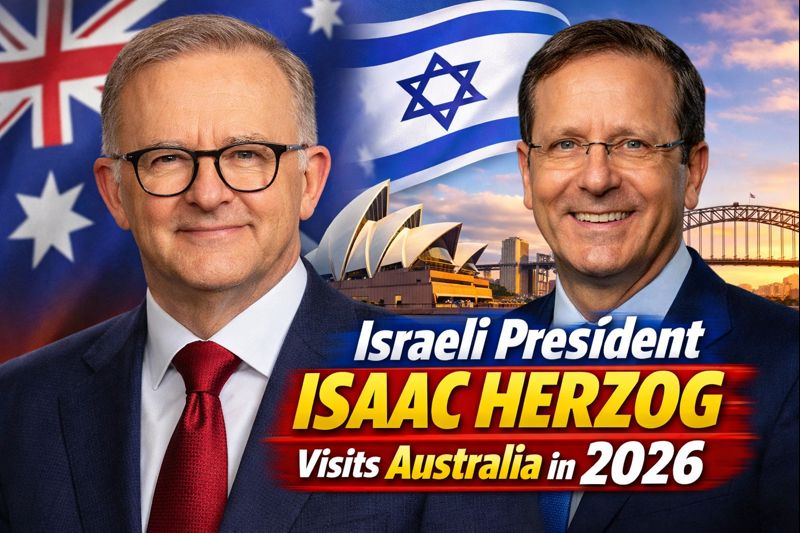
Israeli President Isaac Herzog’s visit to Australia in early 2026 marks a significant diplomatic moment, extending an invitation extended after a tragic terror attack in Sydney. Foreign Minister Penny Wong used the occasion to outline Labor’s nuanced stance on Israel, balancing support for security with calls for humanitarian accountability. The trip highlights Australia’s complex navigation of Middle East tensions amid domestic divisions.
Background to the Invitation
The invitation stemmed from a shocking terror attack at a Hanukkah event on Bondi Beach in December 2025, where fifteen people lost their lives and dozens suffered injuries. Prime Minister Anthony Albanese, in a call with Herzog shortly after, expressed profound dismay and announced that the Governor-General would formally invite the Israeli President for an official visit as soon as possible. Herzog accepted promptly, also noting outreach from the Zionist Federation of Australia.
This gesture aimed to honor victims and address surging antisemitism, which had spiked following the incident. Albanese emphasized protocol for a head-of-state visit, framing it as solidarity against extremism and jihadist threats. Herzog echoed the need for robust legal measures to combat rising hatred, extending condolences to affected families.
The timing aligned with early 2026, allowing preparations amid Australia’s summer calendar. Community leaders from Jewish organizations welcomed the move, seeing it as a bulwark against isolation.
Details of the Visit
Herzog arrived in Sydney to commence a multi-city itinerary, beginning with a ceremonial welcome at Government House. Ceremonies included wreath-laying at the Bondi memorial site, interfaith dialogues, and addresses to parliamentary gatherings. In Melbourne and Canberra, he engaged business roundtables and youth forums, focusing on innovation ties between Israel and Australia.
Security remained paramount, with heightened measures reflecting global threats to Israeli officials. The visit spanned four days, incorporating private meetings with Albanese and Wong, alongside community events hosted by Jewish federations. Media coverage highlighted symbolic gestures, like joint walks along Bondi, underscoring resilience.
Public engagements drew crowds, blending supporters waving Israeli flags with protesters voicing Gaza concerns. Diplomatic dinners featured discussions on trade, defense tech, and regional stability.
Penny Wong’s Key Comments
Foreign Minister Penny Wong positioned Labor’s Israel policy as principled yet pragmatic during a press conference alongside Herzog. She reaffirmed Australia’s commitment to Israel’s right to self-defense, particularly post-Bondi, while stressing adherence to international humanitarian law. Wong highlighted Labor’s shift under Albanese, recognizing Palestinian statehood aspirations alongside security guarantees.
Wong critiqued escalations in Gaza, urging restraint and ceasefire pathways, without endorsing boycotts. She defended the visit as apolitical solidarity, countering claims of undue favoritism. On antisemitism, Wong pledged tougher hate speech laws, linking domestic rises to imported conflicts.
Her remarks navigated party divides, appeasing progressive wings critical of Israel while assuring allies of steadfast ties. Wong emphasized two-state solutions, with Australia’s UN voting record reflecting balanced abstentions.
Labor Party’s Evolving Israel Policy
Labor’s approach has matured since the 2022 election, blending traditional alliances with progressive pressures. Albanese’s government boosted defense pacts with Israel, including cyber and drone collaborations, while increasing aid to Gaza via UN channels. Policy papers outline recognition of Palestine post-peace deal, a departure from prior Coalition firmness.
Internal tensions simmer: left factions push divestments, while right-leaning unions prioritize trade. Wong’s diplomacy threads this needle, advocating dialogue over isolation. Recent recognitions of Palestinian missions signal intent, tempered by Herzog visit optics.
Polling shows public split, with urban voters favoring balance amid youth activism.
| Policy Aspect | Labor Stance | Coalition Contrast |
|---|---|---|
| Self-Defense | Strong Support | Unconditional |
| Gaza Aid | Increased Funding | Monitored |
| Palestinian State | Conditional Recognition | Post-Peace Only |
| Antisemitism Laws | Tougher Measures | Existing Framework |
| Trade Ties | Expanded | Maintained |
Community Reactions in Australia
Jewish communities hailed the visit as vital affirmation, with federations organizing welcomes and educational events. Bondi survivors shared stories, fostering empathy. Synagogues hosted solidarity vigils, reporting attendance surges.
Conversely, pro-Palestinian groups mobilized protests in Sydney and Melbourne, decrying Herzog’s Gaza role. Imams and activists demanded invitation withdrawals, citing genocide allegations. Clashes remained minimal, policed tightly, though social media amplified divides.
Universities saw debates, with Jewish students facing harassment spikes. Interfaith councils mediated, promoting coexistence forums.
Diplomatic Significance
The visit bolsters bilateral relations strained by Middle East fallout. Australia-Israel trade hit record highs in tech and agribusiness, with Herzog pitching water tech for drought-prone regions. Defense dialogues eyed AUKUS synergies, sharing intel on terror financing.
Herzog’s speeches framed Australia as a like-minded democracy combating extremism. Reciprocity includes Australian leader trips to Israel, deepening people-to-people links.
Globally, it signals Australia’s independence from UN consensus, prioritizing alliances.
Domestic Political Context
Albanese leveraged the visit to unify Labor ahead of midterms, countering opposition attacks on weakness. Wong’s comments preempted backbench rebellions, reinforcing party discipline. Coalition leader Peter Dutton praised the invitation but jabbed at Labor’s Gaza rhetoric.
Polling indicated modest approval bumps for handling antisemitism, though Gaza skepticism persisted among multicultural voters.
Historical Australia-Israel Ties
Relations date to 1949 recognition, flourishing in trade and migration. Jewish Australians, numbering over one hundred thousand, anchor cultural bonds. Past presidential visits, like Shimon Peres in 2013, focused innovation.
Tensions peaked post-2023 Hamas attacks, with Australia abstaining on key UN votes. Herzog’s trip resets momentum.
Protests and Counter-Events
Nationwide demonstrations drew thousands, centered on consulate blockades. Organizers cited Swiss probes into Herzog as leverage, though unlinked to Australia. Police kettled crowds, arresting dozens for disruptions.
Counter-protests by Jewish groups emphasized peace, distributing olive branches. Media framed tensions as imported, urging local focus.
Interfaith and Youth Engagement
Herzog met Muslim leaders, discussing shared Abrahamic values against hate. Youth panels explored startup ecosystems, with Israeli firms mentoring Aussie entrepreneurs.
School programs integrated visit lessons on tolerance, reaching diverse classrooms.
Media Coverage and Public Discourse
Australian outlets balanced coverage: ABC delved into Gaza critiques, while commercial media spotlighted security. Social platforms buzzed, with hashtags trending on both sides.
Editorials urged nuance, warning polarization risks.
Economic and Trade Dimensions
Talks advanced free trade tweaks, targeting pharma and renewables. Herzog showcased desalination tech for Murray-Darling fixes.
Investments flowed, with Israeli VCs eyeing Aussie quantum leaps.
Security Implications
Post-Bondi, agencies shared counter-terror playbooks. Herzog praised Australian resolve, pledging intel reciprocity.
Domestic laws eyed expansions for online radicalization curbs.
Wong’s Broader Foreign Policy Vision
Wong envisions middle-power activism: Pacific focus with Middle East engagement. Labor prioritizes rules-based order, mediating via Quad.
Her Israel comments fit Pacific deterrence narratives against Iran proxies.
Future Bilateral Engagements
Follow-up includes trade missions and student exchanges. Albanese eyes Jerusalem trip, cementing ties.
Joint taskforces on cyber threats promise longevity.
Challenges Ahead
Balancing acts persist: Gaza ceasefires hinge on US shifts, testing Labor coherence. Antisemitism vigilance demands sustained funding.

Vineeth T.C. is a news writer and digital content contributor at PageEuropean, covering key developments across New Zealand and Australia. His work focuses on delivering clear, fact-based reporting on current affairs, public policy, business updates, and regional news that matter to readers.