
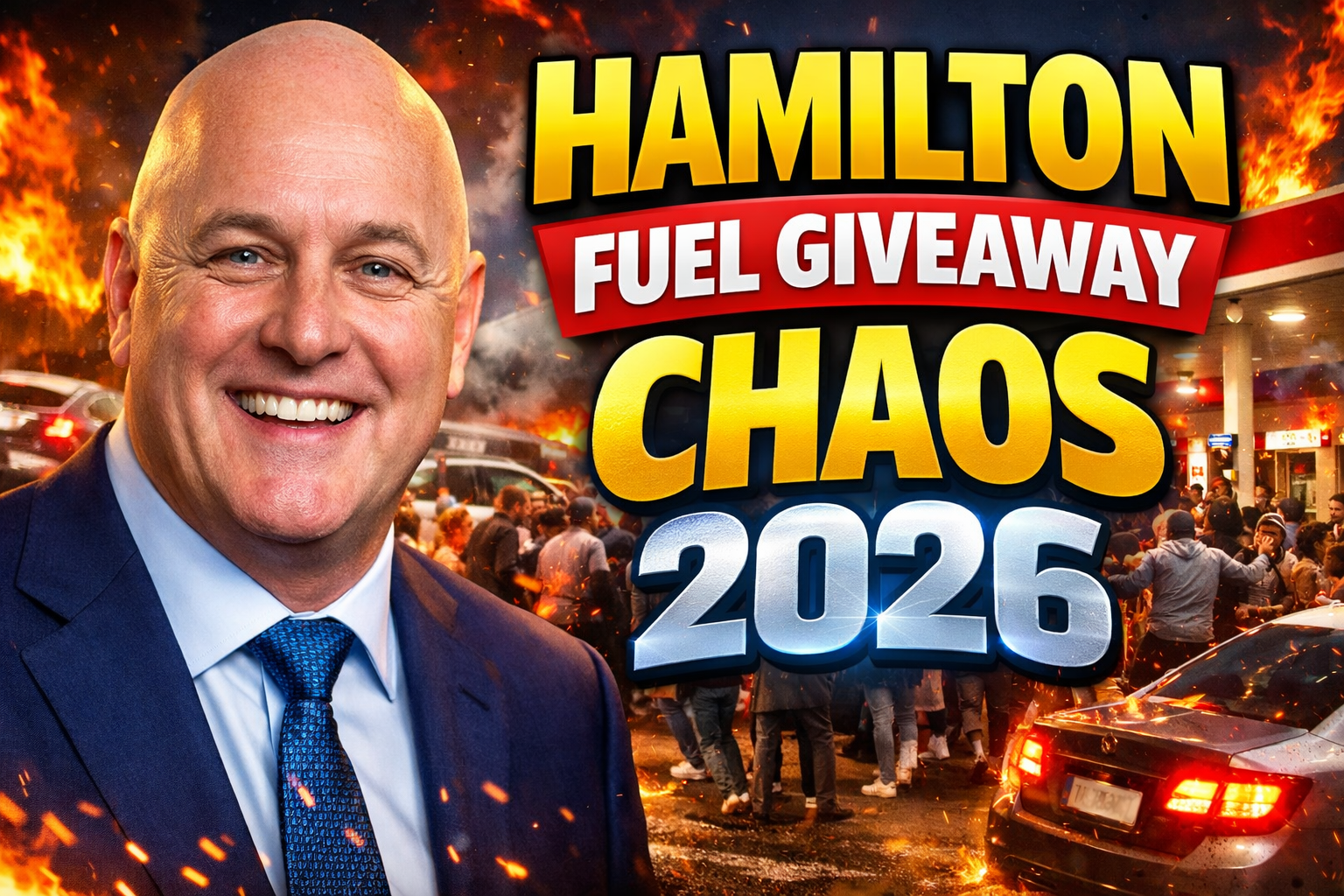
In early April 2026, the city of Hamilton, New Zealand, became the unlikely setting for a textbook case of “going viral” gone wrong. A planned free‑fuel giveaway at a busy petrol station, promoted by a local internet personality, spiralled into a chaotic, hours‑long gridlock that drew hundreds of cars, clogged surrounding roads, and ultimately forced police intervention. What began as a click‑bait stunt for likes and social‑media buzz quickly mutated into a public‑order headache, exposing the thin line between promotional marketing and public safety in an age of instant information.
The Stunt: How a Free‑Fuel Gimmick Was Brought to Life
At the heart of the chaos was a small but well‑executed marketing idea. Rongo Keene, a Hamilton‑based internet personality known for strength‑and‑lifestyle content, announced a free‑fuel promotion at the Z‑brand station Te Papanui in Hamilton. The premise was simple: a limited number of customers would receive a set amount of fuel at no cost, with the giveaway framed as a “thank you” to the local community and a chance to grow Keene’s digital following.
The announcement was posted on social‑media platforms, with short videos, eye‑catching text, and a clear call‑to‑action prompting followers to show up at the station on the specified day and time. Within hours, the post began circulating beyond Hamilton, picking up shares from regional pages, local news aggregators, and even foreign‑language meme accounts that repackaged the stunt for Russian‑language audiences. What started as a hyperlocal event rapidly morphed into a national‑level curiosity.
Viral Spread and the Russian‑Language Twist
What made the Hamilton giveaway stand out was not just its scale but its unexpected global reach. Clipped footage of the growing crowd at the pumps, the snaking lines of vehicles, and the bollards and signage being ignored made its way into Russian‑language media spaces, where it was framed as a surreal example of Western consumer behaviour. Some posts treated it as a light‑hearted prank, while others used it to comment on the volatility of fuel prices and the desperation of motorists in times of economic strain.
This secondary wave of virality added fuel to the fire, so to speak. Online viewers in New Zealand, seeing the station appear in foreign‑language feeds, interpreted the attention as proof that the event was “big news” and rushed to join the queue. The perception of scarcity, amplified by social‑media algorithms constantly resharing the same dramatic shots, encouraged more people to arrive, even if they were not regular followers of the influencer. The result was a feedback loop: more people showed up because more people were talking about it, and more people were talking about it because more people were showing up.
The Crowd Surge: From Queue to Chaos
When the giveaway began, the station’s capacity was quickly overrun. The forecourt, designed to handle a steady flow of vehicles, soon found itself jammed with cars stacked bumper‑to‑bumper, waiting patiently for their turn at the pumps. Drivers had been told there was a limit per vehicle, yet the urge to “get something for nothing” led many to queue anyway, even if they were not sure whether they would qualify.
Within a short time, the line spilled from the forecourt onto the surrounding roads, cutting into intersections, blocking side streets, and disrupting normal traffic flow. Local residents complained of entire roads becoming impassable, with buses, emergency vehicles, and delivery vans stuck behind the wall of cars. Service‑station staff, caught between the need to manage fuel‑dispensing protocols and the pressure of an ever‑growing queue, tried to keep the situation under control, but their options were limited. The physical layout of the station, combined with the sheer volume of vehicles, meant that the giveaway was no longer a controlled event but a de‑facto open‑air gathering.
Police Called In: The Authorities Step Up
As the congestion grew, local authorities took notice. Police were called to the scene to manage traffic and ensure that the situation did not escalate into something more serious. Officers arrived to begin redirecting vehicles away from the station, set up temporary road closures, and discourage drivers from joining an already over‑full queue. The presence of law‑enforcement personnel underscored the seriousness of the disruption: what had begun as a fun social‑media stunt was now occupying public roads, delaying essential services, and posing a risk of accidents or confrontations between frustrated motorists.
The event was eventually shut down early, with the station cutting short the giveaway to restore order. The decision was driven by the need to clear the roads, reduce the risk of collisions, and allow emergency services and public transport to resume normal operations. The abrupt end did not sit well with everyone; some drivers who had waited for hours left feeling frustrated, while others argued that the stunt should never have been allowed to go ahead in the first place.
Risk Factors: Safety, Fuel Anxiety, and Influencer Loopholes
The Hamilton incident highlighted several underlying tensions. One was the vulnerability of public spaces to social‑media‑driven events. Promotions like free‑fuel giveaways tap into existing anxieties about fuel prices, which have been rising and remain a sensitive issue for many households. In an environment where every extra dollar at the pump counts, the promise of “free” fuel, even if it is limited, becomes a powerful motivator.
Another factor was the gap between content‑creator responsibility and on‑the‑ground planning. Influencers and small‑business marketers increasingly use stunts to grab attention, but they often lack the infrastructure, risk‑assessment capability, and coordination with local authorities to manage large crowds. The Hamilton giveaway appeared to be a case of that gap in action: a digital‑only plan that did not fully account for real‑world capacity, traffic management, and safety protocols.
The situation also raised questions about how events like this are regulated. In many jurisdictions, large gatherings require permits, traffic‑management plans, and consultation with local councils or emergency‑services providers. The Hamilton fuel giveaway, however, seemed to fall into a grey area—a promotion run by an individual, hosted at a private business site, that quickly took on the characteristics of a public event without the associated oversight. The chaos that followed suggested that the current regulatory framework may not be fully equipped to handle the scale and speed of viral stunts.
Public Reaction and Questions About Accountability
In the days after the event, public reaction in Hamilton and beyond was mixed. Some residents expressed amusement at the spectacle, sharing photos and videos on social media and joking about the “petrol‑party” that had taken over the suburb. Others were more critical, pointing to the disruption to local life, the risk to safety, and the precedent that could be set by future influencers attempting to replicate the stunt.
Local leaders and community groups called for clearer guidelines around promotional events that have the potential to attract large crowds. The debate centred on who should be held accountable when things go wrong: the influencer who promoted the event, the business that hosted it, local authorities who allowed the crowd to build, or a combination of all parties. The episode prompted discussions about the need for better coordination, communication, and foresight when marketing campaigns intersect with public‑space management.
The Bigger Picture: Fuel Prices, Social Media, and Public Order
Beyond the immediate disruption in Hamilton, the incident fits into a broader global pattern. In 2026, fuel prices have been under pressure due to geopolitical tensions, shifting supply chains, and fluctuating demand, making motorists unusually sensitive to any promise of savings. At the same time, social‑media platforms have turned promotions into highly scalable events, where a single post can reach hundreds of thousands of people in minutes. The combination of those factors creates a volatile environment in which a small‑scale giveaway can quickly become a large‑scale public‑order event.
The Hamilton free‑fuel giveaway, therefore, is not just a local story but a case study in how digital culture, consumer anxiety, and public‑space management converge. It underscores the need for creators, businesses, and policymakers to think more carefully about the potential consequences of viral stunts, particularly when they involve resources as essential and high‑risk as fuel and public roads.
Conclusion
The Hamilton fuel‑giveaway chaos of April 2026 stands as a cautionary tale about the power and peril of viral marketing. What began as a lighthearted promotional stunt by an internet personality turned into a city‑level traffic crisis, forcing police intervention and prompting questions about responsibility, safety, and regulation. The episode highlighted how social‑media virality can amplify a small idea into a large‑scale public event, and how the promise of “free” fuel can tap into deeper anxieties about rising costs and economic strain.

Vineeth T.C. is a news writer and digital content contributor at PageEuropean, covering key developments across New Zealand and Australia. His work focuses on delivering clear, fact-based reporting on current affairs, public policy, business updates, and regional news that matter to readers.