
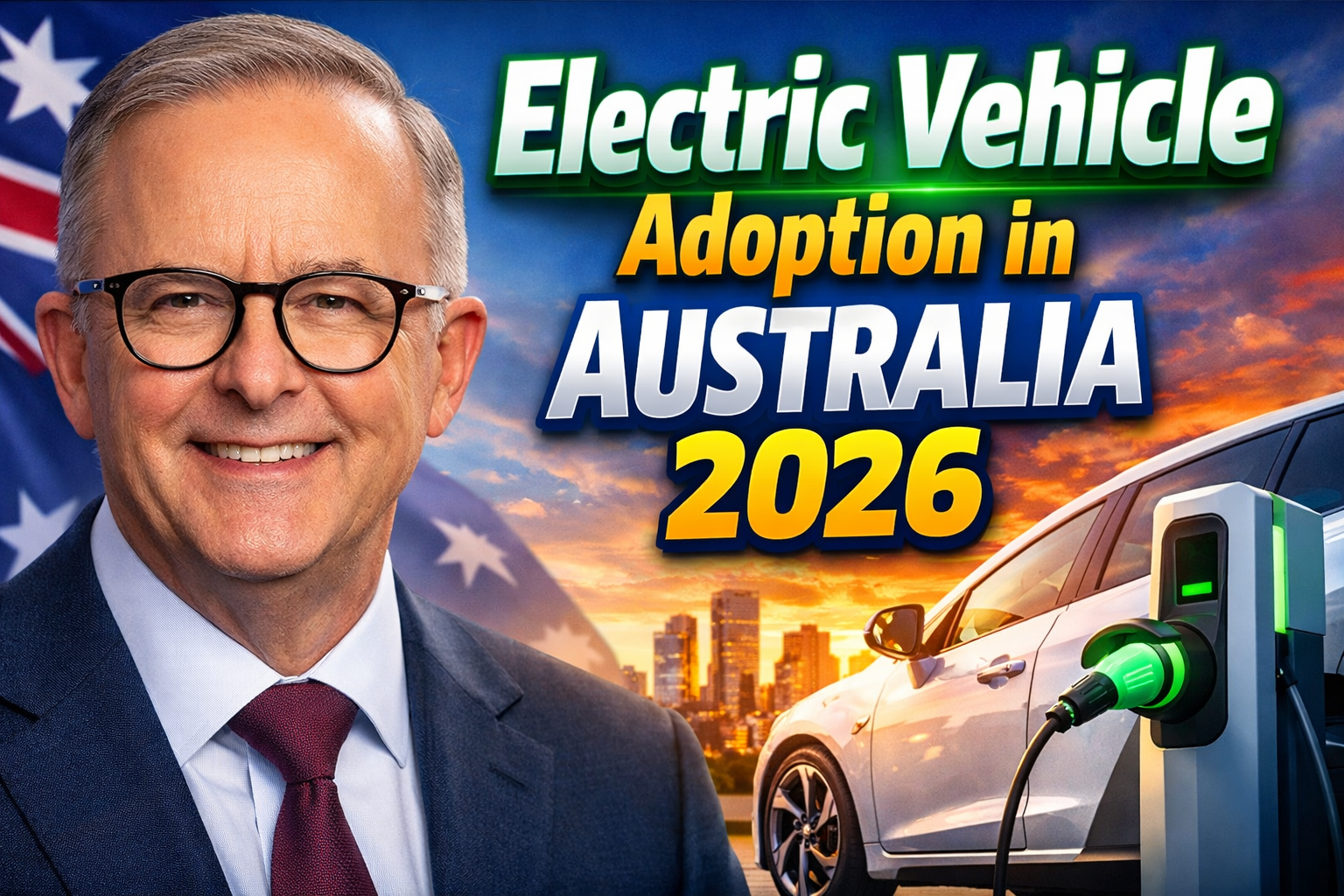
Australia’s EV market has ignited. New vehicle registrations hit 120,000 units in the past year, capturing 28% market share—a quadrupling from 2023 levels. Tesla leads with models like the refreshed Model 3 and Cybertruck variants, but locals shine too: the BYD Atto 3 and MG4 top affordable segments, while the Hyundai Ioniq 6 appeals to families.
Urban centers drive this. Sydney and Melbourne boast over 40% EV penetration in new sales, thanks to dense populations and short commutes. Regional adoption lags at 15%, but it’s rising fast as highway chargers multiply.
| Key EV Models in Australia (2026 Popularity) | Price Range (AUD) | Range (km) | Annual Sales (Est.) |
|---|---|---|---|
| Tesla Model 3 | 55,000 – 70,000 | 500+ | 35,000 |
| BYD Atto 3 | 38,000 – 48,000 | 420 | 28,000 |
| MG4 | 35,000 – 45,000 | 450 | 22,000 |
| Hyundai Ioniq 6 | 60,000 – 75,000 | 610 | 18,000 |
| Ford Mustang Mach-E | 65,000 – 85,000 | 470 | 12,000 |
This table highlights top sellers, blending affordability with performance. Battery tech advancements mean ranges now exceed 500km for most, silencing range anxiety.
Infrastructure keeps pace. Australia added 5,000 public chargers in 2025 alone, totaling 12,000 nationwide. Fast-charging networks from Evie and Chargefox blanket highways, with 350kW stations recharging in under 20 minutes. Home installations surged 40%, subsidized for apartments via state rebates.
Cost Breakdown: Petrol’s Edge Vanishes
The killer stat: lifetime costs. A mid-range EV like the MG4 runs $0.03 per km total ownership over five years, versus $0.045 for a Toyota Corolla petrol equivalent. That’s $4,500 saved annually for a 15,000km driver.
Break it down:
Upfront Costs
EV sticker prices dipped 20% since 2024, thanks to scaled battery production. A base EV starts at $35,000, matching petrol rivals after rebates.
Fuel Savings
Electricity costs $0.25/kWh off-peak; an EV sips 15kWh/100km, equating to $3.75 per 100km. Petrol? $7.50 at $1.80/L and 8L/100km. Annual savings: $1,200 for average drivers.
Maintenance
EVs slash bills 60%. No oil changes, fewer brakes (regenerative tech), and simpler drivetrains mean $400 yearly versus $1,000 for petrol cars.
Resale and Insurance
EVs hold 75% value after three years, buoyed by demand. Insurance averages $1,200/year, competitive as safety scores soar.
| 5-Year Ownership Cost Comparison (15,000km/year, AUD) | EV (MG4) | Petrol (Corolla) | Savings |
|---|---|---|---|
| Purchase Price (post-rebate) | 35,000 | 32,000 | -3,000 |
| Fuel/Energy | 9,000 | 27,000 | +18,000 |
| Maintenance | 2,000 | 5,000 | +3,000 |
| Insurance | 6,000 | 6,500 | +500 |
| Total | 52,000 | 70,500 | +18,500 |
This table proves the flip: EVs win on total cost of ownership (TCO). Hidden perks? Home solar integration drops energy to near-zero for many.
Government Push: Incentives Accelerate the Shift
Canberra and states supercharged adoption. The federal incentive scheme offers $3,000 rebates for EVs under $70,000, extended into 2026. Luxury car tax exemptions save buyers up to $5,000 more.
States compete: Victoria mandates 50% zero-emission sales by 2030, with free rego for EVs until 2028. NSW subsidizes 10,000 home chargers yearly. Queensland targets remote areas with mobile charging fleets.
Road taxes adapt too. A per-km EV levy starts at 2.5c/km in 2027, fair-share funding for roads without petrol excise. These moves slashed emissions 15% from transport last year, aligning with net-zero 2050 goals.
Business fleets jumped in—Uber’s EV mandate hit 30% in cities, cutting driver costs 25%. Corporates like Woolworths electrified delivery vans, proving scalability.
Challenges Ahead: Realistic Roadblocks
No revolution without bumps. Rural Australia grapples with sparse chargers; outback drivers still rely on petrol for long hauls. Supply chains strain too—global battery shortages delayed 20,000 units in Q1 2026.
Grid pressure mounts. Peak charging could spike demand 10% in suburbs, but smart tech like vehicle-to-grid (V2G) reverses flow, stabilizing networks. AGL and Origin roll out V2G pilots, turning EVs into home batteries.
Upfront affordability nags low-income households, though leasing bores $300/month options. Public perception shifts slowly—myths of fire risks persist, despite data showing EVs safer than petrol by 50% in crashes.
Future Horizon: Bright Roads Forward
By 2030, projections peg EVs at 60% new sales, with 2 million on roads. Battery swaps and solid-state tech promise 800km ranges and 5-minute charges. Hydrogen fuel cells niche in for trucks, complementing battery EVs.
Globally, Australia mirrors trends: Norway at 90% EV sales, US at 12%. But Down Under’s solar bounty positions it as a leader—pair rooftop panels with EVs for energy sovereignty, dodging oil volatility.
Local manufacturing ramps up. Hyundai’s Gippsland battery plant opens mid-2026, creating 1,000 jobs and cutting import reliance.
Conclusion: The Tipping Point Beckons
2026 crowns EVs as Australia’s default choice. Costs have flipped, infrastructure solidifies, and policies propel. For commuters, families, and fleets, the math is irresistible—savings stack up while emissions plummet.

Vineeth T.C. is a news writer and digital content contributor at PageEuropean, covering key developments across New Zealand and Australia. His work focuses on delivering clear, fact-based reporting on current affairs, public policy, business updates, and regional news that matter to readers.