
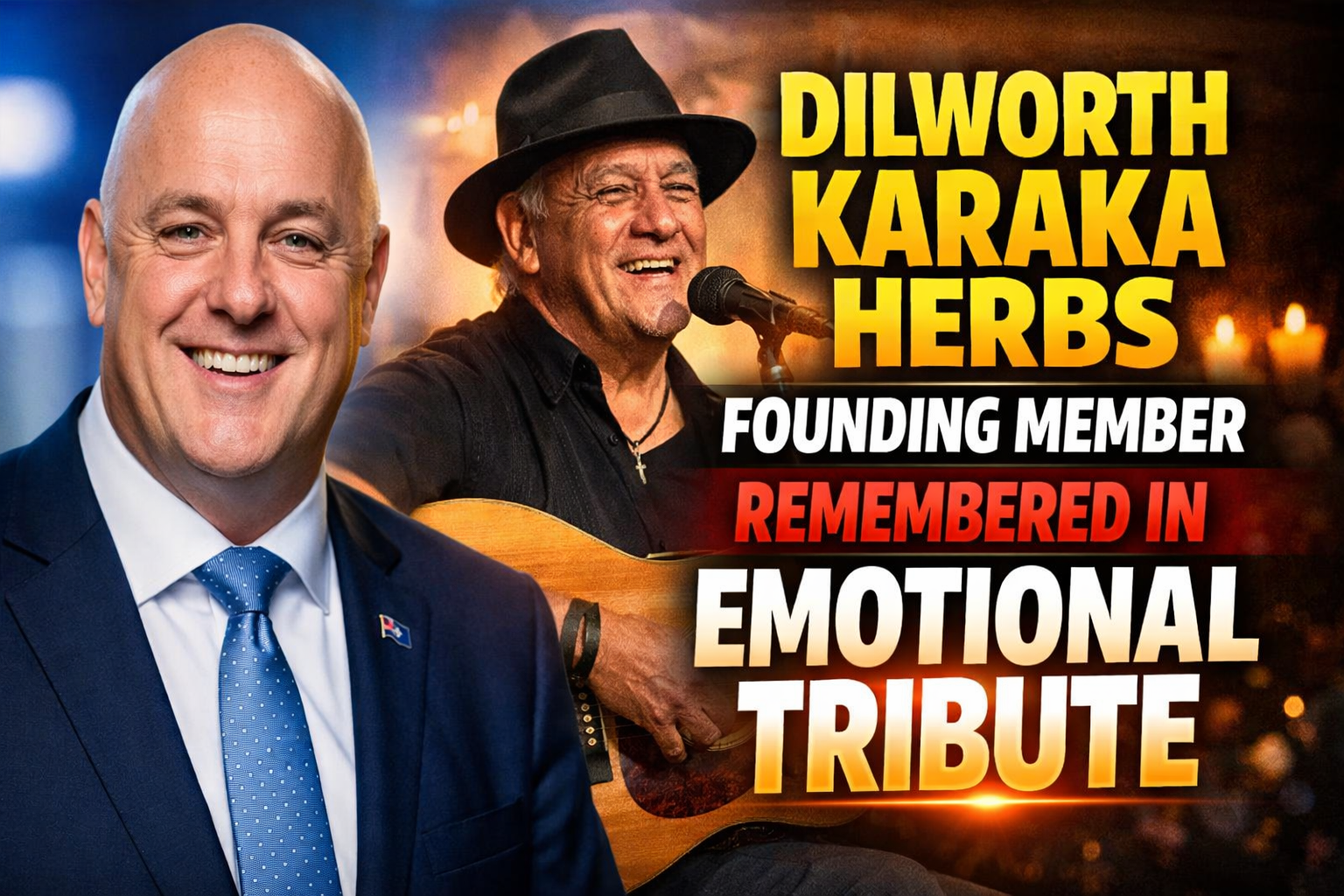
Dilworth Karaka, the soulful voice and unwavering anchor of New Zealand’s legendary reggae band Herbs, has left an indelible mark on Pacific music and activism. Tributes pour in from whānau, fellow musicians, and fans worldwide, celebrating a man whose songs fused rhythm with raw social justice for over four decades.
Introduction
In the heart of Auckland’s vibrant Polynesian community, Dilworth Karaka emerged as a pioneer, blending Jamaican reggae grooves with Māori and Pasifika narratives. Born in nineteen fifty, he co-founded Herbs in nineteen seventy-nine, becoming its only constant member through lineup shifts and life’s tempests. His passing at age seventy-five has sparked an emotional outpouring, with marae gatherings and social media floods honouring his legacy as the “rock and foundation” of Aotearoa’s protest music.
Karaka’s music wasn’t mere entertainment; it was a megaphone for the marginalised—Dawn Raids victims, Bastion Point protesters, nuclear-free warriors. As co-founder Toni Fonoti reflected, Karaka was the driving force, his guitar riffs and gravelly vocals carrying messages “for the head and music for the soul.” From waterfront labourer to cultural icon, his journey mirrors New Zealand’s multicultural evolution.
Early Life and Roots in Auckland
Dilworth John Karaka grew up in Auckland’s urban sprawl, attending St Benedict’s School and Tamaki College. The son of Māori descent, he navigated a world of factory lines, labouring gigs, and truck driving before docking eighteen years on the Auckland waterfront. Those docks, alive with Polynesian workers, forged his worldview—exploitation, resilience, and unbreakable community bonds.
Introduced to music via the Papa Band in the late seventies, Karaka’s path crossed Fonoti’s through Polynesian Panthers leader Will ‘Ilolahia. The Panthers, fighting Dawn Raids that deported overstayers, ignited his activism. Karaka joined Herbs at its birth: Fonoti on keys, Spencer Fusimalohi on drums, Fred Faleauto on bass. Rehearsals in central Auckland flats birthed a sound defying genres—reggae with Pacific soul.
Waterfront tales shaped him. “Songs came from real life,” he once said, recalling mates deported or bashed by police. This grit propelled Herbs’ debut demos at Mascot Studios, capturing raw urgency.
Formation and Rise of Herbs
Herbs exploded in nineteen eighty-one with the EP What’s Be Happen?, a landmark fusing Bob Marley influences with local fire. Tracks like “Long Waimangu” wailed against land grabs, echoing Bastion Point’s nineteen seventy-seven- nineteen seventy-eight occupation. Karaka’s lead vocals—deep, urgent—demanded justice: “Give us back the land that’s ours.”
The band swelled multi-ethnic: Samoans, Tongans, Cook Islanders, Pākehā, Māori. Karaka, guitarist and singer, steered through changes—dozens cycled, but he endured. Their sound? Soulful reggae with horns, keys, and chants, topping charts and festivals.
Nineteen eighty-four’s “French Letter” protested French nuclear testing, sampling chants from the Rainbow Warrior protests. Hits like “Nuclear Waste” and “Sensitive to a Smile” crossed to pop, collaborating with Dave Dobbyn, Tim Finn, Annie Crummer. By the nineties, albums like Homegrown solidified their status, earning the title New Zealand’s “most soulful, heartfelt voice.”
Here’s a timeline of Herbs’ pivotal moments under Karaka’s watch:
| Year | Milestone | Key Song/Album | Impact |
|---|---|---|---|
| 1979 | Band founded in Auckland | Demos at Mascot Studios | Pacific reggae pioneer |
| 1981 | Debut EP What’s Be Happen? | “Long Waimangu” | Voice for land rights, Dawn Raids |
| 1984 | Anti-nuclear hit | “French Letter” | Chart-topper, protest anthem |
| 1990s | Mainstream crossovers | Homegrown, “Sensitive…” | Collaborations with Dobbyn, Finn |
| 2012 | NZ Music Hall of Fame | Inductees as 11th cohort | Cultural icons recognised |
| 2019 | Documentary Songs of Freedom | Features Karaka’s stories | Legacy cemented |
Musical Legacy and Activism
Karaka embodied Herbs’ ethos: music as activism. “We were the voice for people not getting heard,” he told documentary makers. Songs tackled racism, poverty, environment—Dawn Raids’ family splits, Springbok Tour violence, uranium mining threats.
His guitar work—chunky riffs over skanking rhythms—grounded anthems. Vocals carried pain and hope, like “Light Up the Fire”‘s call to unity. Beyond Herbs, he wrote solo, mentored youth, performed at marae.
Inducted into the New Zealand Music Hall of Fame in twenty twelve, Herbs set Pacific reggae standards. The twenty nineteen doco Herbs: Songs of Freedom immortalised them, Karaka sharing Panthers tales and studio yarns. International nods followed: UB40 mourned him as a “founder member and frontman,” Fiji media hailed the “Pacific reggae pioneer.”
Stats underscore reach: millions of streams, festivals from Sweetwaters to Pasifika. Yet Karaka stayed humble—no flash, just whānau and guitar.
Personal Life and Character
Whānau described a “humble man with a musical soul.” Father, brother, uncle—Karaka balanced stage with home. He spoke little of struggles, letting songs vent. Fonoti called him “the face of Herbs,” the constant carrying kaupapa post-departures.
Health woes shadowed later years, but he gigged on, voice undimmed. Tributes paint warmth: master storyteller, light in rooms, unfailingly kind. “Uncle Dilworth came from Papa Band,” one fan posted, linking to Aotearoa’s unsung history.
The Emotional Tributes
News broke March sixth, whānau confirming via social media: “Deep sorrow.” Messages flooded: “Legend,” “Voice of the voiceless.” Prime Minister extended condolences; musicians shared clips.
Fonoti: “The rock of Herbs.” Dobbyn: “Brother in song.” Crummer’s family recalled collabs. International: UB40’s RIP, Pacific outlets lauding fusion.
Ōrākei Marae hosts his lying in state March ninth, then Whaatapaka Marae for two nights and burial—whānau-led, songs ringing.
Fan vigils pop up: Auckland streets humming “French Letter,” Queenstown bars toasting. Social scrolls brim anecdotes: “Saw Herbs at nineteen eighty-five protest—changed me.”
Impact on New Zealand Music and Pacific Identity
Herbs under Karaka birthed Pacific reggae, predating fusion trends. They bridged islands—Samoan lali drums, Māori haka, Tongan brass—crafting Aotearoa sound. Protest roots influenced Six60, Sons of Zion; activism inspired Ladyhawke, Bic Runga.
Youth draw from it: school kapa haka weave reggae, Pasifika festivals blast Herbs. Globally, Pacific diaspora streams “What’s Be Happen?” amid modern fights—climate, migration.
Karaka’s passing spotlights voids: fewer voices for Pasifika tales. Yet legacy endures—playlists, docs, Hall of Fame ensuring “songs of freedom” echo.
Looking Ahead: Celebrating the Pioneer
Funeral approaches, but tributes evolve: benefit gigs, re-releases eyed. Whānau urge living his kaupapa—speak truth, uplift.
Dilworth Karaka: from docks to stages, waterfront worker to worldwide echo. His riffs rallied nations; soul stirred souls. In Pacific reggae’s heartbeat, he lives—guitar eternal, message undying.

Vineeth T.C. is a news writer and digital content contributor at PageEuropean, covering key developments across New Zealand and Australia. His work focuses on delivering clear, fact-based reporting on current affairs, public policy, business updates, and regional news that matter to readers.