
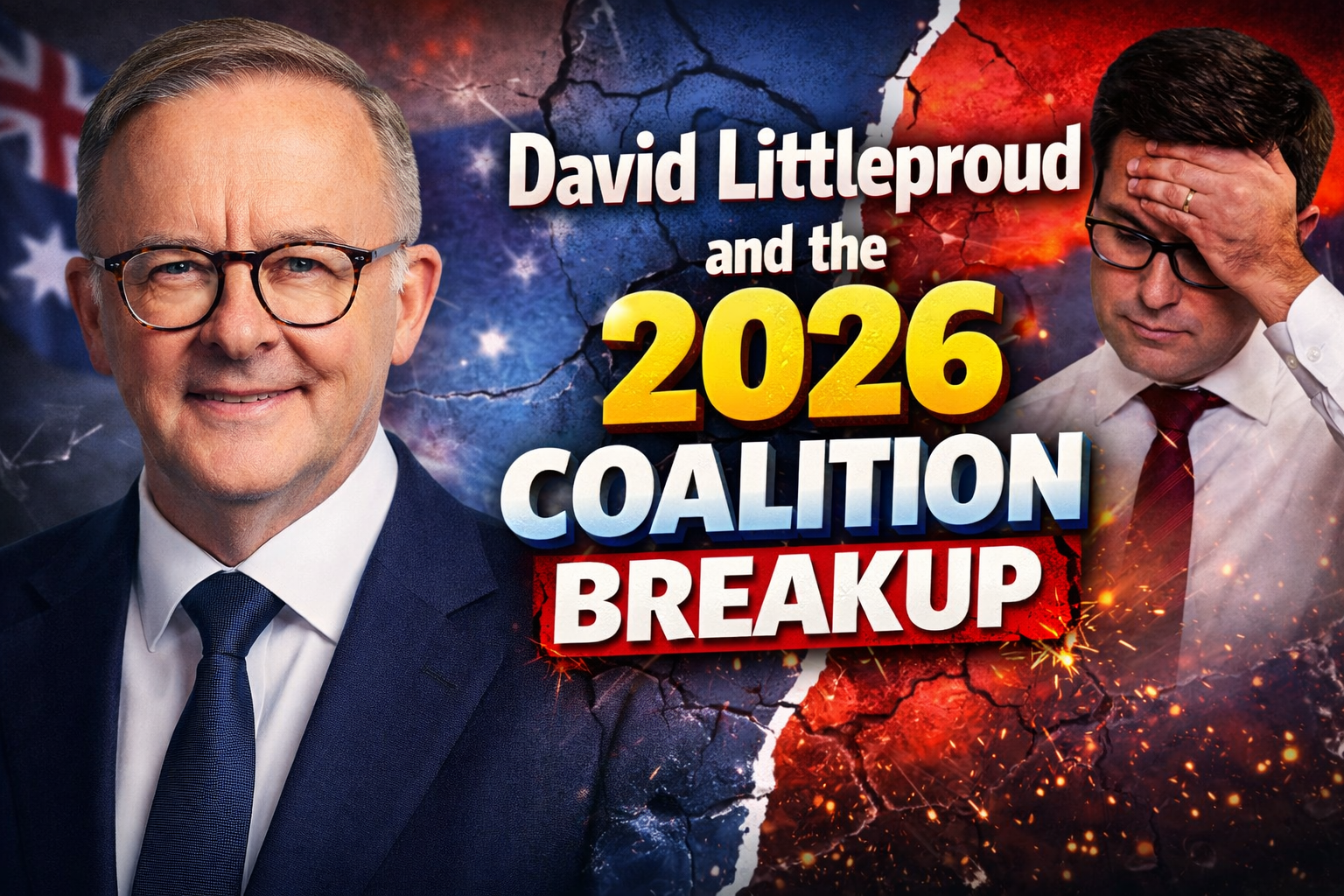
David Littleproud, the resilient Nationals leader, finds himself at the epicenter of a seismic rupture in Australian conservative politics. The 2026 Coalition breakup, the second in less than a year, has shattered the long-standing Liberal-Nationals alliance, thrusting Littleproud into uncharted territory as he navigates leadership challenges and regional threats.
David Littleproud’s Political Journey
David Littleproud entered federal politics in 2016 as the member for Maranoa, Queensland’s vast rural electorate spanning over 700,000 square kilometers. A former civil engineer turned cotton farmer, he quickly rose through Nationals ranks, serving as Minister for Agriculture and Water Resources under the Morrison government. His no-nonsense style, honed in drought-ravaged outback communities, earned him loyalty among primary producers facing trade wars and climate pressures.
By 2022, Littleproud claimed the Nationals leadership after Barnaby Joyce’s tumultuous exit, positioning himself as a defender of regional Australia against urban-centric policies. His tenure emphasized agriculture innovation, energy affordability, and infrastructure for flyover country. Critics dubbed him a “bush warrior,” but supporters praised his blunt advocacy on live exports and water rights. Holding Maranoa with margins exceeding twenty percent, Littleproud’s base remains rock-solid amid national turbulence.
This background equips him uniquely for the breakup fallout. Unlike predecessors entangled in Canberra scandals, Littleproud’s rural authenticity resonates where One Nation lurks, forcing him to balance party unity with electoral survival.
Timeline of the Coalition’s Dramatic Split
The fracture erupted in late January 2026, triggered by Labor’s contentious hate speech legislation. Nationals senators crossed the floor in protest, prompting Sussan Ley, Liberal leader, to demand resignations. Littleproud rallied his party room, withdrawing all Nationals from the shadow ministry in solidarity and declaring the Coalition “unworkable” under Ley’s command.
Tensions simmered from prior rifts. Eight months earlier, disagreements over net-zero targets and indigenous voice remnants strained ties. By mid-January, Littleproud’s late-night Senate gallery appearance—watching Bridget McKenzie’s emotional speech—signaled brewing defiance. Within days, unanswered calls escalated to formal separation, with Littleproud firing off a letter ultimatum.
February brought leadership spills. Colin Boyce challenged Littleproud, accusing him of steering Nationals toward a “political cliff,” but the motion failed. Littleproud then scheduled face-to-face talks with Ley, amid polls showing One Nation surging past combined conservative votes. By early February, Ley appointed an all-Liberal interim frontbench, issuing a ten-day reconciliation deadline before parliament’s February 9 resumption.
This wasn’t mere posturing. Insiders revealed panic over polls, with One Nation hitting twenty-six percent in key regionals while Liberals and Nationals lagged at nineteen percent combined. Barnaby Joyce’s flirtations with One Nation hinted at defections, amplifying the crisis.
Root Causes Behind the Breakup
Policy clashes fueled the implosion. Nationals railed against Ley’s perceived softness on hate speech laws, viewing them as threats to free speech in regional media debates. Broader gripes included Liberal dominance in portfolio allocations and urban bias on housing affordability, ignoring rural housing shortages.
Electoral math played kingmaker. One Nation’s Longreach office launch in Maranoa directly targeted Littleproud’s kingdom—once John Howard’s safest seat. Voters like local grazier Ian Williams credited the split for legitimizing Pauline Hanson’s push, citing Joyce’s ousting as Nationals weakness.
Leadership egos clashed too. Littleproud rejected Ley’s pre-parliament meeting, conditioning talks on surviving his spill. Ley’s camp fumed at his blame-shifting, while moderates like Andrew Bragg signaled indifference to reunion. Prime Minister Anthony Albanese gleefully likened it to a doomed reality TV marriage, exploiting the chaos.
| Trigger Event | Date | Key Action | Impact |
|---|---|---|---|
| Hate Speech Bill | Late Jan 2026 | Nationals cross floor | Resignations demanded |
| Shadow Ministry Walkout | Early Feb 2026 | All Nationals resign | Coalition declared broken |
| Leadership Spill | Feb 2, 2026 | Boyce challenges Littleproud | Spill defeated |
| Reconciliation Talks | Feb 3, 2026 | Littleproud-Ley meeting planned | 10-day deadline issued |
| One Nation Surge | Ongoing | Polls show 26% support | Regional seats at risk |
This table captures the rapid unraveling, highlighting synchronized pressures.
Littleproud’s Leadership Under Fire
Surviving Boyce’s challenge bought time, but Littleproud faces internal reform motions from Darren Chester. His response: recommitting to Maranoa with 110 days—or forty percent of post-election time—on the ground. “Serving Maranoa is an honor,” he affirmed, pledging Canberra advocacy.
Yet threats mount. Joyce’s One Nation defection tease and Hanson’s regional inroads erode Nationals’ monopoly on country votes. Littleproud’s strategy pivots to differentiation—pushing agriculture sovereignty against Liberal free-trade zeal—while mending fences selectively.
Alex Hawke warned of an “own goal” if no reunion, but Littleproud’s calculus prioritizes Nationals identity over Coalition baggage. Polls validate caution: Redbridge data shows One Nation devouring disaffected conservatives.
Implications for Liberal Party Stability
Sussan Ley’s perch wobbles. Angus Taylor eyes her job, though no immediate spill looms. Liberals split: conservatives urge Nationals reunion for numbers; moderates relish solo opposition status, eyeing city seats unburdened by rural populism.
An all-Liberal frontbench tests viability. Shadow ministers double up on Nationals portfolios, but parliamentary arithmetic suffers—Labor holds majority, crossbench grows bolder. Permanent separation risks by-election losses, as seen in past Coalition wobbles.
Long-term, Liberals confront identity crisis. Without Nationals ballast, urban moderates dominate, alienating blue-collar bases to Greens or independents.
Shake-Up for Nationals and Regional Politics
Littleproud’s gamble elevates Nationals as standalone force. Free from Liberal vetoes, they amplify voice on agribusiness, mining, and energy—core Maranoa pillars. Yet isolation amplifies One Nation competition; Longreach symbolizes encroachments into heartland.
Voters weigh options. Maranoa farmers praise Littleproud’s irrigation fights but eye Hanson’s anti-establishment fire. Joyce’s maneuvers underscore fragmentation risk—Nationals must consolidate or bleed support.
| Regional Poll Shifts (Hypothetical Post-Split) | Liberals | Nationals | One Nation |
|---|---|---|---|
| Pre-Breakup (2025) | 32% | 28% | 18% |
| Post-Split Regional | 25% | 22% | 26% |
| Urban Seats | 38% | N/A | 12% |
These shifts illustrate One Nation’s gains, squeezing both majors.
Broader Ramifications for Australian Politics
The breakup hands Labor a lifeline. Albanese’s caucus mocked the chaos, delaying scrutiny on economic woes like inflation hovering above targets. Crossbench—teals, Greens—gains leverage, demanding concessions on climate and integrity.
By next election, conservative vote splinters, potentially gifting Labor winnable marginals. Historical parallels: 1931 Lang Labor split doomed conservatives temporarily. Polls predict hung parliament scenarios, with One Nation kingmakers.
Policy gridlock ensues. Without unified opposition, bills like industrial relations pass easier, frustrating business lobbies. Regional infrastructure stalls sans bipartisan buy-in.
One Nation’s Rising Shadow
Pauline Hanson’s party capitalizes masterfully. Longreach office targets flyover neglect; polls crown them regional frontrunners. Joyce’s hinted switch validates strategy—poach disgruntled Nationals for instant credibility.
This dynamic forces Littleproud rightward, hardening stances on immigration and renewables to reclaim turf. Urban Liberals drift moderate, widening conservative chasm.
Potential Paths to Reconciliation or Divorce
Littleproud-Ley talks offer slim hope. Success demands portfolio equity, policy vetoes for Nationals. Failure cements separate campaigns—Liberals urban-focused, Nationals rural bastions.
Reform motions in both parties loom. Littleproud pushes Coalition overhaul; Ley eyes Nationals purge. By parliament’s February 9 start, outlines emerge—interim frontbench permanence signals divorce.
Voter Sentiment in Maranoa and Beyond
ABC canvassing reveals split views. Loyalists back Littleproud’s spine; swingers flirt with One Nation’s boldness. “Coalition’s toxic,” one grazier vented, echoing kingdom’s unease.
Nationwide, fatigue reigns. Voters crave stability amid cost-of-living squeezes—breakup amplifies perceptions of elite gamesmanship.
Economic and Policy Fallout
Agri sectors fret veto loss on trade deals; energy producers eye Liberal green tilts. Infrastructure pipelines, like inland rail, risk bipartisan death.
Business councils urge reunion, citing unified opposition necessity against Labor’s union reforms.
What Lies Ahead for Littleproud
At 49, Littleproud stakes legacy on Nationals reinvention. Survive 2026 parliament, consolidate regionals, outmaneuver Hanson. Meeting Ley tests mettle—reconcile risks dilution; divorce gambles viability.
His Maranoa fortress endures, but kingdom cracks demand bold strokes. Australian politics enters multipolar era—Littleproud’s either architect or casualty.
This saga redefines centre-right terrain, echoing global populist waves. Conservatives fragment; Labor laughs last—unless unity prevails.

Vineeth T.C. is a news writer and digital content contributor at PageEuropean, covering key developments across New Zealand and Australia. His work focuses on delivering clear, fact-based reporting on current affairs, public policy, business updates, and regional news that matter to readers.