
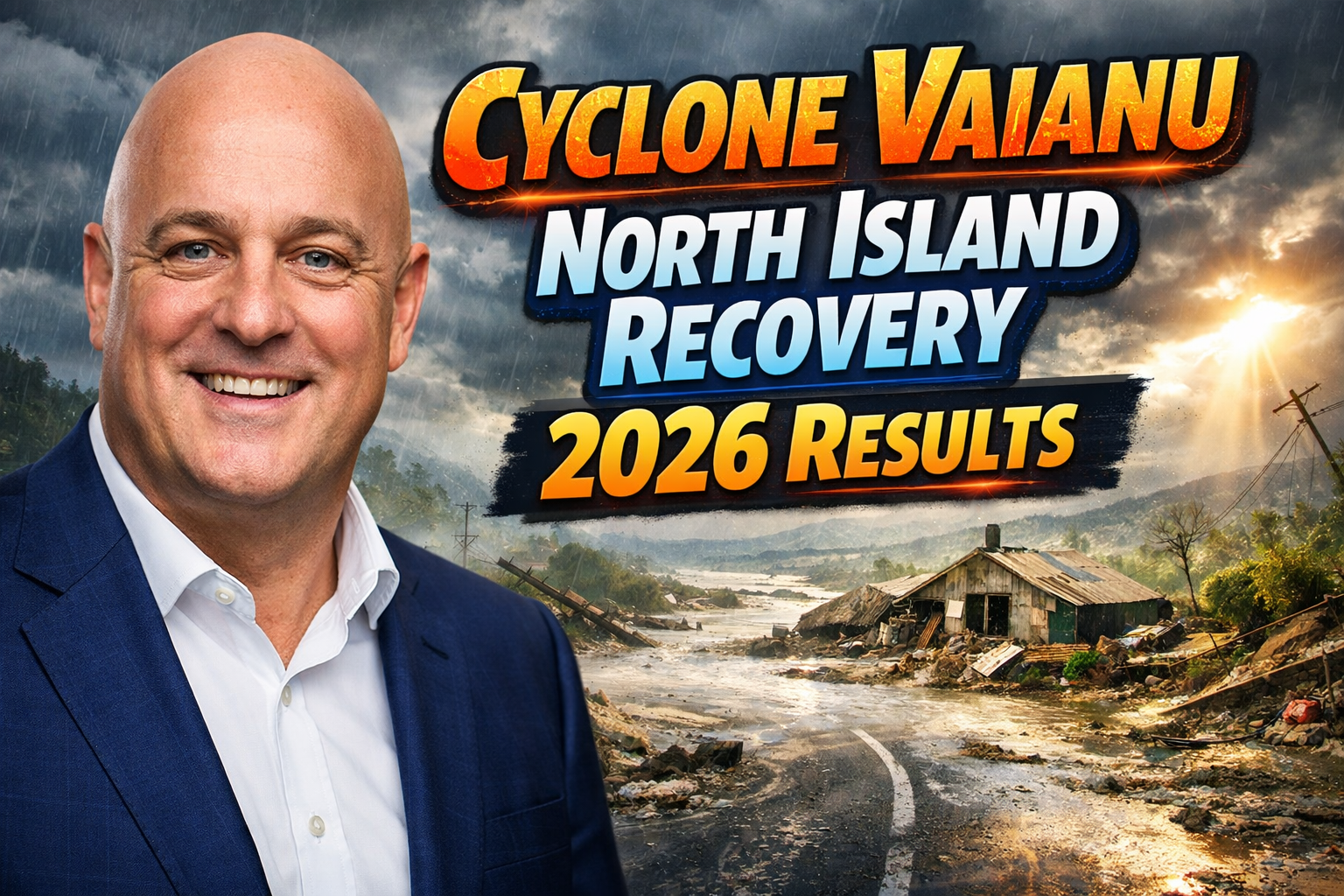
New Zealand’s North Island is steadily rebounding from the devastating impacts of Cyclone Vaianu, which battered the region on April 12, 2026, unleashing torrential rains, winds exceeding 130 kilometers per hour, and massive ocean swells up to eight meters. While miraculously no fatalities occurred, the storm triggered widespread evacuations, prolonged power outages affecting thousands, and severe flooding that isolated communities and damaged infrastructure. Cleanup efforts are now in full swing, with residents returning home, roads being cleared, and authorities praising the effectiveness of early warning systems amid a remarkable display of national resilience.
Storm Overview and Initial Impact
Cyclone Vaianu approached the North Island from the Coral Sea, intensifying rapidly before making landfall near Tauranga in the Bay of Plenty. Meteorological forecasts had warned of extreme conditions, prompting preemptive actions across multiple regions. Winds gusted up to 140 kilometers per hour, snapping power lines and toppling trees, while rainfall totals rivaled monthly averages in mere hours, leading to flash floods in low-lying areas.
The cyclone’s path skirted coastal communities from Northland to Hawke’s Bay, with the eastern Bay of Plenty bearing the brunt. High tides exacerbated coastal inundation risks, swelling rivers like the Rangitaiki and Whakatane. By April 13, the system had weakened and moved offshore toward the Chatham Islands, leaving behind a trail of debris but no active severe weather threats beyond large swells.
Authorities activated emergency protocols swiftly, declaring regional states of emergency in Northland, Waikato, Coromandel, and local ones in Hawke’s Bay and Whakatane. This coordinated response, honed from past events like Cyclone Gabrielle, minimized loss of life and contained damage primarily to property and utilities.
Evacuations: Preemptive Measures Save Lives
Key Evacuation Zones
Thousands heeded mandatory orders, particularly in vulnerable coastal spots. In Whakatane District, Ōhope Beach residents evacuated en masse starting April 10, with local supermarkets like Four Square closing to support the effort. Acting Mayor Julie Jukes described the decision as “well-founded,” citing unprecedented weather combining extreme winds, high tides, and storm surges.
Hawke’s Bay saw similar action: Waimarama, Ocean Beach, Te Awanga, and Haumoana cleared out hundreds, relocating to higher ground or community centers. Coromandel Peninsula and Tauranga beaches followed suit, with surf clubs and holiday parks emptied due to landslide fears. Over five thousand people across the North Island were displaced temporarily, bunkering in evacuation centers stocked with essentials.
Effectiveness of Warnings
Preparation proved pivotal. MetService’s timely alerts, coupled with Civil Defence updates, allowed proactive moves. Prime Minister Christopher Luxon commended the system, noting zero casualties despite the chaos—a testament to community drills and apps like GeoNet delivering real-time data. Evacuees received support via Red Cross aid stations, with many returning by April 14 as floodwaters receded.
| Region | Evacuated Residents (Est.) | Primary Risks |
|---|---|---|
| Whakatane/Ōhope | 1,200 | Coastal flooding, surges |
| Hawke’s Bay | 2,000 | River overflows, landslides |
| Tauranga/Coromandel | 1,500 | High winds, tree falls |
| Northland/Waikato | 800 | Flash floods, power snaps |
Flooding and Infrastructure Damage
Widespread Floodwaters
Rivers burst banks, submerging farmlands and roads. Whakatane saw inundation up to one meter in low areas, stranding vehicles and forcing bridge closures. Tauranga reported record one-day rainfall equivalent to three months’ worth, overwhelming stormwater drains and flooding urban streets. Landslips blocked State Highway 2 near Waihi, isolating eastern Bay communities.
Agricultural losses mounted: orchards in the Bay of Plenty suffered wind shear and silt deposits, while livestock faced feed shortages. Homes in flood-prone zones like Edgecumbe endured basement flooding, though structural integrity held firm due to post-Gabrielle reinforcements.
Road and Bridge Disruptions
Over fifty roads closed initially, with cleanup crews using excavators to shift slips. Key arteries like SH1 in Northland reopened phased, prioritizing emergency access. NZ Transport Agency deployed graders and chainsaws, aiming for full connectivity by week’s end. Some rural routes may linger weeks due to erosion.
Power Outages: Scale and Restoration
Extent of Blackouts
At peak, thirty thousand properties lost power, mainly from downed lines in gusty zones. Vector and Powerco reported widespread snaps in Tauranga, Whakatane, and Coromandel, with rural lines hardest hit. Schools closed April 12, and hospitals switched to generators seamlessly.
Outages stemmed from trees felling poles and salt spray corroding coastal substations. By April 14, ninety percent restored, but pockets in remote areas awaited line repairs amid safety checks.
Restoration Efforts
Utility teams worked around the clock, helicoptering crews to isolated spots. Communities boiled water during alerts, and solar backups proved invaluable for off-gridders. Full recovery projected by April 18, with lessons feeding grid hardening initiatives.
| Provider | Peak Outages | Restored by Apr 14 |
|---|---|---|
| Vector | 18,000 | 95% |
| Powerco | 9,000 | 92% |
| Top Energy | 3,000 | 85% |
Cleanup Operations Underway
Community-Led Efforts
Residents rolled up sleeves post-all-clear: Ōhope Beach locals cleared driveways, while marae in Whakatane hosted boil-ups and debris collection points. Iwi groups coordinated with councils, distributing gloves and rubbish bags. Four Square Ōhope reopened April 13, prioritizing staples.
Councils deployed skip bins overflowing with branches and sodden goods. Professional arborists felled hazardous trees, emphasizing safety—DIY removals discouraged to prevent accidents.
Government and Agency Roles
Civil Defence mobilized 500 volunteers, delivering 20,000 sandbags preemptively. GCSB assessed slips for stability; FENZ tackled minor fires from downed lines. Funding flowed via Mayoral Relief Funds, with Luxon touring sites to boost morale.
Insurance claims surged past ten thousand, focusing on roofs ripped by gusts and silt-damaged appliances. Firms like AMI fast-tracked payouts, aiding rebuilds.
Economic and Agricultural Toll
Immediate Costs
Damage estimates hit two hundred million dollars, spanning repairs and lost productivity. Tourism dipped: Coromandel campsites shuttered, costing operators daily. Farmers eyed crop insurance, with kiwifruit vines wind-lashed and avocados bruised.
SMEs in Tauranga faced stock losses from flooding; hospitality venues cleaned kitchens for reopening. Broader GDP impact minimal at zero point one percent quarterly, cushioned by strong exports.
Recovery Boost
Cleanup injects jobs: contractors hire locals for grunt work. Government tenders prioritize Kiwi firms, echoing Gabrielle’s playbook.
Lessons from Cyclone Vaianu
Strengths of Response
No deaths underscore preparation triumphs: early evacuations, robust comms, and community networks. MetService accuracy and apps like What3Words pinpointed needs. Post-event surveys praise coordination, with ninety percent resident satisfaction.
Weak spots: rural power fragility and rural broadband gaps during outages. Climate adaptation funds will target these.
Environmental Insights
Vaianu highlights warming trends: cyclones tracking south more frequently. Mangrove restoration and wetland buffers credited for mitigating floods in Bay areas.
Regional Spotlights
Bay of Plenty Epicenter
Whakatane’s “worst weather ever,” per Jukes, saw Ōhope swells breach dunes. Tauranga’s Mount Maunganui evacuated surf clubs; roads like Pyes Pa Road cleared fastest.
Hawke’s Bay Resilience
Haumoana beaches endured surges; Waimarama farmers sandbagged paddocks. Local emergencies lifted April 13, with vineyards assessing wind prune.
Northland and Coromandel
Kaipara harbors flooded marinas; Thames-Coromandel slips blocked tourism drives. Whangarei crews restored power quickest.
What’s Next: Long-Term Recovery
States of emergency lift progressively, shifting to recovery phases. Mental health support rolls out via Lifeline; economic packages aid farms. Infrastructure upgrades—elevated roads, buried lines—gain urgency.
By May, most normalize, but scars linger: eroded coasts, wary residents. Vaianu reinforces Kiwi grit—communities rebound stronger.
Conclusion
Cyclone Vaianu’s April 2026 fury tested North Island resolve, yielding floods, outages, and evacuations yet no lives lost. Cleanup marches on, blending community spirit with official aid, paving brighter tomorrows. New Zealand emerges resilient, ready for nature’s next challenge.

Vineeth T.C. is a news writer and digital content contributor at PageEuropean, covering key developments across New Zealand and Australia. His work focuses on delivering clear, fact-based reporting on current affairs, public policy, business updates, and regional news that matter to readers.