
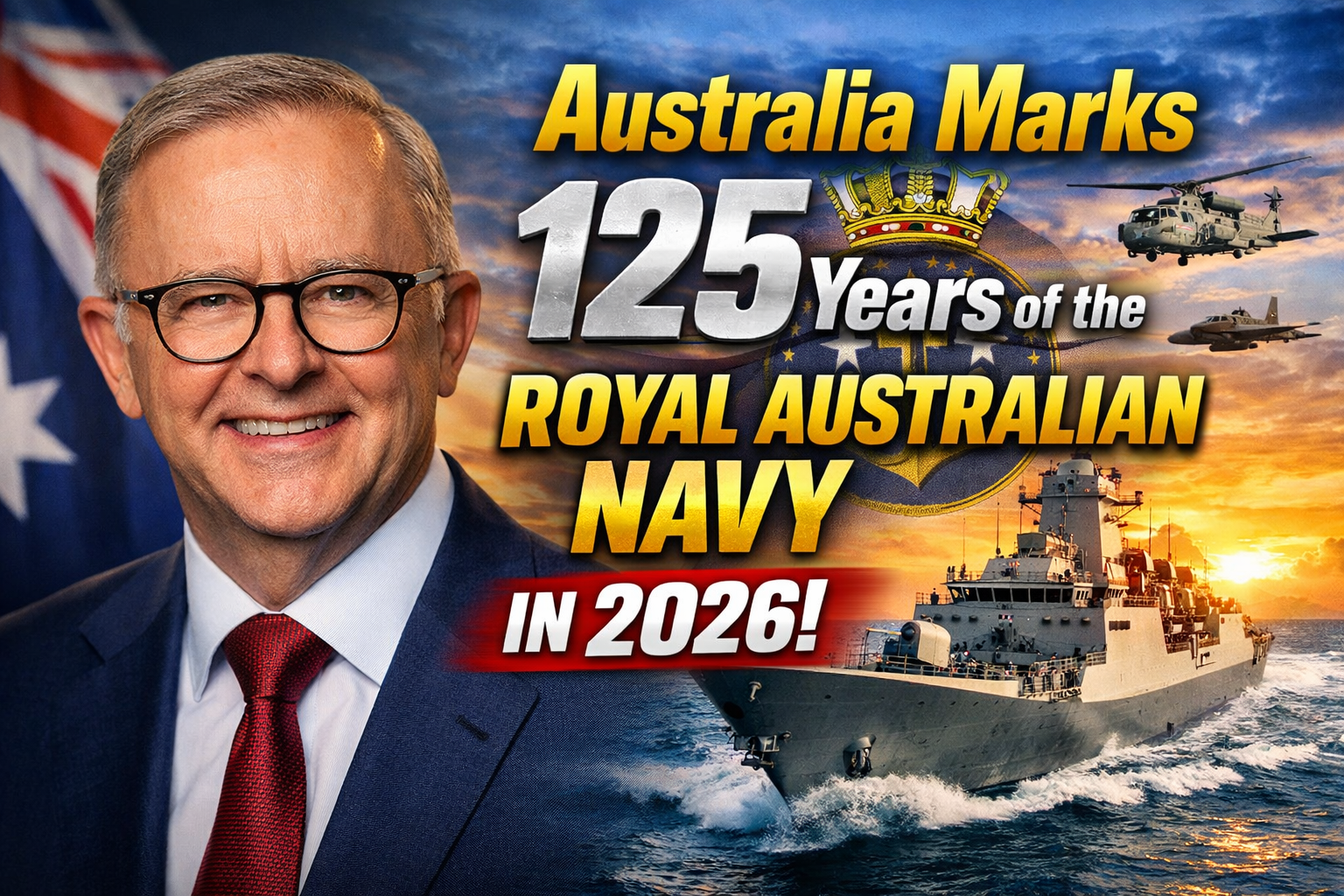
Australia marks a historic milestone in 2026 as the Royal Australian Navy celebrates 125 years of service, honoring its foundational legacy and pivotal role in national security. From humble beginnings as colonial forces to a modern blue-water fleet, the RAN’s journey reflects Australia’s evolution on the global stage, with nationwide events culminating in spectacular Sydney open days.
Origins of the Royal Australian Navy
The RAN traces its roots to March 1, 1901, when the Commonwealth Naval Forces emerged from the federation of Australia’s colonial navies. This unification created a single maritime defense entity, initially modest with a handful of vessels patrolling coastal waters. By 1911, King George V bestowed the “Royal” title, solidifying its identity amid growing regional tensions.
Early challenges included protecting trade routes from piracy and rival powers, setting the stage for global engagements. The arrival of the first fleet in Sydney Harbour in 1913, led by the battlecruiser HMAS Australia, symbolized newfound sovereignty and drew massive crowds. These formative years built a tradition of resilience, blending British naval heritage with distinctly Australian grit.
Key Historical Milestones
Over 125 years, the RAN has shaped pivotal moments in Australian and world history. World War I saw it clash decisively at the Battle of Cocos, where HMAS Sydney sank the German raider Emden, boosting national morale. In World War II, ships like HMAS Canberra endured brutal Pacific campaigns, while postwar efforts focused on Korean and Vietnam deployments.
| Era | Major Contribution | Notable Ships Involved |
|---|---|---|
| World War I | Naval victories securing sea lanes | HMAS Sydney, Australia |
| World War II | Amphibious assaults, convoy protection | HMAS Canberra, Shropshire |
| Cold War Era | Peacekeeping, anti-submarine patrols | Daring-class destroyers |
| Modern Conflicts | Gulf Wars, East Timor stabilization | Collins-class submarines, Anzacs |
This table highlights the navy’s adaptive evolution, from sail to nuclear-age operations. Post-Vietnam modernization introduced advanced frigates and submarines, ensuring relevance in an era of asymmetric threats.
Evolution of Fleet and Technology
The RAN’s fleet has transformed dramatically, mirroring technological leaps. Early wooden cruisers gave way to steel dreadnoughts, then diesel-electric submarines and gas-turbine destroyers. Today, Hobart-class destroyers with Aegis systems provide air defense supremacy, while Hunter-class frigates promise stealthy multi-role capabilities.
Submarine prowess stands out: the Collins-class, despite teething issues, now excels in covert missions across the Indo-Pacific. Future AUKUS nuclear-powered subs will extend underwater endurance, countering rising maritime challenges. Investments in drones, cyber warfare, and hypersonic missiles underscore a shift toward integrated, high-tech dominance.
Personnel training has paralleled this, with sailors mastering everything from sonar arrays to satellite comms. Women joined combat roles decades ago, enhancing diversity and operational depth.
Nationwide Events Marking the Anniversary
2026 unfolds as a year-long tribute, blending solemn commemorations with public spectacles. Commemorative services on March 1 honor fallen sailors, featuring wreath-laying at memorials nationwide. Museums like the Australian National Maritime Museum host immersive exhibits, from interactive WWI simulators to VR tours of modern carriers.
Fleet weeks dot coastal cities: Melbourne’s dockside parades showcase replenishment ships, while Perth hosts international symposia on maritime strategy. Community barbecues, veteran reunions, and school outreach programs foster intergenerational bonds. A narrated video by Russell Crowe captures the navy’s spirit, airing across platforms to evoke pride.
Exercise Kakadu evolves into a centerpiece, drawing allies for joint maneuvers simulating real-world scenarios. These events not only celebrate history but recruit the next generation amid personnel shortages.
Sydney Open Day Spectacular
Sydney steals the show with the grand Fleet Review during Exercise Kakadu, assembling up to 30 warships from 20 nations—the largest harbor gathering in over a decade. Iconic Sydney Harbour transforms into a sea of steel, with destroyers, frigates, and submarines steaming in precise formation past the Opera House.
Public open days offer rare access: board HMAS Hobart for cockpit views, inspect submarine interiors, and chat with crew about daily life. Flyovers by Super Hornets thunder overhead, while brass bands play naval anthems. Drones capture aerial footage beamed to giant screens, immersing thousands onshore.
| Open Day Feature | Highlights | Visitor Experience |
|---|---|---|
| Ship Tours | Guided walks through major vessels | Hands-on with tech and history |
| Aerial Displays | Fighter jet formations | Thrilling precision maneuvers |
| Interactive Zones | Simulator stations, recruitment booths | Test skills, meet personnel |
| Evening Fireworks | Harbor light show synced to music | Festive close to the day |
Safety protocols ensure smooth crowds, with ferries and bridges offering prime vantage points. Locals and tourists alike queue from dawn, turning the event into a national party.
Strategic Role in Today’s World
At 125, the RAN confronts its most demanding era, safeguarding vast exclusive economic zones amid Indo-Pacific tensions. It patrols critical chokepoints, counters illegal fishing, and leads humanitarian missions like disaster relief in the Pacific. Partnerships with the US and Japan via AUKUS amplify deterrence.
Climate change adds layers: rising seas threaten bases, while cyclones demand rapid response. The navy’s humanitarian arm has delivered aid to cyclone-hit neighbors, earning soft power dividends. Cyber and space domains now integrate, with sailors defending digital sea lanes.
Chief of Navy Vice Admiral Mark Hammond emphasizes honoring the past while steeling for the future, as fleet renewal accelerates to meet these imperatives.
Legacy and Community Impact
The RAN’s enduring bond with Australians stems from service beyond war—disaster responses like the 2011 Queensland floods saw ships as floating hospitals. Veterans’ tales, shared at RSL clubs, weave into the national fabric, inspiring youth through scholarships and cadet programs.
Indigenous service deepens this legacy, with Aboriginal and Torres Strait Islander sailors breaking barriers since WWII. Cultural acknowledgments feature prominently in 2026 events, recognizing First Nations contributions to navigation lore.
Economically, the navy sustains shipyards in Adelaide and Osborne, employing thousands in high-skill jobs. Its trade protection ensures 99 percent of Australia’s exports move by sea, underpinning prosperity.
Looking Ahead to the Next Century
As celebrations peak, the focus sharpens on renewal: six new surface combatants by 2030, plus loyal wingman drones revolutionizing air-sea integration. International fleet reviews signal alliances vital for collective security.
Youth engagement—STEM workshops, sailing regattas—ensures a pipeline of talent. The RAN vows to remain agile, adapting to AI-driven warfare and green propulsion tech for sustainable ops.
In 2026, Australia pauses to salute its navy: from federation’s fragile flotilla to a force projecting power globally. The white ensign flies proud, a beacon of strength securing tomorrow’s horizons.

Vineeth T.C. is a news writer and digital content contributor at PageEuropean, covering key developments across New Zealand and Australia. His work focuses on delivering clear, fact-based reporting on current affairs, public policy, business updates, and regional news that matter to readers.