
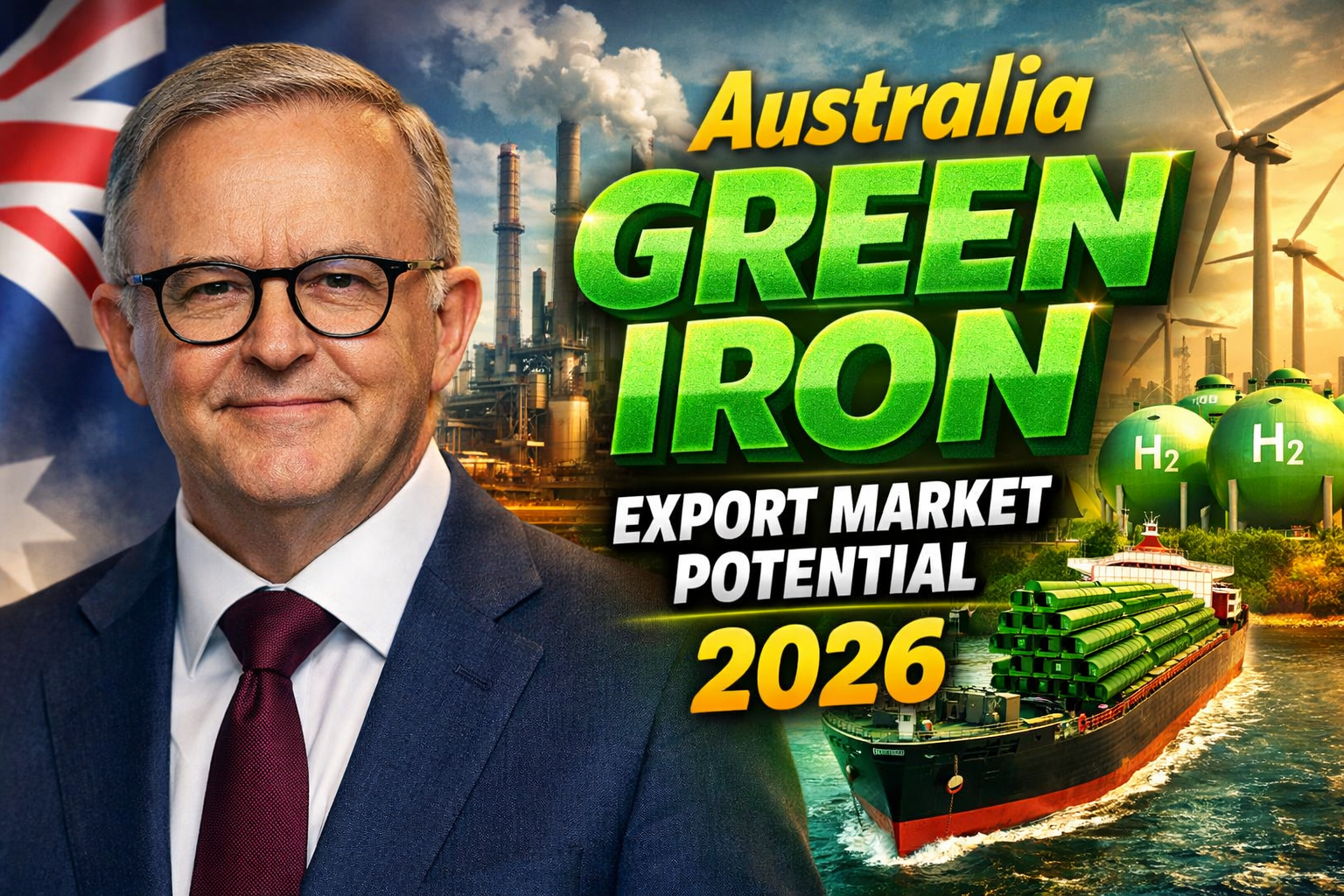
Australia stands at the forefront of a transformative shift in the global steel industry, leveraging its vast iron ore reserves and abundant renewable energy to pioneer green iron production. As nations race toward net-zero emissions, green iron—produced via hydrogen-based direct reduction—emerges as a cornerstone for decarbonizing steelmaking, promising billions in export revenues by capturing premium markets in Europe, Asia, and beyond.
Introduction
Steel production accounts for roughly eight percent of worldwide carbon emissions, primarily from traditional blast furnaces reliant on coal. Green iron addresses this by using green hydrogen to strip oxygen from iron ore, yielding a low-emission feedstock for electric arc furnaces. Australia’s position as the top iron ore exporter, shipping nearly 900 million tonnes annually, positions it uniquely to upgrade from raw commodities to value-added green products.
Government initiatives, including a 500 million dollar grant fund launched last year, signal strong backing. Industry leaders forecast that scaling green iron could double export values from current levels around 120 billion dollars, injecting massive economic gains amid declining fossil fuel trades.
What is Green Iron?
Green iron represents a breakthrough in metallurgical processing. Traditional direct reduced iron uses natural gas, but green variants employ hydrogen from renewable electrolysis, emitting only water vapor. This sponge iron, or direct reduced iron pellets, feeds into downstream steelmaking without coke or coal.
The process demands cheap renewables for hydrogen production, where Australia’s solar and wind potential shines. Pilots demonstrate over 95 percent emission cuts compared to conventional methods, meeting stringent standards like Europe’s Carbon Border Adjustment Mechanism.
Key advantages include compatibility with existing steel infrastructure and higher purity, reducing impurities in final products. As global steel demand grows to support infrastructure booms, green iron fills a supply gap for sustainable construction.
Australia’s Unique Advantages
Australia boasts over half of global seaborne iron ore trade and world-leading renewable resources. Pilbara’s vast deposits, combined with Western Australia’s gigawatt-scale solar farms, enable low-cost green hydrogen at under two dollars per kilogram projections.
Proximity to Asian steel giants like China and Japan minimizes shipping costs, while established ports like Port Hedland handle bulk exports seamlessly. Policy support through production credits—around 170 dollars per tonne—makes green iron competitive against fossil-based rivals immediately.
Moreover, critical mineral co-products from processing enhance supply chains for batteries and renewables, diversifying revenues.
Major Projects and Developments
Fortescue leads with its Christmas Creek Green Metal Project, under construction for first production this year. This 1,500-tonne-per-year demonstration uses on-site green hydrogen and electric smelting, backed by 50 million dollars investment. Studies eye commercial scales of millions of tonnes.
BHP and Rio Tinto collaborate on NeoSmelt, a pilot low-carbon pig iron plant in Kwinana, Western Australia. Slated for operations soon, it employs electric smelters and hydrogen transition, targeting 30,000 to 40,000 tonnes annually. BlueScope Steel partners for offtake.
Government grants target multiple facilities, with Western Australia eyeing 4.5 million tonnes by decade’s end and 37.5 billion dollars in investments. Rio Tinto’s BioIron pilot, though paused, explored biomass alternatives, underscoring diverse tech pathways.
| Project Name | Location | Capacity (tonnes/year) | Key Technology | Status |
|---|---|---|---|---|
| Christmas Creek | Pilbara, WA | 1,500+ | H2-DRI + Electric Smelter | Under Construction |
| NeoSmelt Pilot | Kwinana, WA | 30,000-40,000 | ESF + DRI (H2 transition) | Development |
| BioIron (Paused) | East Rockingham, WA | Pilot scale | Biomass + Microwave Reduction | On Hold |
| Potential Scales | Various Pilbara | Millions | H2-DRI + Renewables | Planning |
These initiatives position Australia for lighthouse projects by 2027, de-risking global adoption.
Global Market Demand
The green steel market, encompassing green iron, surges with a projected compound annual growth rate exceeding 50 percent through 2032, from 8.5 billion dollars to nearly 190 billion. Europe mandates low-carbon imports via CBAM, imposing tariffs on high-emission steel from 2026.
Asia drives volume: China eyes 100 million tonnes of green iron imports, while Japan and South Korea secure long-term contracts. Infrastructure spending under net-zero pledges amplifies needs, with primary steel demand rising despite recycling gains.
Premium pricing—up to 50 percent over traditional ore—fuels economics, as buyers like automakers prioritize certified green supply chains.
Economic Potential and Projections
Superpower Institute models show green iron replacing iron ore exports could yield 386 billion dollars annually by 2060, tripling current values. A single large plant adds 85 billion dollars cumulative to GDP, 2.4 billion in yearly incomes, and 1,500 jobs.
By 2040, Accenture forecasts 122 billion dollars in green metals exports. Doubling iron revenues to 250 billion dollars via 40 percent global share abatement equates to four percent of world emissions cuts—four times Australia’s footprint.
Western Australia’s Minerals Institute highlights multiplier effects: each green iron facility spurs regional hubs, boosting renewables and manufacturing.
Challenges and Barriers
High upfront capital—billions per gigascale plant—demands policy certainty. Fragmented grids, lengthy approvals, and electrolyzer costs hinder timelines. Global competition from Middle East hydrogen hubs and Swedish pilots pressures first-mover status.
Technology risks persist: scaling H2-DRI for impure Pilbara ores requires innovation, as Fortescue pilots prove. Supply chain gaps in hydrogen infrastructure and skilled labor add hurdles.
CBAM-like barriers motivate but expose delays to tariffs. Investment decisions loom by 2030 amid China’s carbon trading shifts.
Government and Industry Support
The 500 million dollar Green Iron Fund incentivizes private capital, laying foundations for multi-billion industries. Production tax credits ensure competitiveness, while state-federal coordination streamlines permits.
Industry collaborates via forums like Perth’s green iron summits, aligning miners, steelmakers, and governments. Fortescue’s neutrality pledge by 2030 exemplifies corporate drive, with BHP and Rio targeting Scope 3 reductions.
International partnerships, including offtake with Nippon Steel, secure demand.
Future Outlook
By end of this year, pilots deliver proof-of-concept, paving gigafactories by 2030. Exports ramp to millions of tonnes, capturing 10-20 percent green market share. Integration with AUKUS supply chains and Asian decarbonization anchors growth.

Vineeth T.C. is a news writer and digital content contributor at PageEuropean, covering key developments across New Zealand and Australia. His work focuses on delivering clear, fact-based reporting on current affairs, public policy, business updates, and regional news that matter to readers.