
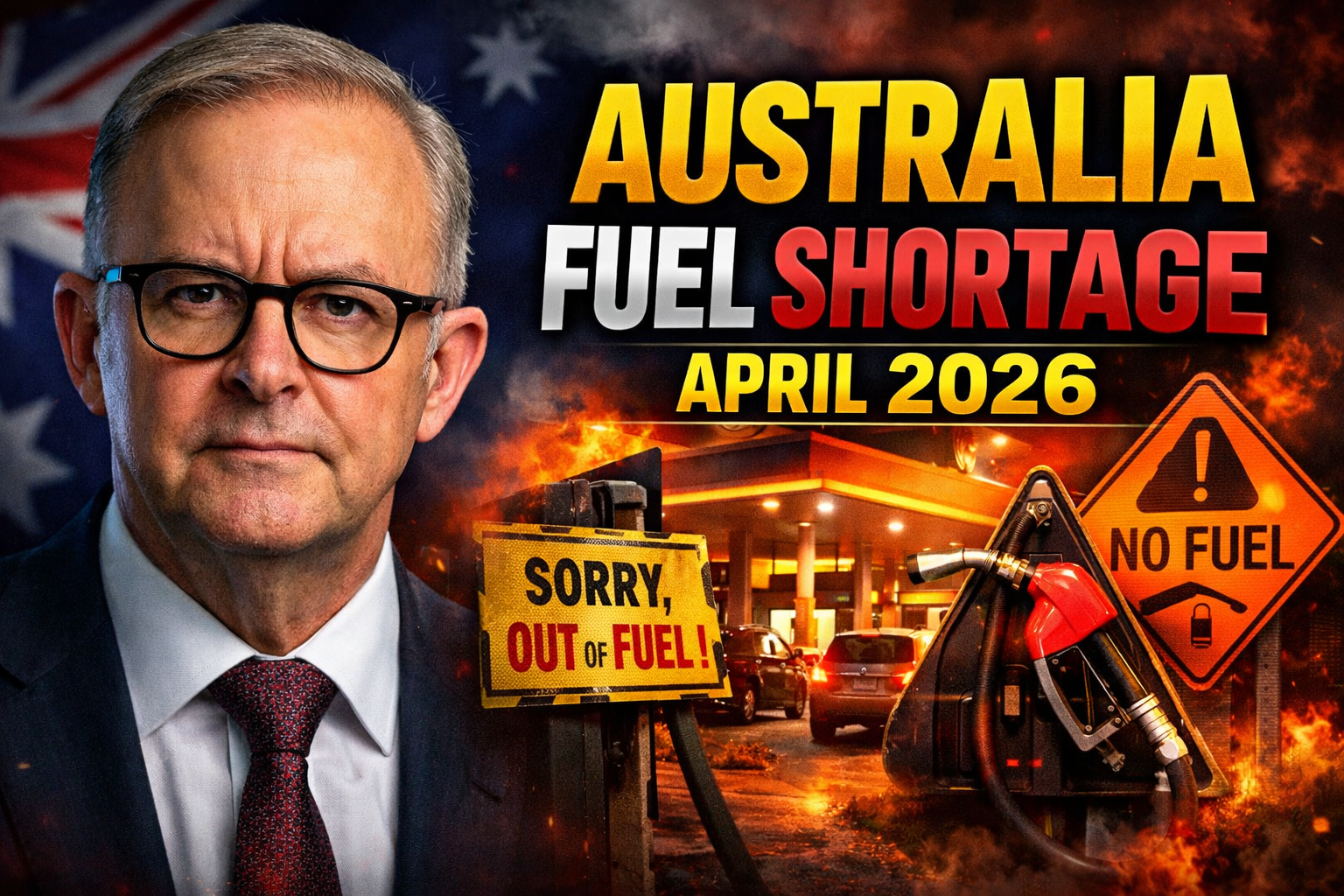
By early April 2026, Australia found itself in the grip of a rolling fuel‑supply crisis that pitted global war, shipping logistics, and domestic demand against one another. Triggered by the Middle East conflict’s disruption of key oil‑shipping routes, the episode has left diesel and unleaded petrol in short, patchy supply at service stations, forced temporary changes to fuel standards, and raised anxiety among farmers, truck drivers, and everyday motorists. At the heart of the public response has been Energy Minister Chris Bowen, who has delivered a series of updates on reserves, inbound shipments, and the risks posed by tanker delays and cancellations.
What Is Happening at the Pump
Across the country in April 2026, the most visible sign of the crisis has been irregular availability at service stations. Accounts from consumers and industry operators describe a patchwork situation: some outlets fully stocked, others running low on diesel, and a minority completely out of at least one fuel type. In major states such as New South Wales, Victoria, and Queensland, clusters of stations have reported no diesel or no unleaded, forcing drivers to travel further or wait longer.
Diesel has borne the brunt of the strain. Agriculture, trucking, and regional transport rely heavily on diesel, and the sowing and seeding season has intensified demand at a sensitive time. Bowen has repeatedly stressed that the ministerial priority is to keep fuel flowing to farms and freight operators, even if that means tighter limits at some retail outlets. Unleaded petrol has also been affected, though the shortages have been more selective and often respond more quickly to new deliveries. Media reports and government data suggest that hundreds of stations across the nation have experienced at least one period of out‑of‑stock status in the past several weeks, with the situation shifting daily as tankers arrive and local demand fluctuates.
Reserve Levels: The “Days of Supply” Snapshot
Underpinning the public‑facing updates is a set of national reserve figures that Bowen has made central to his messaging. As of early April 2026, he indicated that Australia held roughly 39 days’ worth of petrol, 29 days of diesel, and 30 days of jet fuel in its combined commercial and strategic reserves. These numbers are not guarantees of uninterrupted supply nationwide, but they are used by the government to signal that the system is not on the brink of total depletion.
What matters equally, Bowen has argued, is that these figures have remained relatively stable over the past week. If reserves were shrinking sharply, it would suggest that demand was outstripping incoming shipments; instead, the flat trajectory implies that imports are still arriving, refineries are operating near capacity, and fuel is being distributed to service stations and priority users. Still, the minister cautions that the buffer is narrower than in normal times, and that any fresh wave of tanker cancellations or delays could rapidly change the outlook.
Tanker Delays and Cancelled Shipments
The backbone of Australia’s refined‑fuel supply is international shipping. A significant share of petrol, diesel, and jet fuel arrives via tankers from Asian refineries, with additional volumes coming from the United States, Mexico, and other global hubs. In late March and early April, however, the government disclosed that several scheduled deliveries had been knocked out of the system.
Bowen confirmed that six fuel tankers expected to reach Australia between mid‑April and mid‑May had either been cancelled or deferred, out of around 80 planned vessels during that window. These cancellations were not evenly distributed: some stemmed from export controls or shifting priorities in key Asian refining centres, while others were linked to route disruptions and insurance or safety concerns in the wider Middle East conflict zone. Even though the government and industry managed to fill some of the gap with alternative sources, the lost ships have tightened the overall margin of safety.
Industry representatives have not hidden their unease. Senior figures in the road transport and logistics sector have warned that the mere announcement of 50+ vessels en route – often cited as a positive – does not mean all will arrive as scheduled. Delays at congested ports, rerouting around conflict‑affected waters, and last‑minute charter changes can all whittle away at the expected flow. For smaller operators, this uncertainty is particularly painful: contracts that assumed steady deliveries now face the risk of shortfalls, forcing them to reduce runs or seek higher‑cost backup options.
Chris Bowen’s April 2026 Update: Key Messages
In a series of briefings and press appearances in early April, Bowen has sought to balance reassurance with realism. On one hand, he has repeatedly stated that Australia’s fuel supply “remains strong” in aggregate, pointing to the reserve levels and the fact that refineries are running at full capacity. On the other hand, he has acknowledged that local shortages are real and can be severe in certain regions.
One of his core messages is that panic‑buying and hoarding make the situation worse. When drivers fill multiple containers or buy far more than they need, it creates artificial spikes in demand that strain distribution networks and leave some stations empty even when the national stockpile is still adequate. The government has therefore urged Australians to purchase only the fuel they immediately require, a message that has been echoed by state governments and consumer‑advocacy groups.
Bowen has also highlighted the diplomatic and commercial efforts underway to secure extra supply. Australia has signed a mutual fuel‑supply agreement with Singapore and is working to put similar arrangements in place with other Asian partners. These deals are designed to create a more predictable flow of imports during periods of stress, reducing the risk that a single region’s export limits or shipping disruptions can cripple the entire system. He has also stressed ongoing communication with international counterparts, including foreign‑ministry and trade channels, to keep shipping lanes open and to ensure that Australian‑bound vessels are treated as high‑priority movements.
Diesel Standards, Rationing, and Non‑Government Measures
Compounding the logistical challenge is the fact that Australia has had to temporarily lower its diesel standards. In late March, the government announced a six‑month relaxation of diesel specifications to allow more fuel to qualify for domestic use. The move is intended to increase the effective pool of available diesel, particularly for farmers and rural operators who rely on machinery that can tolerate a slightly broader fuel profile. Critics argue that altering standards risks long‑term engine‑wear issues, while supporters see it as a pragmatic step to keep the agricultural sector running during a critical planting window.
Beyond government‑mandated rules, there has also been informal rationing at the industry level. Some fuel suppliers have imposed limits on non‑contract customers, prioritising long‑term clients such as mining companies, major transport operators, and large retailers. This has helped ensure that backbone sectors receive fuel, but it has squeezed smaller operators and individual buyers who lack negotiated supply agreements. Retailers, too, have at times capped the number of litres per vehicle or per customer, especially during high‑demand periods such as early mornings and weekends.
Regional Differences and State‑Level Impacts
The shortage is not uniform. New South Wales has emerged as the most affected state, with Bowen listing over 150 stations temporarily without diesel at one point in early April – a figure that has since declined but still remains above normal. In one update, the minister reported that 36 stations in NSW were completely out of fuel, compared with 51 such outlets a day earlier, illustrating how quickly the situation can shift with new tanker arrivals.
Victoria and Queensland have also recorded dozens of stations without diesel, while South Australia, Tasmania, the Northern Territory, and the ACT have seen smaller numbers of outages. In some regional towns, the shortage has been more acute because of fewer alternative stations and longer distances between depots. Farmers have reported paying higher prices for fuel delivered directly to farms, in addition to the spike at the pump, which has fed into broader concerns about inflation and food‑supply costs. Some agricultural groups have called on supermarkets to absorb part of the fuel‑cost increase by paying more for produce, arguing that otherwise the burden falls entirely on growers and transporters.
What the Government Is Doing Behind the Scenes
Beyond daily updates, the Albanese government has been working on several fronts to stabilise the fuel system. Emergency‑measures coordination between federal and state agencies has been stepped up, with more frequent meetings on stock levels, tanker schedules, and regional distribution bottlenecks. The Australian Competition and Consumer Commission has been tasked with watching for price‑gouging or anti‑competitive behaviour that could exacerbate the crisis, while regulators have granted fast‑tracked approvals for some temporary logistical changes.
Bowen has also pointed to the role of Australia’s two remaining domestic refineries, which he has described as operating “full pelt” and directing all production toward the domestic market. In normal times, some of that output might be exported or traded, but the crisis has prompted a shift to meet local demand. The government has also accelerated work on long‑term fuel‑security planning, including the expansion of storage capacity and the diversification of supply sources, to reduce reliance on a handful of overseas refineries and shipping lanes.
The Outlook for Late April and Beyond
Looking ahead, Bowen and other officials have acknowledged that uncertainty will persist at least into the second half of April. While the arrival of more than 50 additional fuel‑laden vessels is expected to ease pressure on the system, it does not remove the risk of further disruptions. The Middle East conflict remains volatile, global shipping routes are still subject to insurance and security assessments, and any new export restrictions from major refining centres could again tighten the market.
The government’s strategy is therefore to manage the crisis in stages: first ensuring that essential services, agriculture, and freight remain supplied; second smoothing out supply to retail stations; and third buying time for longer‑term policy and infrastructure changes to take effect. Public messaging will likely continue to emphasise the importance of avoiding panic, supporting farmers and truckers, and relying on official information rather than social‑media rumours.
If the current trajectory continues, Australians may see a gradual normalisation of availability at the pump by late April or early May, though prices will probably remain elevated for some time. The episode has already prompted a broader debate about the resilience of the country’s fuel‑supply chain, the role of government reserves, and the limits of international interdependence in times of global instability. As one of the most visible energy‑security shocks in recent memory, the April 2026 fuel shortage will likely shape Australian energy policy for years to come.

Vineeth T.C. is a news writer and digital content contributor at PageEuropean, covering key developments across New Zealand and Australia. His work focuses on delivering clear, fact-based reporting on current affairs, public policy, business updates, and regional news that matter to readers.