
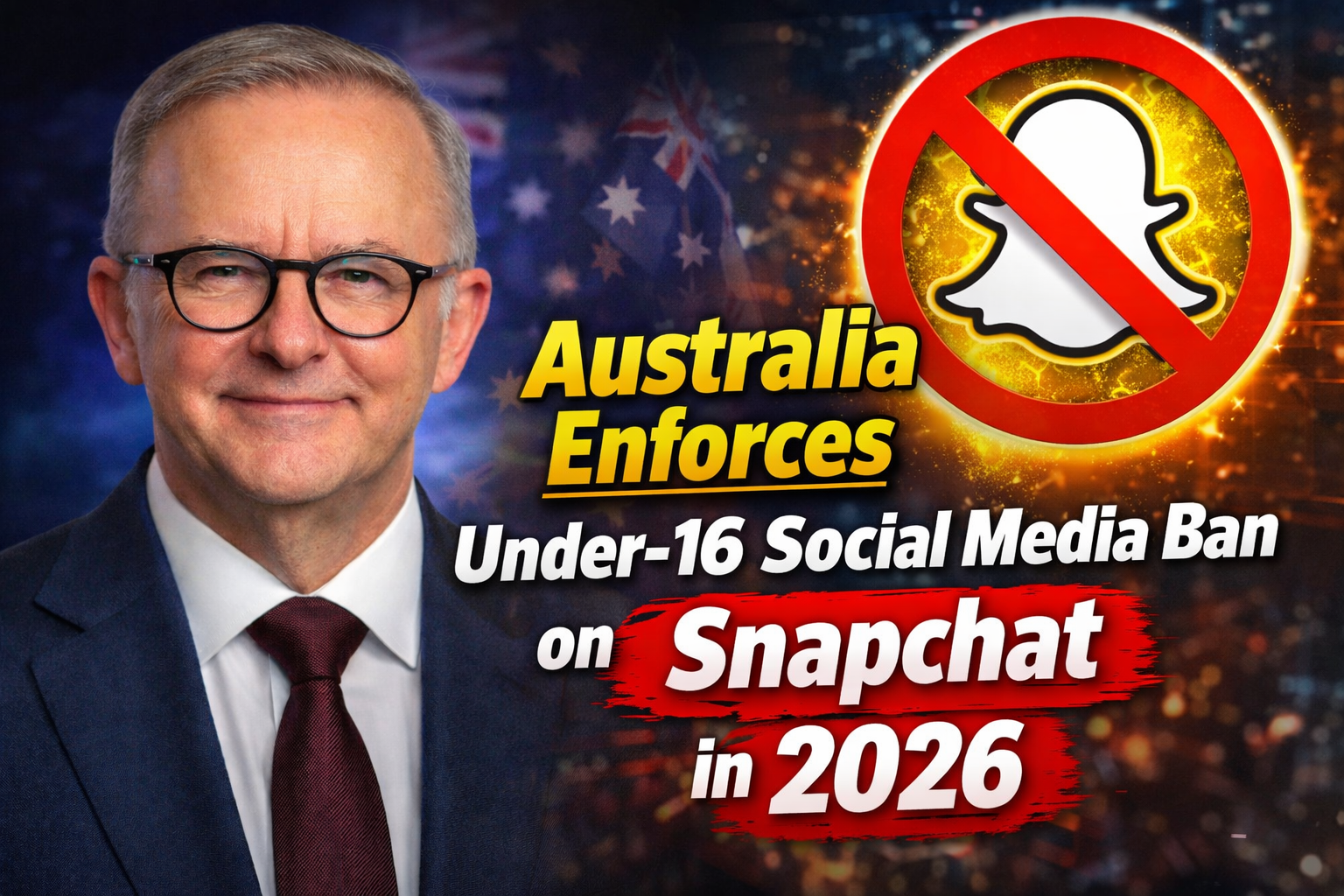
Australia has rolled out a groundbreaking nationwide ban preventing anyone under 16 from holding Snapchat accounts, effective from late 2025 into 2026. This measure targets Snapchat alongside other major platforms to shield young users from online harms.
Overview of the Ban
The legislation marks the world’s first comprehensive under-16 social media restriction, prioritizing child safety over unrestricted access. Platforms must block underage accounts or face massive fines, pushing Snapchat to suspend hundreds of thousands of profiles already. Parents and teens alike grapple with changes, while tech firms adapt amid debates on enforcement feasibility.
Snapchat, known for its ephemeral messaging and augmented reality features, falls squarely under the rules. The ban disrupts daily habits for millions of young Australians who relied on it for friendships and fun filters.
Legal Framework and Timeline
Parliament passed the Social Media Minimum Age law in 2024, with enforcement kicking in December 10, 2025. By early 2026, platforms reported blocking millions of accounts collectively. Snapchat alone locked over 400,000 Australian profiles by January’s end, with daily additions continuing.
Fines reach tens of millions for non-compliance, defined as failing “reasonable steps” to verify ages. The eSafety Commissioner oversees enforcement, naming initial targets like Snapchat, TikTok, Instagram, Facebook, YouTube, and Reddit. Smaller apps get phased inclusion as regulators expand scope.
How Snapchat Implements the Ban
Snapchat uses age estimation tech scanning profile data, selfies, and behavior patterns. Users declaring under-16 or flagged by algorithms face immediate locks. Affected teens get prompts to download data within a three-year window before permanent deletion.
Subscriptions like Snapchat+ auto-cancel for minors. Existing accounts vanish, blocking logins, posts, stories, or chats. Guest viewing remains possible on web versions, but no interactions occur. The company urges app stores to handle upfront age checks for consistency.
Age Verification Challenges
Detection tools boast accuracy within two to three years, yet gaps persist. Savvy kids might dodge via older birthdates or VPNs, exposing them to weaker safeguards. Conversely, some over-16s lose access erroneously, sparking complaints.
Snapchat pushes centralized app-store verification, arguing individual platforms bear unfair burdens. Critics note unregulated messaging apps escape scrutiny, potentially shifting risks elsewhere. Ongoing tweaks promise refinements, but perfection eludes current tech.
Impact on Young Users
Teens under 16 lose a key social lifeline, affecting peer connections and self-expression. Snapchat’s visual, temporary nature fostered safe sharing for many, but lawmakers cite addiction, bullying, and grooming epidemics. Suicide rates among Gen Z climbed, linking partly to cyber pressures.
Alternatives like supervised family accounts or kid-focused apps emerge, though none match Snapchat’s flair. Schools adapt curricula, teaching digital wellness sans platforms. Early data shows reduced screen times, but isolation worries surface for rural or marginalized youth.
Parental Guidance and Tools
Parents gain empowerment through monitoring apps and family safety settings on compliant platforms. Discussions surge on balancing protection with autonomy—some enforce device limits, others explore private servers. Resources from eSafety offer tips: review app permissions, set screen curfews, foster offline hobbies.
A common pitfall: kids borrowing older siblings’ logins. Platforms detect anomalies like sudden friend spikes, triggering flags. Open family talks prove vital, framing the ban as care, not control.
Platform Responses and Controversies
Snapchat complies reluctantly, disputing its “social media” classification due to private messaging focus. Meta echoes calls for unified verification, while TikTok reports swift blocks. Tech giants warn of enforcement whack-a-mole, as kids flock to WhatsApp or Discord loopholes.
Privacy hawks decry selfie scans as invasive, fueling legal challenges. Free speech advocates argue bans stifle youth voices, preferring parental controls. Government retorts with youth mental health stats: cyberbullying triples depression odds.
Statistics on Enforcement and Usage
| Metric | Pre-Ban Estimate | Post-Enforcement (Jan 2026) |
|---|---|---|
| Snapchat Under-16 Accounts | Around 440,000 | Over 415,000 Blocked |
| Total Platform Blocks | N/A | 4.7 Million Across Services |
| Daily New Locks | N/A | Thousands Ongoing |
| Fine Potential | N/A | Up to $49.5M Per Violation |
These figures highlight scale—platforms proactively cull to avoid penalties. Youth penetration hovered high pre-ban, with 13-15-year-olds dominating Snapchat demographics.
Broader Societal Benefits
Proponents tout plummeting exposure to harms. Grooming reports drop as minors exit public feeds. Algorithms lose addictive grips on developing brains, curbing doom-scrolling. E-commerce and education pivot to age-gated alternatives, boosting safer digital ecosystems.
Economically, Australian tech spurs innovation in verification startups. Globally, nations eye emulation—UK, EU mull similar caps. Snapchat’s pivot stresses responsible AI for safety.
Potential Workarounds and Risks
Creative teens test boundaries: shared accounts risk permanent bans for all involved. VPNs mask locations, but behavioral flags catch patterns. Underground apps lure with lax rules, heightening predator access.
Parents spot evasion via unusual data spikes or secretive usage. Authorities warn accomplices face aiding charges. Long-term, bans aim to normalize delayed entry, reshaping norms.
What Happens to Existing Content
Locked accounts freeze memories—streaks vanish, chats archive. Users reclaim data via export tools: photos, contacts, settings download as ZIP files. Three-year retention allows appeals if ages prove wrong.
Irretrievable loss hits hardest: cherished streaks or group chats dissolve. Snapchat advises immediate backups, emailing support for glitches.
Business and Global Ripple Effects
Snapchat forecasts revenue dips from lost young users, yet compliance averts steeper fines. App stores like Google Play and Apple mull federal mandates. Australian firms lead age-tech patents, exporting solutions.
Internationally, pressure mounts—US states propose mirrors, France tightens parental consent. Snapchat’s global uniformity bends locally, testing scalability.
Educational Shifts and Alternatives
Schools leverage bans for media literacy drives, sans distractions. Platforms like Duolingo or Khan Kids fill interactive voids. Gaming realms like Roblox offer social proxies with safeguards.
Youth creators pivot to YouTube guest views or family-managed channels. Creativity thrives offline: art clubs, sports boom as digital voids fill.
Enforcement Timeline Breakdown
| Date | Milestone |
|---|---|
| Mid-2024 | Law Passed in Parliament |
| Dec 10, 2025 | Ban Activates Nationwide |
| Jan 2026 | Millions Blocked; Snapchat Peaks |
| Feb 2026 Ongoing | Audits, Fines, Tech Upgrades |
| 2027+ | Phased Smaller App Inclusions |
This roadmap guides compliance evolution.
Voices from Affected Teens and Families
Anecdotes flood forums: heartbroken 15-year-olds mourn streaks, parents celebrate calmer homes. Rural voices amplify—spotty internet made Snapchat a village square. Celebrities endorse, sharing regretful early exposures.
Surveys show split support: 60 percent of parents back it, teens hover at 40 percent.
Future Outlook and Adjustments
Regulators promise flexibility—exemptions for educational tools loom. Snapchat eyes hybrid models: parental-verified teen tiers post-16. Success metrics track mental health gains, cybercrime dips by 2027.
Challenges persist: enforcement equity across apps, indigenous access bridges. Yet, Australia’s bold stroke pioneers youth digital pauses worldwide.
Practical Steps for Users
Teens: Export data now, explore alternatives. Parents: Audit devices, converse openly. Over-16s: Update profiles accurately. Platforms: Innovate ethically.
This ban reshapes Australia’s digital youth landscape, trading convenience for safety. Early hiccups yield lessons, positioning Snapchat as a more mature space.

Vineeth T.C. is a news writer and digital content contributor at PageEuropean, covering key developments across New Zealand and Australia. His work focuses on delivering clear, fact-based reporting on current affairs, public policy, business updates, and regional news that matter to readers.