
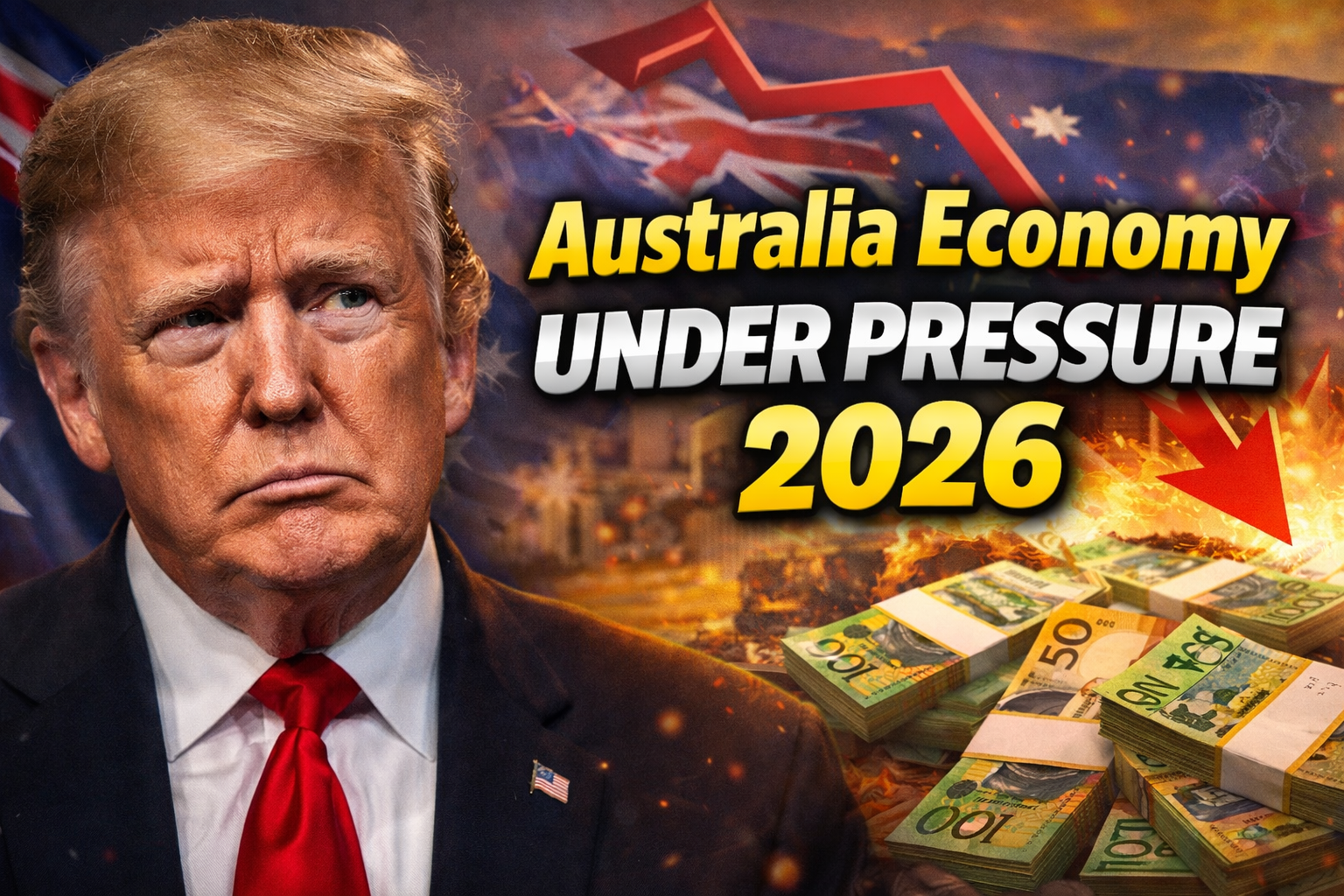
By early April 2026, Australia’s economic story is no longer just about interest rates and housing‑market recovery. It is now intrinsically tied to a war thousands of kilometres away—one that is reshaping petrol pumps, supermarket shelves, and the everyday finances of ordinary households. In a rare national address, Prime Minister Anthony Albanese has warned that the months ahead “may not be easy,” linking the Middle East conflict directly to soaring fuel prices, rising grocery bills, and a broader strain on the cost of living. The government’s messaging is clear: while Australia is not a direct combatant, Australians are still paying the price through more expensive transport, scarcer supply chains, and higher food‑basket inflation.
Albanese’s National Warning: A Rare Primetime Message
Albanese’s televised address framed the crisis in unusually blunt terms. He told viewers that the war in the Middle East had triggered the largest spike in petrol and diesel prices in Australia’s history, with the ripple effects already visible at the bowser and in the aisles of supermarkets. The prime minister stressed that the economic shocks from the conflict were “with us” and would likely persist for months, not weeks. His core message was one of honesty and shared responsibility: the government cannot fully insulate Australians from global shocks, but it can take steps to keep the most essential supplies flowing and to ease the pressure on households.
The speech also carried a call to citizens, urging them to avoid panic‑buying and fuel hoarding, to keep using public transport where possible, and to continue their normal routines while staying alert to the heightened economic environment. Albanese positioned this as a moment of national resilience, asking Australians to think of others in their communities—families in the bush, farmers, truck drivers, and small‑business owners—who are especially exposed to fuel and transport costs. The tone was calm but candid, designed to temper hysteria while also preparing the public for a period of sustained pressure.
The Fuel Shock and the Grocery‑Chain Squeeze
The roots of the 2026 price spike lie in the Strait of Hormuz and the wider Middle East war. With oil flows disrupted and global crude prices surging, Australia has seen petrol and diesel jump sharply, feeding directly into the costs of running trucks, delivery vans, and farm machinery. Economists and strategists warn that every significant rise in fuel prices tends to show up first at the bowser, then in transport‑linked sectors such as freight, logistics, and ultimately food.
Supermarkets and small‑goods suppliers are already feeling the strain. Major chains have signalled that higher fuel and transport costs are feeding into their supplier contracts, but the full pass‑through to customers has not yet arrived thanks to lags in the retail system. Analysts expect that the second half of 2026 will bring a “second wave” of price increases, as contracts are renegotiated and margins tighten. Some projections suggest that the combination of fuel‑driven logistics costs, tighter global supply lines, and possible disruptions to fertiliser and shipping could push grocery‑basket prices up meaningfully, particularly for fresh produce, milk, and other goods that rely on cool‑chain and regional‑distribution networks.
Charity groups and food‑security advocates are sounding alarms. They warn that the same families already relying on hampers and food‑relief programs will be hit hardest by higher grocery bills, especially if the war drags on and the Strait of Hormuz remains constrained. The concern is that long queues, scarcer staples, and rising fuel costs could compound existing food‑insecurity problems, turning a short‑term shock into a longer‑term hardship for low‑income and regional households.
Government Response: Fuel Tax Relief and Contingency Plans
In response to the crisis, the Albanese government has introduced a package of measures aimed at softening the blow, starting with fuel‑price relief. A temporary halving of the federal fuel excise—from 52.6 cents per litre to 26.3 cents for three months—was announced as part of the national‑address package, with the aim of lowering the immediate price impact at the bowser. The move is framed as a short‑term cushion while the government works to secure additional fuel supplies, strengthen domestic refining capacity, and keep supply lines open.
Beyond the excise cut, the government has pointed to broader contingency plans: ramping up imports of petrol and diesel, boosting stockpiles where possible, and leveraging Australia’s regional trading relationships to ensure that critical fuels and fertilisers continue to flow into the country. The prime minister has also asked Australians to avoid stockpiling, arguing that calm, steady demand is more effective in the long run than panic‑driven spikes in consumption.
On the grocery‑front, the government has so far stopped short of a large‑scale price‑control or subsidy scheme, instead focusing on monitoring supply chains, working with suppliers and retailers, and preparing if the situation deteriorates. The Treasury and Department of Infrastructure have been instructed to keep an eye on transport bottlenecks, regional fuel shortages, and the potential impact on agricultural‑inputs such as fertiliser, which could indirectly affect crop yields and food prices later in the year.
How the Conflict Is Reshaping the Cost of Living
The Middle East conflict has already altered the 2026 cost‑of‑living playbook for millions of Australians. For households that drive frequently—whether for work, school runs, or regional commuting—higher fuel prices have become a visible line item on the weekly budget. For small businesses that rely on deliveries, courier services, or on‑the‑road operations, the hit to profit margins can be substantial, especially when they are unable to pass on all of the extra cost.
Farmers, in particular, are in a delicate position. A fuel shortage or spike can delay planting, raise the cost of harvested‑grain movements, and add to the already high price of fertilisers and irrigation. If diesel constraints tighten further in regional and remote areas, the risk is not just higher fuel bills but also reduced agricultural output, which in turn can feed into higher food prices and tighter supply later in the season. The government’s messaging now explicitly links rural fuel‑security to national food‑security, pushing state and federal agencies to coordinate more closely on transport and fuel‑allocation planning.
City‑dwellers, meanwhile, feel the pressure in less obvious but still tangible ways. Public‑transport operators may face higher operating costs, which could eventually show up in fares or service adjustments. Delivery‑based services—food‑delivery platforms, online‑grocery, and courier networks—are all sensitive to fuel and labour costs, and any sustained price spike risks changes in how those services operate or how they are priced. For many families, the cumulative effect is a sense that “everything seems to cost more,” even if the headline‑inflation numbers are only slowly absorbing the full weight of the crisis.
Albanese’s Balancing Act: Foreign Policy, Prices, and Public Trust
The national address also placed Albanese in the awkward position of explaining how foreign‑policy decisions abroad are affecting domestic prices in Australia. The government has been careful to emphasise that Australia is not a direct participant in the Middle East war, but that it is deeply embedded in global energy markets and trade flows. The Strait of Hormuz, through which about one‑fifth of the world’s seaborne oil and gas normally passes, is treated as a shared global resource; when it is disrupted, the cost is borne by importing countries much more than by exporting ones.
Albanese’s rhetoric has been calibrated to walk that line: condemning the broader aggression and instability in the region, supporting multilateral efforts to de‑escalate and reopen key sea routes, while also projecting that the government is in control of the domestic response. The prime minister has repeatedly stressed that the economic shock is “real,” but that it is being managed through a mix of short‑term relief, longer‑term supply‑security measures, and a call for public patience.
This balancing act is also political. The government is acutely aware that voters are already fatigued by years of high living‑cost pressures and that the Middle East‑driven spike risks deepening dissatisfaction, especially among drivers, regional communities, and low‑income households. Albanese’s blunt warning that the months ahead “may not be easy” is an attempt to preempt backlash by under‑promising and then, if possible, over‑delivering on relief measures. The hope is that by being transparent about the limits of what government can do, the government will retain credibility even as prices remain elevated.
The Road Ahead for Australian Households
Looking ahead, the key question for Australian households is not whether prices will rise, but by how much and for how long. Most forecasts assume that the worst of the immediate fuel‑price spike will be mitigated by the temporary excise cut and by the government’s push to secure alternative supplies, but they also caution that the broader Middle East war and the Strait of Hormuz crisis could keep global oil prices elevated well into 2026 and beyond. If the conflict drags on, the grocery‑price pass‑through could become more pronounced, particularly in the second half of the year when seasonal agricultural and supply‑chain pressures usually peak.
For consumers, the practical response is likely to involve a mix of small‑scale behavioural changes: driving less, using public transport, carpooling, consolidating trips, and shopping more deliberately to minimise unnecessary fuel and food waste. Families may also shift their grocery habits—leaning more on cheaper staple foods, buying in bulk when feasible, and relying more on community‑support networks such as food‑relief programs and charity‑run hampers.
A Test of Australia’s Economic Resilience
In the broadest sense, the 2026 Middle East‑driven cost‑of‑living shock is testing Australia’s economic resilience in a new form. The country is no longer just managing the aftermath of the pandemic or the transition to higher interest rates; it is now grappling with a global energy crisis that has landed squarely on its doorstep. Albanese’s national address and the accompanying relief package represent an attempt to steer a course between acknowledging the severity of the shock and avoiding panic‑driven overreaction.
The speech on the Middle East conflict and the simultaneous surge in grocery prices encapsulates this moment: an economy under pressure, a prime minister trying to keep the public informed and calm, and millions of Australians watching the bowser and the supermarket checkout as the clearest barometers of a distant war’s impact at home. How the government responds in the coming months—on fuel, on food, and on support for the most vulnerable—will shape both the economic trajectory of 2026 and the political landscape leading into the next election cycle.

Vineeth T.C. is a news writer and digital content contributor at PageEuropean, covering key developments across New Zealand and Australia. His work focuses on delivering clear, fact-based reporting on current affairs, public policy, business updates, and regional news that matter to readers.