
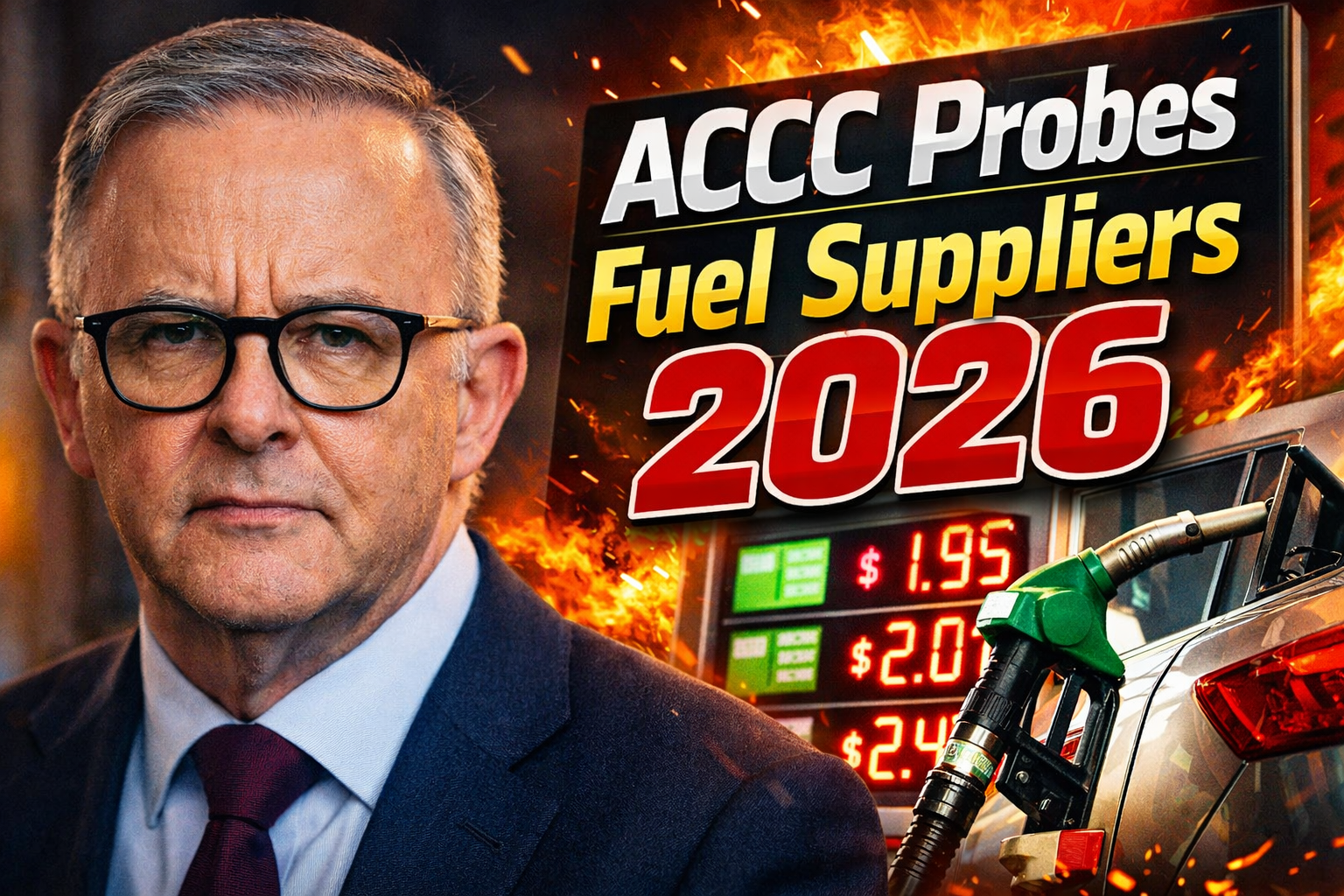
Australia’s fuel system is under intense scrutiny in 2026 as the Australian Competition and Consumer Commission launches a high‑profile investigation into the country’s major fuel suppliers. Allegations of anti‑competitive behaviour in the diesel supply chain, particularly in regional and rural areas, have collided with a worsening national fuel‑shortage crisis triggered by Middle East conflict and supply‑chain disruption. The ACCC has publicly confirmed it is looking at whether major companies are using the crisis as cover to restrict supply, control prices, or otherwise distort the market to their advantage—moves that could translate into undue pressure on farmers, transporters, and ordinary motorists already feeling the squeeze of record‑high fuel prices.
Why the ACCC Stepped In
The ACCC’s intervention did not come out of the blue. For months, the watchdog has been monitoring fuel prices and supply on a daily basis, tracking wholesale and retail trends across the five major capital cities and key regional hubs. In late 2025 and early 2026, the government, including the Treasurer and the Climate Change and Energy Minister, repeatedly asked the ACCC to keep a close eye on the fuel sector after the outbreak of war in the Middle East sent global oil prices higher and raised fears of physical shortages at home. Motorists and industry groups began reporting steep, seemingly disproportionate jumps at the bowser, even when international crude benchmarks only rose modestly.
Against that backdrop, reports emerged that some independent wholesalers and regional distributors were struggling to obtain diesel from large integrated suppliers on normal terms. In rural and remote areas, where logistics are already tight and competition is thin, any disruption in supply can quickly lead to rationing, higher prices, and uncertainty for farms, trucking companies, and local councils. The ACCC has now opened a formal enforcement inquiry into conduct around the diesel supply chain, specifically how the big players—Ampol, BP, Chevron, ExxonMobil, and Viva Energy—are allocating product to downstream buyers in country markets. The regulator has stated that the gravity of the situation is so serious it has broken with its usual practice of keeping probes confidential and has instead publicly announced the investigation, underscoring the political and economic stakes.
The Conduct Under the Microscope
The ACCC is not yet asserting that illegality has occurred; instead, it is gathering evidence to determine whether there is a pattern of behaviour that could breach the Competition and Consumer Act. The main lines of inquiry centre on:
- Supply allocation and access – The watchdog is examining whether major fuel suppliers are limiting or prioritising diesel allocations to certain customers (for example, their own branded sites or large corporate accounts) while making it harder for independent rural retailers and wholesalers to secure product at commercially reasonable terms. In tightly supplied markets, control over who gets fuel and when can effectively determine who can stay open and who must raise prices to compensate for sporadic supply.
- Pricing behaviour and “price gouging” – Although Australian law does not explicitly ban “high” prices, the ACCC is scrutinising whether retailers are using the war‑linked supply shock as a pretext to layer on excessive margins. The regulator is comparing changes in wholesale costs with the timing and magnitude of retail‑price increases, as well as checking for any misleading or deceptive claims at the pump (for example, implying that every cent of the price rise is driven by overseas events when parts may be margin‑driven).
- Information and coordination risks – The ACCC is also on the lookout for any signs of tacit or explicit coordination among suppliers, such as parallel price‑rise announcements, uniform responses to the crisis, or information‑sharing that could reduce competition. In a concentrated market where a handful of firms dominate refining, import, and wholesale, even subtle signals between players can have a material effect on pricing and availability in regional areas.
The ACCC has already summoned key executive‑level representatives from Ampol, BP, Chevron, ExxonMobil, Viva Energy, and some independent retailers for an emergency “please explain” session. The purpose is to force companies to walk through their pricing strategies, allocation decisions, and internal documentation, giving the regulator a clearer picture of how the supply chain is functioning under strain.
Regional and Rural Fuel Markets Under Pressure
The 2026 ACCC probe is especially focused on regional and rural Australia, where fuel markets are often less competitive and more vulnerable to shocks. In many country towns, there may be only one or two service stations, and diesel is not just a motive force but a lifeblood for agriculture, freight, and emergency services. Farmers rely on it to run tractors, harvesters, and irrigation pumps; trucking companies depend on it to keep goods moving; and local councils and utilities need it to power backup generators and maintenance equipment.
Reports from the bush describe situations where diesel deliveries have become patchy, with trucks turning up late or canceling orders; where stations are limiting how many litres customers can buy per transaction; and where prices have jumped faster and further than in the major cities. Some community leaders argue that the shortage is not just a consequence of global supply issues but is being amplified by how large suppliers are managing their domestic distribution networks. The ACCC is exploring whether there is a pattern of behaviour that reduces the effective competition in these areas—for example, by favouring corporate or branded‑chain sites over independents, or by setting prices that force smaller operators out of the market.
In response, the ACCC is looking at market‑structure concerns that extend beyond the immediate crisis. These include the concentration of refining and import capacity, the degree of vertical integration among major players, and the role of contractual arrangements that may reduce the ability of independent retailers to secure long‑term, reliable supply. The inquiry could ultimately feed into broader policy debates about whether Australia needs more diverse fuel‑supply channels, more resilient regional storage, or changes to how the fuel‑supply chain is regulated in times of national stress.
The Government’s Broader Crisis Response
The ACCC probe runs alongside a wider set of government actions aimed at addressing the fuel‑shortage crisis. The federal government, working with state and territory leaders, has been exploring options such as establishing a national fuel‑supply chain coordinator to help match physical supply with demand across the country, especially in hard‑hit regions. Other measures being discussed include reviewing strategic fuel reserves, encouraging greater transparency in fuel‑stock reporting, and using competition and consumer laws to deter any attempt to exploit the crisis for inappropriate profit.
The Climate Change and Energy Minister has signalled that the ACCC’s penalties for anticompetitive conduct could be tightened if the watchdog finds evidence that firms are deliberately exploiting the supply‑chain strain. The idea is to send a strong deterrent signal: while companies are entitled to manage commercial risk, they should not use a crisis as cover for behaviour that harms consumers and undermines the integrity of the market. The ACCC itself has reiterated that it does not set fuel prices, but it will act where there is evidence of conduct that breaches the law, including misleading claims to consumers about why prices are rising.
At the same time, academics and consumer‑advocacy groups caution that price‑gouging in the strict sense is not always illegal under Australian law. In many cases, the ACCC can only intervene if companies make false or misleading statements or engage in conduct that is anti‑competitive or unconscionable, not simply because they are making high margins. This legal nuance means that the regulator may find concerning behaviour even if it does not result in a wave of prosecutions, and it underscores why the government is also considering additional tools—such as enhanced monitoring, public naming‑and‑shaming, and structural‑market reforms—as part of a longer‑term response.
What the Investigation Means for Consumers and Farmers
For ordinary Australians, the ACCC probe offers a measure of reassurance that someone is watching over the fuel market, even if the immediate impact on pump prices may be limited. The watchdog’s public monitoring of fuel prices, which it has done for years, already shows that retail prices respond quickly to wholesale trends, but the investigation into conduct during the 2026 crisis is meant to sniff out whether some of the spikes are driven by market power rather than pure supply‑and‑demand. The ACCC has indicated that any evidence of deceptive or misleading statements at the bowser would be treated seriously, and it has encouraged consumers to report suspicious behaviour through its online channels.
For farmers and regional businesses, the stakes are higher. A reliable, competitively priced fuel supply is not a luxury but a core input to the national economy. If the ACCC ultimately finds that major suppliers have been restricting access to diesel in rural areas or using contractual or allocation practices that hurt independent retailers, it could recommend binding undertakings, structural changes, or even court action in the worst cases. The inquiry may also prompt a review of how the fuel‑supply chain is regulated in times of crisis, with options such as more transparent allocation rules, stronger obligations to supply essential users, and enhanced oversight of downstream‑pricing decisions.
The probe’s findings could also influence the way consumers and businesses view the fuel market in the longer term. If the ACCC identifies clear patterns of anti‑competitive behaviour or information‑sharing that depresses competition, it may push for changes in how the industry is monitored and supervised, including more robust data‑collection requirements and more frequent reporting on price‑cost margins. Such reforms would not only address the 2026 crisis but would help future governments and regulators respond more quickly to any repeat of the current situation.
The Bigger Picture: Fuel, Competition, and Energy Security
The ACCC’s 2026 investigation into fuel suppliers highlights a fundamental tension in the Australian economy: the need to allow companies to respond commercially to volatile global conditions, and the need to ensure that this does not translate into undue harm for consumers, farmers, and regional communities. The fuel‑supply chain is already highly concentrated, with a small number of firms controlling refining, import, and wholesale capacity, and with strong brand‑channel relationships in retail. In a crisis, that concentration can work both ways—it can enable rapid coordination and prioritisation of critical users, but it can also create opportunities for anti‑competitive behaviour if oversight is weak.
The 2026 probe is thus more than a short‑term enforcement exercise; it is a test of whether Australia’s competition and consumer‑protection framework is equipped to police complex, globally exposed markets in times of national stress. The ACCC’s decision to go public with the investigation, hold emergency meetings with the sector, and coordinate with the federal government shows that the regulator is treating the issue as a matter of national economic importance, not just a dry‑goods case study. The outcomes of the probe—whether in the form of enforcement action, binding undertakings, or policy recommendations—could shape the fuel‑supply landscape in Australia for years to come.
In the meantime, motorists are being urged to keep an eye on price‑monitoring tools, report any misleading claims at the bowser, and engage with their local petrol‑price‑watch groups. Farmers and regional‑business groups are being encouraged to share detailed data on supply disruptions and pricing patterns with the ACCC and with their state‑level agencies, since granular evidence from the ground is often what makes the difference between a generalised complaint and a actionable case. As the investigation unfolds, the hope is that the ACCC can help ensure that Australia’s fuel‑shortage crisis is driven by genuine global supply constraints, not by anti‑competitive conduct within the domestic supply chain.

Vineeth T.C. is a news writer and digital content contributor at PageEuropean, covering key developments across New Zealand and Australia. His work focuses on delivering clear, fact-based reporting on current affairs, public policy, business updates, and regional news that matter to readers.