
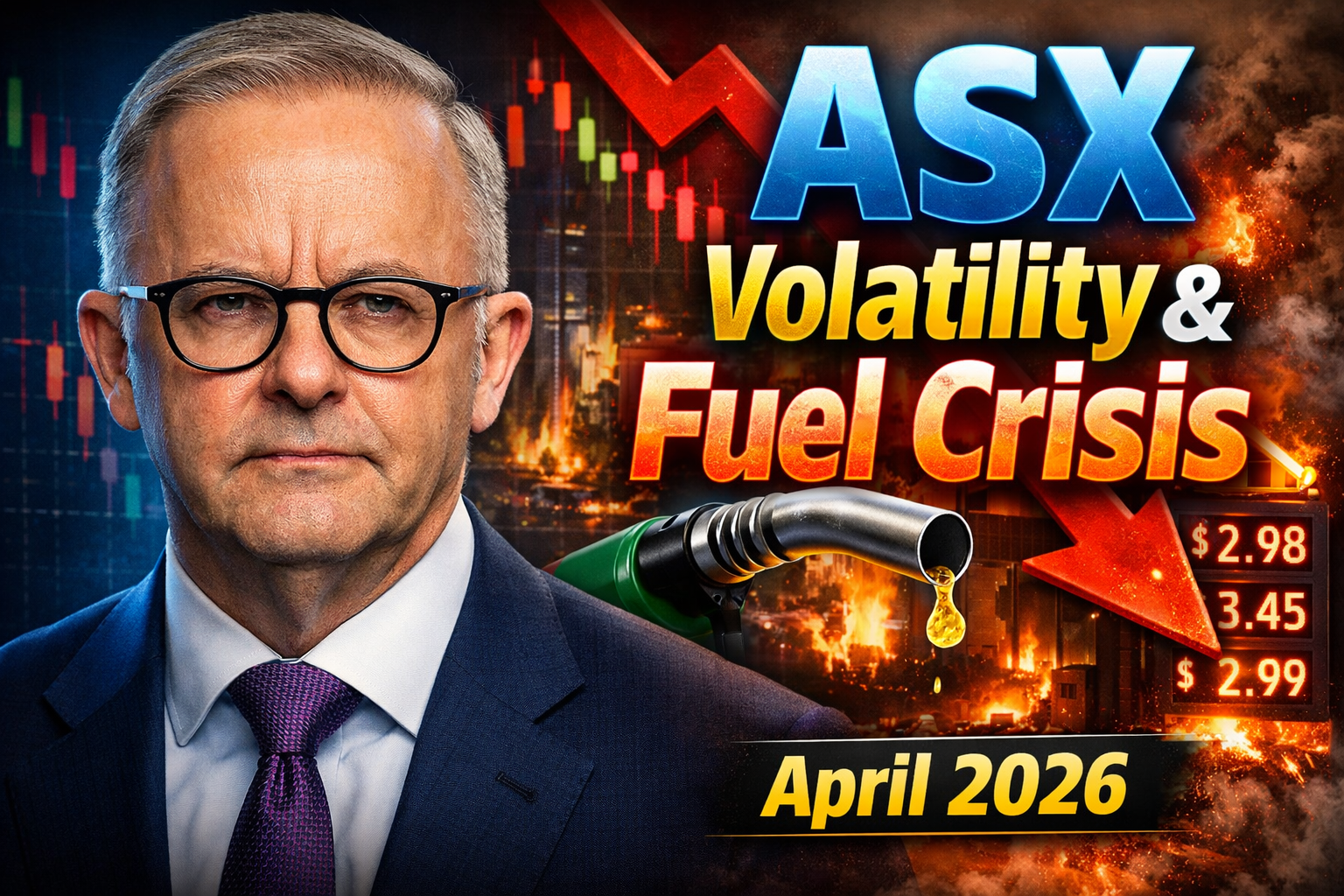
Australia’s economy is reeling from a perfect storm of soaring fuel prices and jittery stock markets. Prime Minister Anthony Albanese faces mounting calls to extend emergency fuel tax cuts as everyday costs bite harder into household budgets and business profits.
The Australian Securities Exchange has been a rollercoaster in early April 2026, with sharp swings driven by global energy shocks. Brent crude oil prices have surged past key thresholds amid geopolitical tensions, pushing local fuel costs to painful levels and amplifying market volatility. This crisis exposes vulnerabilities in Australia’s energy supply chain, where reliance on imports meets domestic refinery constraints. For commuters, truckers, and industries, the pain is immediate—higher petrol and diesel prices ripple through groceries, freight, and manufacturing. Anthony Albanese’s government, already under scrutiny for its recent half-measure excise cut, now grapples with demands for bolder action to stabilize the ASX and shield the public from further inflation.
Roots of the Fuel Crisis
Global conflicts have reignited supply fears, sending oil prices climbing rapidly. Refineries in Asia, including those in China and Thailand, have curtailed exports, tightening refined fuel availability worldwide. Australia’s two remaining domestic refineries—Lytton in Brisbane and Geelong—cover less than one-fifth of national demand, leaving the country exposed to international disruptions. Stockpiles of petrol sit at around 29 days and diesel at 25 days, buffers that are shrinking as panic buying and higher consumption accelerate depletion.
This isn’t just an import issue; jet fuel and diesel cracks have widened dramatically, doubling from recent peaks and forcing airlines to hike fares. Heavy vehicle operators, vital for logistics, face road user charges that compound the squeeze despite recent relief. The result? A different breed of energy crisis, not from crude shortages but refined product scarcity, hitting transport-heavy sectors hardest.
ASX Volatility Explained
The ASX 200 has whipsawed between hope and fear this month. Early rallies on Wall Street optimism faded as fresh war escalations drove oil higher, turning the index lower before Easter. Selling spread broadly, with more decliners than gainers—118 falling against 78 rising in one brutal session. Mining giants like BHP Group, Rio Tinto, and Fortescue bore the brunt, as higher energy costs threaten global growth and commodity demand.
Retailers, airlines, and transport firms feel the pinch too, with freight and shipping expenses eroding margins. Volatility gauges echo Wall Street’s, dipping then spiking as traders price in prolonged uncertainty. Corporate earnings guidance from February now looks outdated, with energy shocks, rate hikes, and supply snarls forcing downward revisions across the board.
| Sector | Key Impact | Example Stocks Affected |
|---|---|---|
| Mining | Commodity demand risks from slower growth | BHP, Rio Tinto, Fortescue |
| Energy | Higher input costs, export curbs | Ampol, Viva Energy |
| Transport | Freight and fuel squeezes | Qantas, toll road operators |
| Retail | Margin erosion from logistics hikes | Woolworths, Coles suppliers |
| Airlines | Jet fuel cracks doubling fares | Qantas, Virgin Australia |
This table highlights how interconnected the crisis is, with no sector unscathed.
Government Response So Far
Anthony Albanese’s administration acted swiftly in late March, announcing a halved fuel excise from 52.6 cents per litre to 26.3 cents, effective April 1 through June 30. This delivers about 26 cents savings per litre on petrol and diesel, equating to nearly 19 dollars for a standard 65-litre tank fill-up. The National Cabinet backed a four-point fuel security plan, urging public transport shifts and zeroing heavy vehicle charges for truckers.
Treasurer Jim Chalmers coordinated with the Australian Taxation Office for small business leniency—delayed collections and flexible payments dubbed “COVID-lite.” Banks and insurers pledged hardship support. Yet, as April unfolds, these steps feel like a band-aid. Savings are appearing at pumps, but with oil still climbing, the relief is fleeting.
Economic Ripple Effects
Households are stretched thin. A family filling two cars weekly saves modestly, but grocery bills climb as trucking costs pass through. Inflation, already stubborn, risks reacceleration from energy pass-throughs. Small businesses, especially regional ones, teeter—cafes pay more for deliveries, builders for diesel generators.
| Fuel Type | Pre-Cut Excise (cents/L) | Post-Cut Excise (cents/L) | Weekly Savings (65L tank, 2 fills) |
|---|---|---|---|
| Petrol | 52.6 | 26.3 | Around 34 dollars |
| Diesel | 52.6 | 26.3 | Around 34 dollars |
Stats like these underscore tangible relief, but broader stats paint a grimmer picture: fuel imports up 15 percent year-on-year, refinery output strained at 80 percent capacity. GDP forecasts whisper downgrades if oil stays elevated, with consumer spending—the economy’s engine—faltering.
Political Pressure Mounts
Albanese walks a tightrope. Opposition Leader Peter Dutton hammers the government for inadequate reserves and slow diversification from fossil fuels. Business lobbies, from the Australian Banking Association to trucking unions, demand excise elimination, not just a trim. Regional MPs, representing fuel-dependent electorates, amplify calls—think Queensland miners and Victorian farmers.
Public sentiment sours too. Polls show cost-of-living topping concerns, with fuel rivaling housing. Social media buzzes with #SlashTheExcise, blending commuter rage and trucker pleas. Albanese’s “months ahead not easy” line resonates, but inaction risks by-elections in marginal seats.
Industry Voices and Stats
Transport Australia reports diesel demand up 12 percent amid shortages, with 40 percent of operators rationing runs. Airlines like Qantas have bumped fares 8-10 percent, citing jet fuel at double 2022 peaks. Retailers note 5-7 percent logistics cost hikes, trickling to shelves.
Refined product competition intensifies—Australia bids against Asia for Southeast Asian and African crude. Reserves deplete faster than planned, with government eyeing strategic releases. Viva Energy and Ampol stocks wobble, reflecting investor nerves over sustained high costs.
| Indicator | April 2026 Level | Change from March |
|---|---|---|
| Brent Crude | Above 105 USD/barrel | Up 15 percent |
| ASX 200 Volatility | Elevated swings | 1 percent weekly range |
| Petrol Reserves | 29 days | Down from 35 |
| Diesel Reserves | 25 days | Down from 32 |
| Jet Fuel Crack | 52 USD/barrel | Doubled from 2022 peak |
These figures crystallize the urgency, showing supply strains in hard numbers.
Calls for Excise Slash
Stakeholders push for full excise axing. The Business Council argues it would inject billions into pockets, boosting spending and ASX confidence. Truckers seek permanent heavy vehicle charge zeroing, vital for 70 percent of freight volume. Economists model scenarios: a total cut could shave 0.5 percent off inflation, per think tanks.
Albanese resists, citing budget black holes—excise revenue funds roads. Yet, with war fears lingering, extension beyond June seems inevitable. A permanent slash? That demands cross-party buy-in, tricky in a polarized Parliament.
Broader Implications
This crisis spotlights energy security gaps. Australia’s import dependence—over 80 percent for refined fuels—clashes with net-zero ambitions. Renewables ramp-up lags, leaving hybrids and EVs as partial buffers, but most fleets run fossil. Public transport pleas fall flat in sprawl-heavy suburbs.
Globally, peers like the UK mull similar cuts; Australia’s move sets precedent. For ASX, stabilization hinges on oil cooling—geopolitics willing.
Path Forward
Albanese must balance fiscal prudence with voter fury. Extending the halve buys time; slashing fully ignites growth but balloons deficits. National Fuel Security Plan evolves—more reserves, refinery incentives, biofuel mandates. Business aid expands, targeting hardest-hit SMEs.
Investors eye corporate updates warily, betting on resilience. Households adapt—carpooling, hybrids—but systemic fixes lag. As April wears on, the PM’s inbox overflows with pleas: act big, or risk economic stall.
Conclusion
Australia stares down a volatile April, where fuel fires fan ASX flames. Albanese’s excise halve eased immediate pain, but pressure builds for deeper cuts amid eroding reserves and relentless oil climbs. From miners to mums, the call echoes: slash the excise, steady the ship. The months ahead test leadership—will bold strokes calm markets and wallets, or does dithering deepen the downturn? Only time, and tank gauges, will tell.

Vineeth T.C. is a news writer and digital content contributor at PageEuropean, covering key developments across New Zealand and Australia. His work focuses on delivering clear, fact-based reporting on current affairs, public policy, business updates, and regional news that matter to readers.