
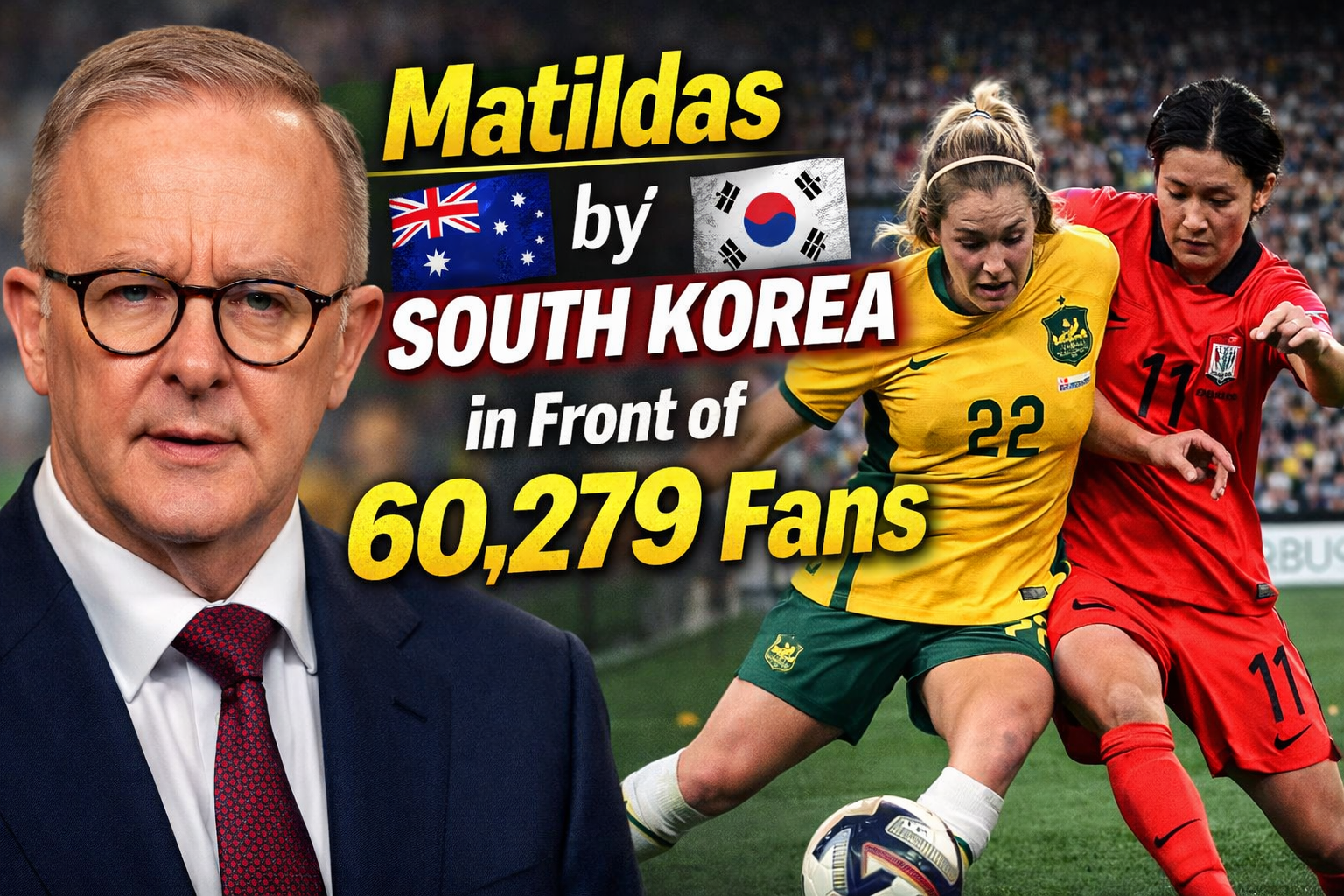
The Matildas fought valiantly but settled for a thrilling draw against South Korea, playing out to a six-goal spectacle before a massive home crowd. This result cost Australia the top spot in their group at the Women’s Asian Cup, setting up a tougher quarterfinal path ahead.
Introduction
The Stadium Australia erupted with energy as over sixty thousand fans packed the stands, creating an electric atmosphere for one of the tournament’s standout matches. The Matildas, Australia’s beloved women’s national football team, entered the clash knowing a win would secure Group A leadership and a favorable knockout draw. South Korea, however, proved resilient, turning the game into a back-and-forth battle that ended level.
This draw highlighted both the Matildas’ attacking flair and defensive vulnerabilities. Key players rose to the occasion, but critical moments exposed gaps that allowed South Korea to edge ahead on goal difference. As the tournament progresses on home soil, the team now shifts focus to the quarters, where the road to the final just got steeper.
Match Overview
From the opening whistle, both sides showed intent, trading chances in a high-tempo first half. The Matildas struck first through sharp interplay, only for South Korea to respond swiftly. The game swung wildly, with Australia regaining the lead before halftime, delighting the roaring crowd.
The second period brought more drama. South Korea mounted a comeback, capitalizing on transitions to take the lead. Australia pushed hard, creating waves of pressure, but it took until deep into stoppage time for them to salvage a point. The final scoreline reflected a contest full of quality and heart, though it left the home side frustrated.
Key statistics from the match underscore the intensity:
| Metric | Matildas | South Korea |
|---|---|---|
| Possession | 54% | 46% |
| Shots on Target | Higher | Fewer |
| Total Shots | More | Less |
| Corners | 7 | 4 |
| Fouls | 12 | 10 |
These figures show Australia’s dominance in attack but South Korea’s clinical edge.
First Half Fireworks
The Matildas wasted no time asserting themselves. Early possession allowed them to probe South Korea’s defense, leading to the opener via a well-worked move involving midfield maestros. The goal sparked wild celebrations, with fans sensing a statement performance.
South Korea hit back quickly, exploiting a momentary lapse at the back. Their equalizer came from a fluid counter, showcasing their speed on the break. Undeterred, Australia rebuilt momentum, with wingers stretching the play and creating overloads.
Just before the interval, the Matildas regained control. A precise through ball set up a finish that sent the stadium into frenzy. Leading at the break felt deserved, given their shot volume and territorial advantage. The crowd’s energy seemed to fuel every surge forward.
Second Half Drama
Post-interval, South Korea emerged revitalized, pressing higher and disrupting Australia’s rhythm. They leveled proceedings with a sharp finish after a turnover, then pushed ahead through relentless pressing. The Matildas, caught off-guard, struggled to regain footing amid the chaos.
Substitutions injected fresh legs, and Australia began clawing back. Crosses rained into the box, and midfield battles intensified. South Korea defended stoutly, absorbing pressure while threatening on the break. Tension mounted as the clock ticked down, with the home crowd urging their heroes on.
In the dying embers, composure returned. A late surge culminated in an equalizer nodded home from a corner, sparking joyous scenes. The point felt hard-earned, preserving quarterfinal hopes despite the group lead slipping away.
Key Player Performances
Alanna Kennedy shone brightest, netting a brace including the dramatic late leveler. Her aerial presence and positioning proved decisive, bailing out the defense time and again. Sam Kerr, the talismanic forward, linked play expertly, completing a full match and creating chances aplenty.
Caitlin Foord dazzled on the flank, her pace troubling defenders throughout. Mary Fowler added spark from the bench, nearly scoring with a curling effort. In goal, the keeper made crucial stops, though lapses allowed South Korea’s bursts.
South Korea’s threats came from quick forwards who punished transitions. Their goalkeeper denied Australia multiple times, earning praise for sharp reflexes.
Standout contributions in a table:
| Player | Goals | Assists | Key Moments |
|---|---|---|---|
| Alanna Kennedy | 2 | 0 | Late equalizer, leadership |
| Sam Kerr | 1 | 1 | Full game, chance creation |
| Caitlin Foord | 0 | 1 | Dribbles, crosses |
| Mary Fowler | 0 | 0 | Sub impact, near miss |
These efforts kept Australia in contention.
Tactical Breakdown
Coach Tony Gustavsson opted for an attacking setup, emphasizing width and quick passes. This yielded early rewards but left gaps on counters, which South Korea exploited masterfully. The press worked initially but fatigued late, allowing the visitors to sit deep.
South Korea’s coach focused on organization, using pace to transition rapidly. Their midfield controlled tempo at key junctures, frustrating Australia’s buildup. Both teams showed AFC-level quality, with set pieces proving pivotal.
Adjustments post-half helped, as fullbacks pushed higher and midfielders dropped deeper. Yet, finishing remained the Achilles’ heel—clear chances went begging until the end.
Crowd and Atmosphere
A record-breaking sixty thousand two hundred seventy-nine fans turned Stadium Australia into a cauldron of noise. Chants echoed from kickoff, boosting every Matildas attack. The sea of green and gold created a home advantage felt on the pitch.
Halftime saw families and kids waving flags, while second-half tension built to fever pitch. The late goal prompted an explosion of joy, with flares lighting the night sky. This support rivals World Cup levels, underscoring football’s growth Down Under.
Such crowds signal the Matildas’ cultural impact, drawing diverse fans from across Australia. The energy likely unnerved South Korea, though they held firm.
Group Stage Implications
The draw handed South Korea top spot via superior goal difference, earning them a Sydney quarterfinal. Australia drops to second, facing a trip to Perth against a Group B runner-up like China or DPR Korea. Both teams advance with identical records, but seeding matters.
Prior results shaped this: Australia won earlier games convincingly, while South Korea edged tight contests. The Philippines and Iran trail, with the former sneaking as a best third possibly.
Updated Group A standings:
| Team | Played | Wins | Draws | Losses | Goals | Points |
|---|---|---|---|---|---|---|
| South Korea | 3 | 2 | 1 | 0 | +6 | 7 |
| Australia | 3 | 2 | 1 | 0 | +5 | 7 |
| Philippines | 3 | 1 | 0 | 2 | -2 | 3 |
| IR Iran | 3 | 0 | 0 | 3 | -9 | 0 |
This shifts Australia’s knockout venue, adding travel fatigue.
Road to the Quarterfinals
Australia’s campaign started strong, dispatching weaker foes with flair. This test against South Korea exposed areas for growth, particularly composure under pressure. The psychological edge goes to the Koreans, who ousted the Matildas in past knockouts.
Quarterfinal opponents loom large—China brings physicality, DPR Korea technical skill. Home support will follow to Perth, but adaptation is key. Gustavsson emphasized the “long road,” signaling mental fortitude.
Tournament format favors consistency: top two per group plus best thirds advance. With eight teams left, Australia’s pedigree positions them well, but execution decides titles.
Broader Tournament Context
Hosted across Australia, the Asian Cup blends domestic passion with continental rivalry. The Matildas, World Cup semifinalists not long ago, carry medal hopes. This draw tempers expectations, reminding all of football’s unpredictability.
Rivals like Japan and China dominate historically, but Australia’s rise challenges the order. Record crowds boost visibility, inspiring young players nationwide. Off-field, inclusivity drives grow, with sellouts signaling parity push.
Looking Ahead
Recovery starts with analysis: sharpen finishing, tighten transitions. Kerr’s fitness buoys optimism, while depth from subs offers options. Perth awaits, where a win rebuilds momentum.
Fans remain fervent—the late roar proves unbreakable spirit. South Korea’s resolve earns respect, setting up potential rematches. For the Matildas, silverware dreams endure; this hiccup fuels hunger.

Vineeth T.C. is a news writer and digital content contributor at PageEuropean, covering key developments across New Zealand and Australia. His work focuses on delivering clear, fact-based reporting on current affairs, public policy, business updates, and regional news that matter to readers.