

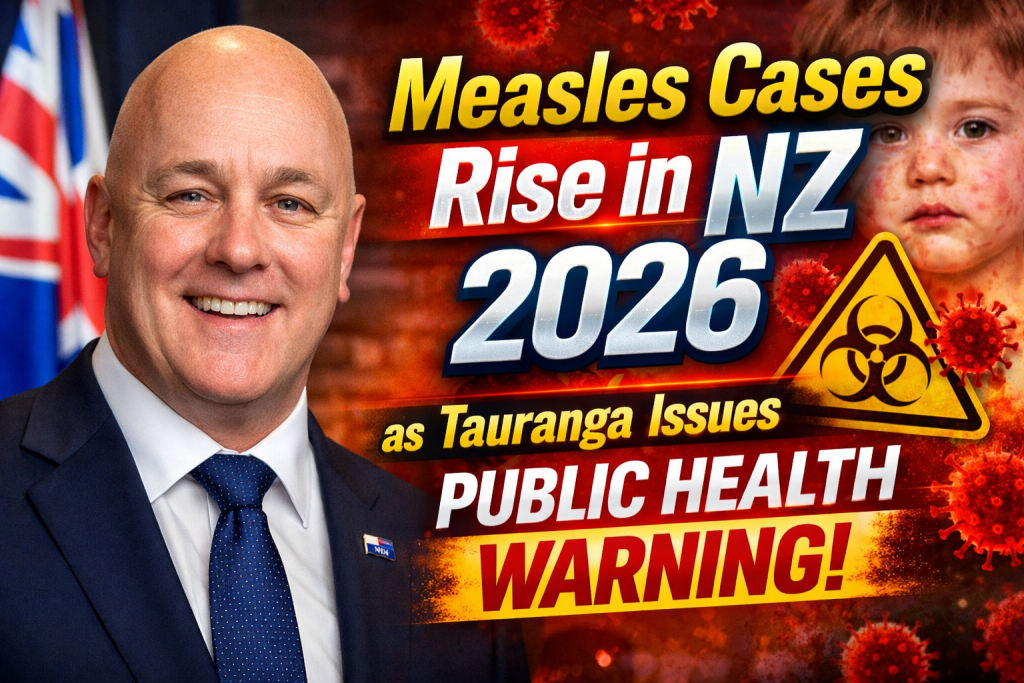
New Zealand faces a troubling uptick in measles cases early in 2026, with Tauranga issuing an urgent public health warning after confirming a new local infection linked to overseas travel. Health authorities emphasise vaccination as the frontline defence, amid vulnerabilities exposed by low immunity rates and global outbreaks spilling into communities.
Understanding Measles in New Zealand
Measles is a highly contagious viral illness that spreads through respiratory droplets, thriving in unvaccinated pockets and imported cases. New Zealand eliminated endemic transmission years ago, but imported infections reignite risks, especially with travel resuming post-holidays. Symptoms start with fever, cough, runny nose and red eyes, followed by a distinctive rash spreading from face to body.
Complications hit hard: pneumonia, encephalitis and severe dehydration threaten young children, pregnant women and immunocompromised individuals. One confirmed Tauranga case underscores fragility – despite prior national efforts, surveillance week three logged dozens of infections nationwide, signalling clusters beyond isolated events.
Tauranga Case Details
Health New Zealand confirmed the latest Tauranga patient, who returned from overseas travel but fell ill domestically after a non-infectious flight. Symptoms emerged mid-January, prompting swift contact tracing unrelated to prior national outbreaks. Public health teams identified exposure sites like a Mount Maunganui cafe and central supermarket, urging monitoring through early February.
Clinical leads stress rapid isolation of contacts, with no hospitalisations yet but vigilance high. This incident highlights Bay of Plenty’s exposure via tourism hubs and airports, where transient populations amplify spread.
National Case Surge Context
Early 2026 data reveals escalating notifications: confirmed, probable and suspected cases climbed into dozens weekly, surpassing late-2025 trends. North Island hotspots dominate, but southern alerts loom as travel mixes populations. Imported strains from Southeast Asia and Europe fuel chains, exploiting gaps in herd immunity.
Prior 2025 outbreaks in Northland, Auckland and Waikato set precedents, with low vaccination coverage – hovering below ninety percent for two-dose coverage – leaving communities porous. Health New Zealand’s dashboard tracks rises, prompting escalated alerts.
Public Health Warning Specifics
Tauranga’s directive calls for symptom vigilance at listed locations during specified windows. Casual contacts monitor fever or rash for three weeks post-exposure; close ones isolate fully. Phone-ahead protocols protect clinics from inadvertent spread.
Authorities reiterate two-dose MMR vaccine efficacy – free for under-eighteens and eligible adults – targeting laggards. Whānau checks prove timely, as summer gatherings risked silent transmission.
Symptoms and Contagion Risks
Initial prodrome mimics flu but intensifies: temperatures exceed thirty-eight degrees Celsius, eyes inflame and cough deepens. Rash erupts days four to seven, blotchy and itchy, lasting a week. Infectivity peaks pre-rash, airborne via coughs or breaths, lingering in air two hours.
Crowded venues like cafes spell danger; one case exposes hundreds potentially. Incubation spans ten to fourteen days, delaying detection until rashes betray.
Vaccination Drive Urgency
MMR delivers ninety-seven percent protection post-booster, slashing outbreak scales. New Zealand’s schedule doses babies at twelve and eighteen months, yet catch-up lags for teens and adults born post-1960s rubella campaigns. Migrants and travellers face highest risks without proof.
Free clinics ramp up: GP visits, pharmacies and marae host sessions, with rapid serology tests confirming immunity. Booster campaigns target schools and workplaces, aiming herd thresholds above ninety-five percent.
MMR Coverage Benchmarks
| Age Group | Target Rate | Current NZ Estimate |
|---|---|---|
| Twelve Months | Ninety-Three | Eighty-Eight |
| Eighteen Months | Ninety-Two | Eighty-Five |
| School Entry | Ninety-Five | Eighty-Nine |
| Adults | Ninety-Five | Variable, Lower |
These gaps explain resurgence vulnerability.
Contact Tracing Efforts
National Public Health Service mobilises: patients recall timelines meticulously, mapping movements via receipts, apps and whānau input. Digital tools flag overlaps at malls, transport hubs. Ring vaccination – boosters for at-risk contacts – contains sparks.
Tauranga’s list evolves dynamically, posted online with grace periods for updates. Success hinges on compliance; past outbreaks curbed via similar precision.
Vulnerable Populations
Infants under twelve months lack maternal antibodies fully, facing hospitalisation risks triple adults’. Pregnant individuals risk miscarriage or prematurity; immunocompromised patients endure prolonged shedding.
Pasifika, Māori and low-income whānau show coverage shortfalls, compounded by access barriers. Outreach via kōhanga reo, churches and mobile units bridges divides.
Global Connections Fueling Rise
Overseas epicentres – Thailand, Indonesia, Europe – seed imports yearly. Air travel funnels cases silently, with pre-symptomatic shedding evading screens. Neighbours like Australia log parallel surges, cross-Tasman links heightening alerts.
SafeTravel.govt.nz urges pre-trip checks, MMR top-ups for gaps.
Government and Health Sector Response
Te Whatu Ora escalates nationally: stockpile MMR doses, train frontline staff and fund advertising blitzes. Ministry of Health integrates data, forecasting via models. Regional public health directors coordinate, sharing intelligence.
Funding boosts community vaccinators, tackling hesitancy via trusted voices – kaumātua, GPs, celebrities. School mandates loom discussions, balancing rights and safety.
Community Impact and Stories
Tauranga families alter routines: kids homebound, gatherings paused. Parents recount 2025 scares – siblings hospitalised, schools shuttered briefly. Social media amplifies fears, blending misinformation with legit worries.
Positive tales emerge: vaccinated bubbles shield vulnerable cousins, community drives pack clinics.
Prevention Strategies Beyond Vaccination
Hygiene amplifies defence: handwashing, cough etiquette, distancing in prodrome seasons. Workplaces screen travellers, schools exclude suspects. Masks in high-risk settings curb aerosols.
Household isolation post-exposure: fourteen days minimum, fever-free clearance.
Long-Term Immunity Goals
Elimination demands sustained ninety-five percent coverage, per WHO benchmarks. Digital registries track lifelong status, nudging boosters for wānanga gaps. School entry proofs enforce basics.
Integration with routine checks – Well Child, cervical screening – embeds habits.
Economic and System Strain
Outbreaks burden: contact tracing hours, clinic surges, lost wages. Hospital beds divert from electives; 2025 tallied millions indirectly. Vaccination averts exponentially more, cost-benefit stark.
Addressing Vaccine Hesitancy
Myths persist – autism links debunked exhaustively – countered by data: unvaccinated cohorts suffer worst. Culturally attuned campaigns feature whānau testimonials, Pacific influencers.
Access fixes: after-hours pop-ups, transport subsidies, te reo resources.
School and Workplace Protocols
Schools notify communities, exclude cases fourteen days post-rash. Clusters trigger deep cleans, ventilation audits. Employers offer paid vaccine leave, flu-shot parallels.
Monitoring and Reporting Tools
ESR labs confirm via PCR or serology; dashboards update weekly. Public hotlines triage symptoms, avoiding ED overloads. Apps like Huia log exposures voluntarily.
Successes from Past Responses
2025’s Northland containment – rapid MMR pushes – halted chains, modelling 2026 blueprints. Community-led efforts in Māori enclaves doubled local rates swiftly.
Looking Ahead to Containment
Tauranga’s case tests resolve, but tools exist: vaccines, tracing, education. February peaks loom with schools resuming; pre-emptive boosts critical.
New Zealand rebounds via collective āwhi – check status, vaccinate whānau, report symptoms. Measles yields to vigilance, reclaiming safe kai gatherings and playgrounds.

Vineeth T.C. is a news writer and digital content contributor at PageEuropean, covering key developments across New Zealand and Australia. His work focuses on delivering clear, fact-based reporting on current affairs, public policy, business updates, and regional news that matter to readers.