
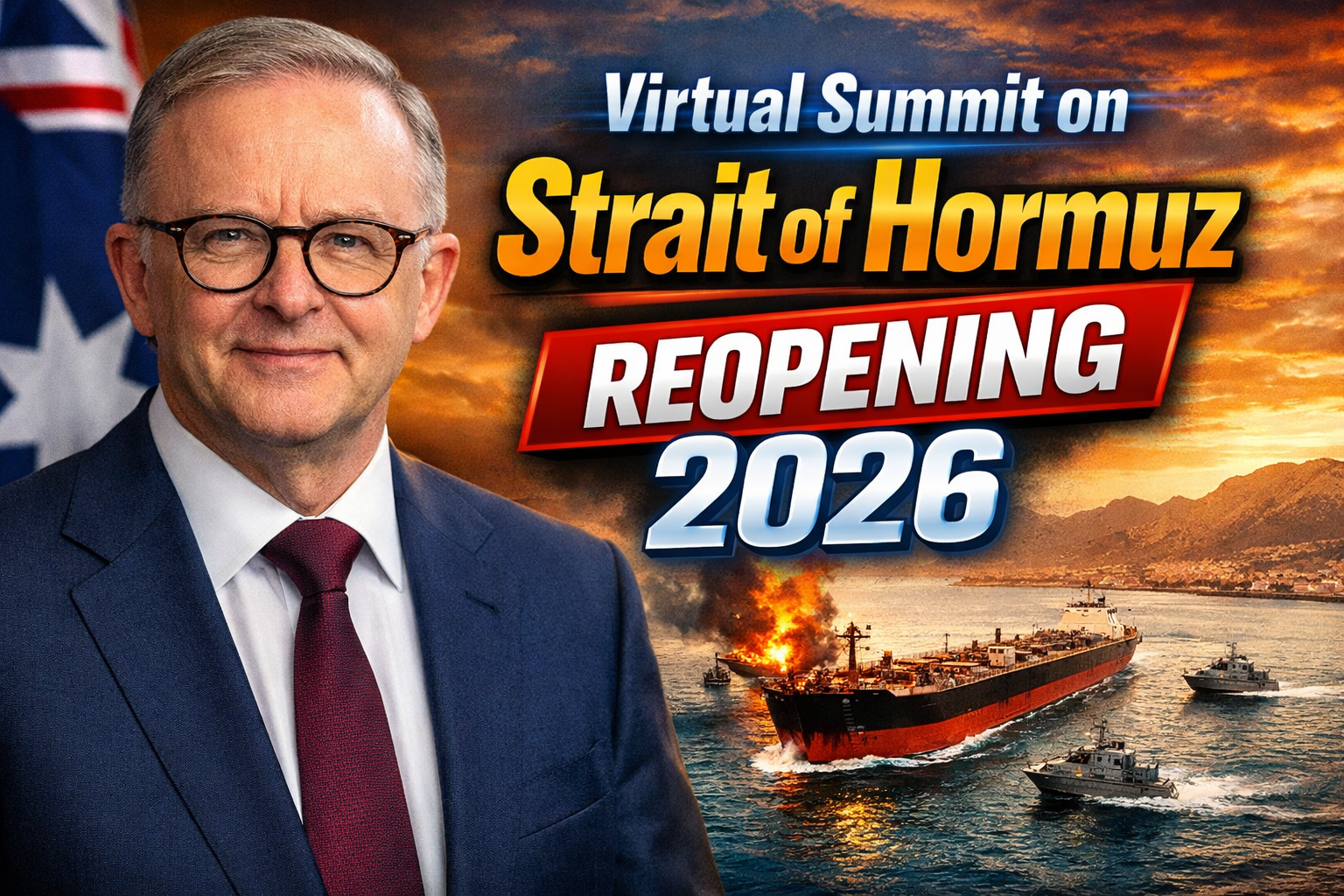
A high-stakes virtual summit convened on April 17, 2026, uniting leaders from 40 nations to chart the reopening of the Strait of Hormuz, the world’s oil lifeline crippled by Iran’s blockade since late February. Hosted by British Prime Minister Keir Starmer and French President Emmanuel Macron, the forum marks a unified global push against disruptions threatening 20% of seaborne oil trade. Australia, deeply exposed as a net fuel importer, dispatched Deputy Prime Minister Richard Marles, underscoring Canberra’s vow to safeguard shipping lanes vital to its economy.
Amid a fragile US-Iran ceasefire, participants pledged coordinated patrols, intelligence fusion, and International Maritime Organization enhancements. With Brent crude hovering near $110, the stakes transcend energy—food prices, inflation, and security hang in balance. This gathering signals a post-crisis pivot toward multilateral chokepoint defense.
Strait of Hormuz Crisis Recap
Iran sealed the Strait on February 28, retaliating against US-Israeli strikes on its Gulf assets. Mines, drone swarms, and speedboat harassment halted 21 million barrels per day, spiking prices 25% and rerouting tankers via Africa. Global GDP faces a 1% shave; Asia, importing 80% of its oil via Hormuz, reels hardest.
Australia dodged direct hits—Singapore refineries buffer supplies—but jet fuel shortages loom, with Qantas trimming flights. GCC states like Bahrain push UNSC resolutions, while shipping insurers triple premiums.
Summit Hosts and Agenda
Starmer and Macron framed the talks around ceasefire reinforcement and safe passage restoration. Key items: endorsing IMO safety protocols, forming a multinational naval coalition, and pressuring Tehran via sanctions relief tied to navigation freedoms.
Foreign ministers hashed logistics—patrol rotations, demining tech—while energy reps modeled supply ramps. Outcomes target Hormuz at 80% capacity by June, with phased commercial transits starting May.
Australia’s Strategic Stake
Down under, 90% of fuel arrives refined from Hormuz-dependent Singapore. Disruptions add 15 cents per litre, fueling inflation above 4%. Defence Minister Marles stressed Australia’s “deep investment,” committing RAN frigates to patrols.
Canberra eyes AUKUS synergies—P-8 Poseidons for surveillance—and bilateral Gulf ties. PM Albanese links Hormuz to Indo-Pacific stability, warning China-Russia opportunism.
Key Discussion Points
Talks zeroed on layered deterrence: mine countermeasures from UK minehunters, ASW from French subs, air cover via US carriers. UNSC Resolution 2817 backs defensive actions, averting blockade legalities.
Participants urged Iran incentives—frozen assets released for compliance—while prepping Stage 2 contingencies like SPR draws. Tech sharing emerged: AI vessel tracking, quantum-secured comms.
Participant Nations Table
| Nation/Bloc | Role/Contribution | Key Statement |
|---|---|---|
| UK/France | Hosts; lead patrols | “Ceasefire foundation for flows” |
| Australia | RAN frigates, P-8 surveillance | “Deeply invested in open Strait” |
| US | Carrier groups, demining | “Freedom of navigation paramount” |
| GCC (Bahrain lead) | UNSC push, host facilities | “Strategic test for Gulf security” |
| Japan/S. Korea | Tanker escorts, funding | “Asia bears 80% import pain” |
| India | Eastern patrols, intel | “Chokepoint threatens growth” |
| NATO | Tech standards, exercises | “Black Sea lessons apply” |
| China | Observer; supply chain input | “Stability aids all trade” |
This lineup spans consumers, producers, and transit states.
Proposed Security Measures
A GCC-led Maritime Task Force takes shape: layered patrols from Muscat to Bandar Abbas, joint exercises by July. UNSC authorisation shields actions; NATO fuses intel via Black Sea playbook.
Drones map mines, USVs sweep hazards. Private sector pledges rerouting aid—cape routes insured at cost. Iran gets phased easings: tanker transits first, then bulkers.
Economic Impacts Addressed
Hormuz choke costs $10 billion daily in detours, premiums. Summit models $90 Brent by Q3 with flows; Australia eyes 52-week stockpiles. LNG swaps with Qatar buffer gas; biofuels ramp.
Retailers commit no-hoarding; governments cap exporter diversions. Asia pivot—India’s Russian buys—to stabilise.
Challenges and Risks
Tehran’s ceasefire fragility tops worries—proxy flares could reseal gates. Enforcement gaps: mines regenerate, drones evade. China-Russia abstentions blunt UNSC bite; domestic politics constrain hosts.
Modelling flags 10% relapse risk, needing sustained 12-month patrols.
Australia’s Post-Summit Actions
Marles announced HMAS Sydney deployment to Gulf, P-8 rotations from Pearce. $200 million funds minehunters, allied basing in Bahrain. Canberra hosts Asia-Pacific follow-up in May, syncing with Quad.
Albanese ties to net-zero: Hormuz security buys EV transition time.
Long-Term Outlook
Hybrid models emerge: sovereign GCC capacity plus allied surges. AI sentinels, satellite constellations preempt blocks. Chokepoint pacts—Hormuz, Malacca, Bab al-Mandab—eye treaty status.
By 2030, drone swarms and USVs halve manned risks; quantum nets defy jamming.
Conclusion
The 2026 Hormuz Summit forges consensus from crisis, with Australia anchoring the Pacific flank. UK-France diplomacy, backed by 40 flags, charts reopening amid fragile peace. Patrols, tech, and carrots to Tehran promise flows restored. Global trade’s jugular secured, Australia proves stake translates to action—resilient, allied, forward-leaning. Open seas beckon; collective will delivers.

Vineeth T.C. is a news writer and digital content contributor at PageEuropean, covering key developments across New Zealand and Australia. His work focuses on delivering clear, fact-based reporting on current affairs, public policy, business updates, and regional news that matter to readers.