
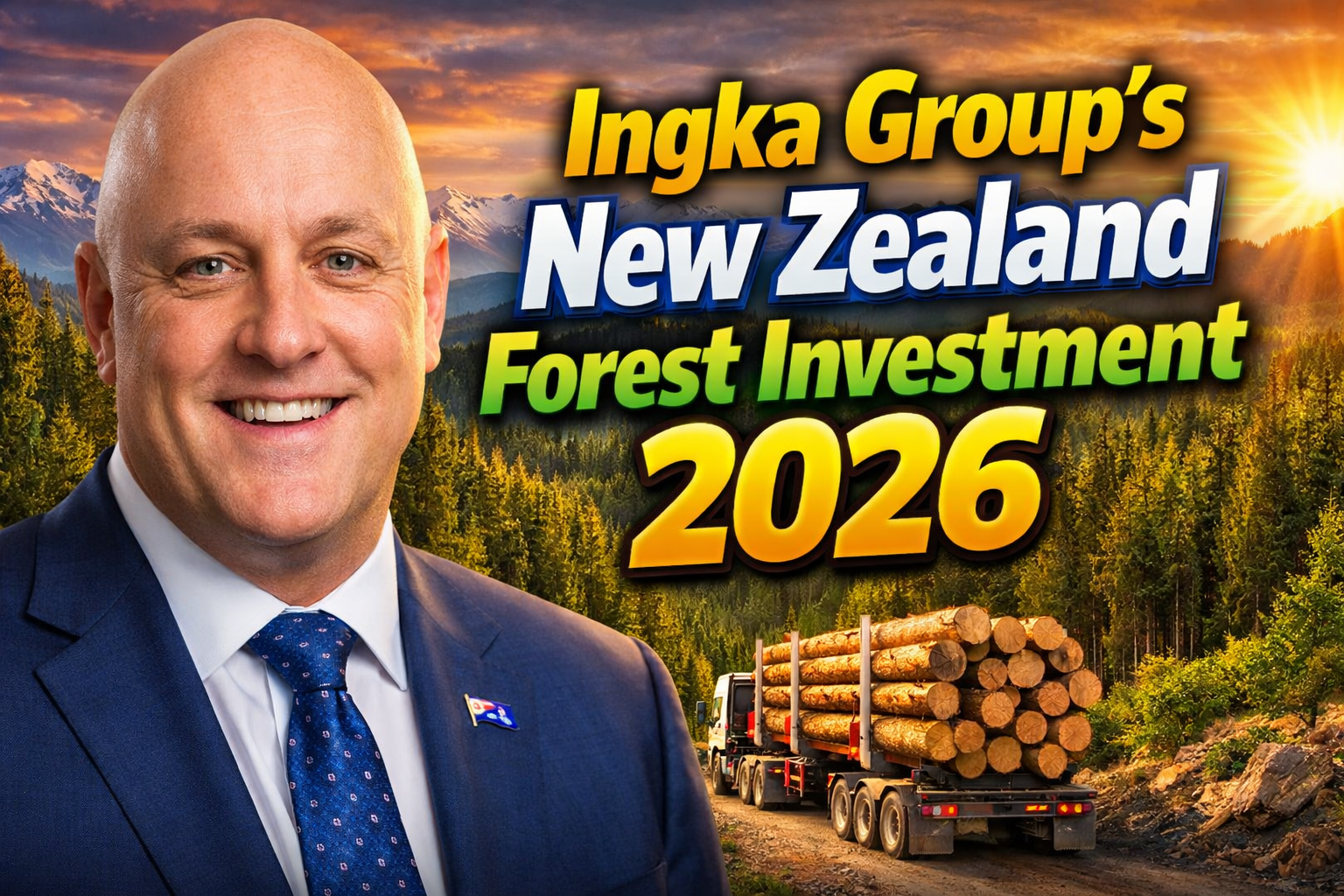
Ingka Group, the primary investment arm behind IKEA, has ramped up its commitment to New Zealand’s forestry sector in 2026, expanding holdings toward one hundred thousand hectares. This strategic push blends long-term sustainable management with tangible economic benefits, positioning forests as carbon sinks, biodiversity havens, and job creators in regions like Northland and Southland.
Overview of Ingka Group’s Forestry Strategy
Ingka Investments manages vast forestlands globally, prioritizing perpetual ownership over short-term logging gains. In New Zealand, the group owns twenty-eight thousand three hundred hectares as of recent counts, with aggressive expansion plans doubling this footprint. Purchases target marginal farmland unsuitable for intensive agriculture, converting it into productive radiata pine plantations alongside native restoration zones.
The approach emphasizes responsible stewardship: harvesting below natural growth rates ensures forests endure for generations. Annual volume growth hits one hundred four thousand cubic meters, while twenty-two percent of lands fall under high conservation values. This model aligns with Ingka’s not-for-profit ethos, forgoing aggressive carbon trading to focus on ecological integrity and community uplift.
Recent Investments and Expansions in 2026
A landmark move came with the acquisition of ten thousand hectares in Northland, finalized after overseas investment approval. Previously pastoral land, three thousand three hundred hectares now host commercial forestry, while the rest regenerates natives, safeguarding high biodiversity sites. Harvesting kicks off selectively in 2026, balancing timber yield with waterway protections featuring riparian setbacks five times legal minimums.
Southland partnerships with Hokonui Rūnanga involve iwi in native seedling propagation and pest control, fostering cultural ties. North Island collaborations with Ngati Awa target kiwi habitats, with joint pest eradication programs. Overall, Ingka aims for one hundred thousand hectares nationwide, blending afforestation of deforested paddocks with existing stands to restore ecosystems and curb stream pollution.
Six point nine million seedlings planted in fiscal 2025 underscore reforestation vigor, with twenty twenty-six scaling native mixes for resilience.
Sustainability Practices at the Core
Sustainability defines Ingka’s playbook, exceeding regulatory baselines across environmental pillars.
Waterway protection leads: crews clear farm debris, plant erosion buffers, and craft harvest plans avoiding stream contamination. Riparian zones span forty to one hundred fifty meters, nurturing native corridors that filter runoff and host wildlife.
Biodiversity thrives via conservation networks covering twenty-two percent of forests, prioritizing kiwi monitoring, possum culls, and pre-harvest surveys. Partnerships like Whakatane Kiwi Project deploy tracking tech, ensuring operations enhance rather than disrupt taonga species.
Carbon sequestration integrates without profiteering—eight thousand hectares registered in the Emissions Trading Scheme preserve land value, but credits fund biodiversity over revenue. Natural regeneration supplements plantings, mimicking forest dynamics for healthier stands less prone to pests or fires.
Local managers, often lifelong residents, embed kaitiakitanga, aligning global scale with place-based care.
Economic Impacts on Local Communities
Forestry injects vitality into rural economies, sustaining eight hundred direct and indirect jobs nationwide. In Northland’s acquisition, Southern Forests oversees operations, employing locals for planting, maintenance, and harvesting starting 2026. Wages circulate through regional hubs, bolstering shops, schools, and services.
Land conversions from low-yield farming to timber unlock higher returns without urban sprawl. Timber flows to domestic mills and export markets, stabilizing supply chains strained by global shortages. Iwi equity grows via revenue shares, training, and co-management, empowering rūnanga like Hokonui in decision-making.
Multiplier effects amplify: each forestry role supports three indirect positions in transport, processing, and hospitality. Regional GDP lifts as visitor eco-tourism—hiking trails, kiwi spotting—pairs with industry stability.
| Impact Category | Key Metrics | Local Benefits |
|---|---|---|
| Employment | 800 jobs (direct/indirect) | Stable rural livelihoods |
| Land Use Conversion | 3,300ha new forestry (Northland) | Higher productivity than pastoral |
| Seedlings Planted | 6.9 million (FY25) | Long-term timber + carbon stocks |
| Conservation Coverage | 22% of forests | Biodiversity + eco-tourism draw |
| Riparian Zones | 5x legal minimums | Cleaner waterways, fisheries |
This table quantifies contributions, highlighting job density and environmental multipliers.
Broader Environmental Contributions
Ingka’s model counters deforestation trends, restoring peatlands and wetlands that farming degraded. Native plantings—manuka, totara—combat erosion, while pine buffers stabilize soils against cyclones. Water quality rebounds as riparian forests trap nutrients, aiding downstream fisheries and drinking supplies.
Kiwi survival hinges on such efforts: intensive pest control across thousands of hectares creates safe havens, with monitoring data informing national strategies. Globally, Ingka’s three hundred thirty-one thousand five hundred hectares grow five hundred thousand cubic meters net annually, with New Zealand exemplifying scalable resilience.
Climate adaptation shines—diverse species mixes weather droughts, while continuous cover forestry minimizes clear-cut scars. This positions Aotearoa as a testing ground for Ingka’s worldwide playbook.
Partnerships and Community Engagement
Iwi collaborations anchor social license: Hokonui Rūnanga grows natives, Ngati Awa shares kiwi aspirations. Memoranda of Understanding formalize co-governance, blending mātauranga Māori with science.
Local hires dominate, from chainsaw operators to ecologists, building skills via on-site training. Community funds support marae upgrades, scholarships, and events, weaving Ingka into fabric.
Challenges like ETS price inflation complicate buys, yet long horizons—perpetual ownership—sidestep speculation. No rush to harvest preserves value, prioritizing steady yields.
Challenges and Future Outlook
Expansion faces hurdles: sensitive sites demand meticulous consents, while ETS dynamics inflate costs. Pest incursions and climate extremes test resilience, necessitating adaptive pruning.
Yet 2026 heralds acceleration—full Northland harvesting, Southland scaling, and native trials. Targets include full ETS registration for planted lands, funding predator-free initiatives. Doubling to one hundred thousand hectares by decade’s end promises proportional job and carbon gains.
Globally, Ingka’s Latvian research—closer-to-nature methods—feeds New Zealand innovations, enhancing wind firmness and habitat complexity.
Long-Term Vision for New Zealand Forestry
Ingka Group redefines investment as stewardship, proving forests outlast quarterly reports. New Zealand’s holdings embody this: productive, protective, prosperous. For iwi, communities, and ecosystems, 2026 marks not just scale but symbiosis—timber for today, legacies for tomorrow.
Sustainability metrics soar—growth outpacing cuts, natives reclaiming margins—while economics root deeply. As global demand for ethical wood rises, Ingka’s model elevates Aotearoa, blending profit with planet.

Vineeth T.C. is a news writer and digital content contributor at PageEuropean, covering key developments across New Zealand and Australia. His work focuses on delivering clear, fact-based reporting on current affairs, public policy, business updates, and regional news that matter to readers.